
insight 2026-07-07
From Welded to Seamless Pipes for Hydrogen Transport:
The Core of Hydrogen Pipeline Technology
As carbon neutrality and energy security take center stage globally, hydrogen has emerged as a vital catalyst for the green energy transition. Given that it produces zero carbon emissions at the point of use and can be generated using renewable sources like solar and wind, it is poised to become the backbone of tomorrow's energy supply chain.
However, as the hydrogen economy scales up, a critical challenge arises: bridging the gap between production hubs and end-users safely and efficiently. Long-distance hydrogen pipelines have become a prerequisite for delivering massive volumes of clean energy reliably and economically. Consequently, advanced steel piping and special steel material technologies are stepping into the spotlight as the indispensable foundation of the future hydrogen economy.
What is a Hydrogen Pipeline?
A hydrogen pipeline is a dedicated piping system built to safely transport produced hydrogen to actual demand centers, such as storage facilities, industrial complexes, power plants, and hydrogen refueling stations. As a representative transport infrastructure capable of continuously supplying hydrogen on a massive scale, it is evaluated to serve as the core supply chain of the hydrogen economy, organically connecting production, storage, and utilization.
Differences Between Traditional Natural Gas Pipes and Hydrogen Pipelines
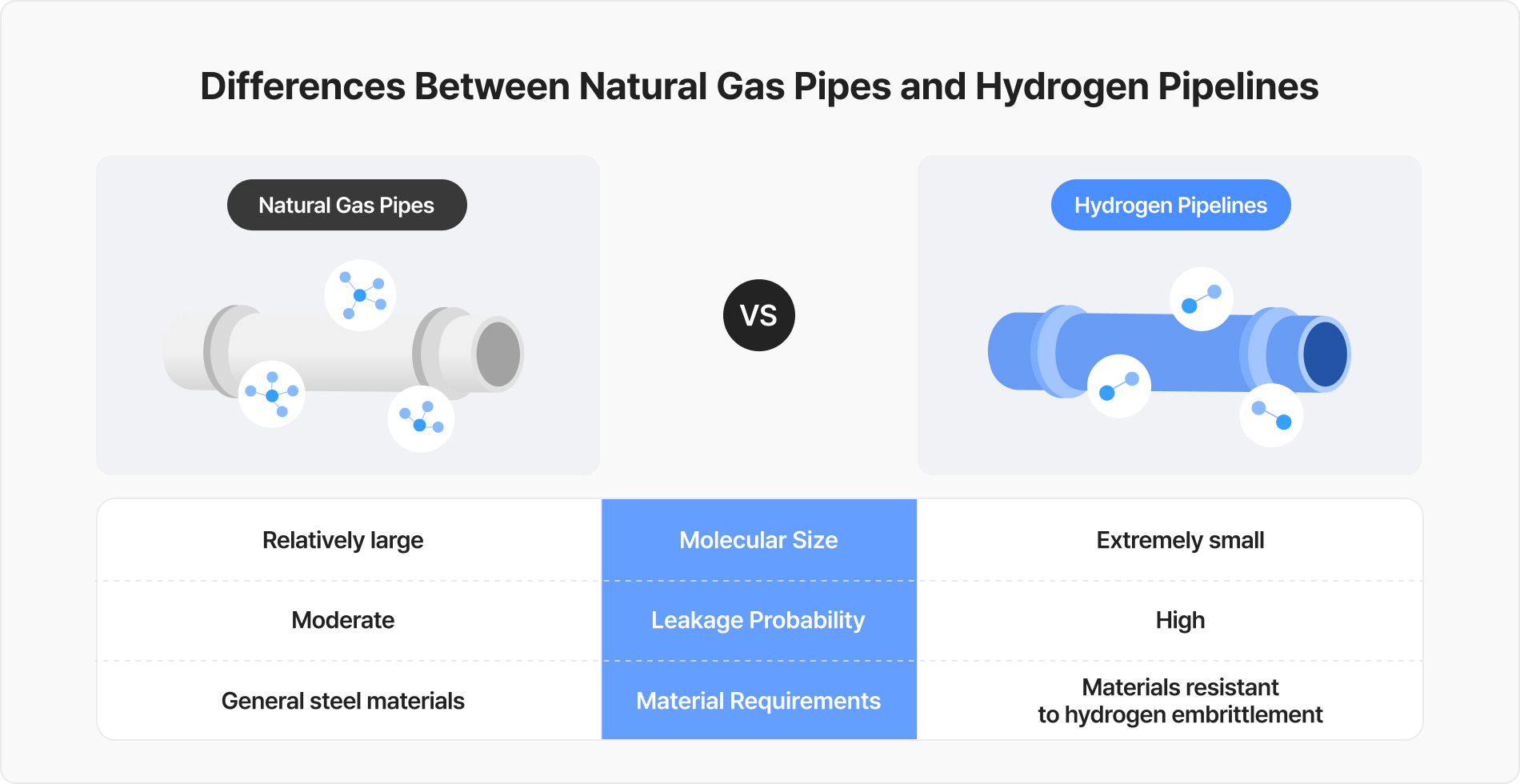
Natural gas pipes and hydrogen pipelines may look similar on the outside, as both serve as infrastructure for transporting energy over long distances. However, clear differences exist in their design and management standards since the physical and chemical properties of the substances they transport are completely different.
Traditional natural gas pipes are primarily engineered to handle internal pressure, flow rates, and basic structural durability. Hydrogen pipelines, in contrast, demand a focus on extreme airtightness and material stability. As the lightest element on Earth with the smallest molecular footprint, hydrogen can easily escape through microscopic vulnerabilities. Worse yet, if these tiny molecules infiltrate the metal itself, they can severely compromise the pipe's structural integrity, leading to catastrophic material failure.
Why Long-Distance Hydrogen Transport is Crucial
There is often a significant geographical disconnect between where hydrogen is produced and where it is consumed. For instance, green hydrogen is generated with zero carbon emissions using renewables and optimally produced in regions boasting abundant sunlight or strong winds. In contrast, the massive demand centers for this clean energy are typically concentrated in large-scale industrial complexes, power plants, and densely populated urban hubs.
Moreover, hydrogen's utility extends far beyond just a fuel for power generation. As it becomes widely adopted across diverse industrial sectors, from steelmaking and chemical manufacturing to hydrogen mobility, future demand will inevitably surge on a national scale rather than remaining localized. Consequently, forging an expansive, wide-area supply chain that connects production hubs with major demand centers is essential.
While tube trailers or liquid hydrogen transport serve as viable solutions in the early stages of the market, their limitations in efficiency and economic feasibility become glaring as hydrogen demand surges. Tube trailers are bottlenecked by low transport volumes per trip, whereas liquid hydrogen demands specialized infrastructure and prohibitive ongoing costs to maintain ultra-low temperatures below minus 253 degrees Celsius. Therefore, as the hydrogen economy accelerates, the necessity of a pipeline-based transport system will become paramount as the most efficient method for moving massive volumes of hydrogen.
Characteristics of Welded Pipes for Hydrogen Transport
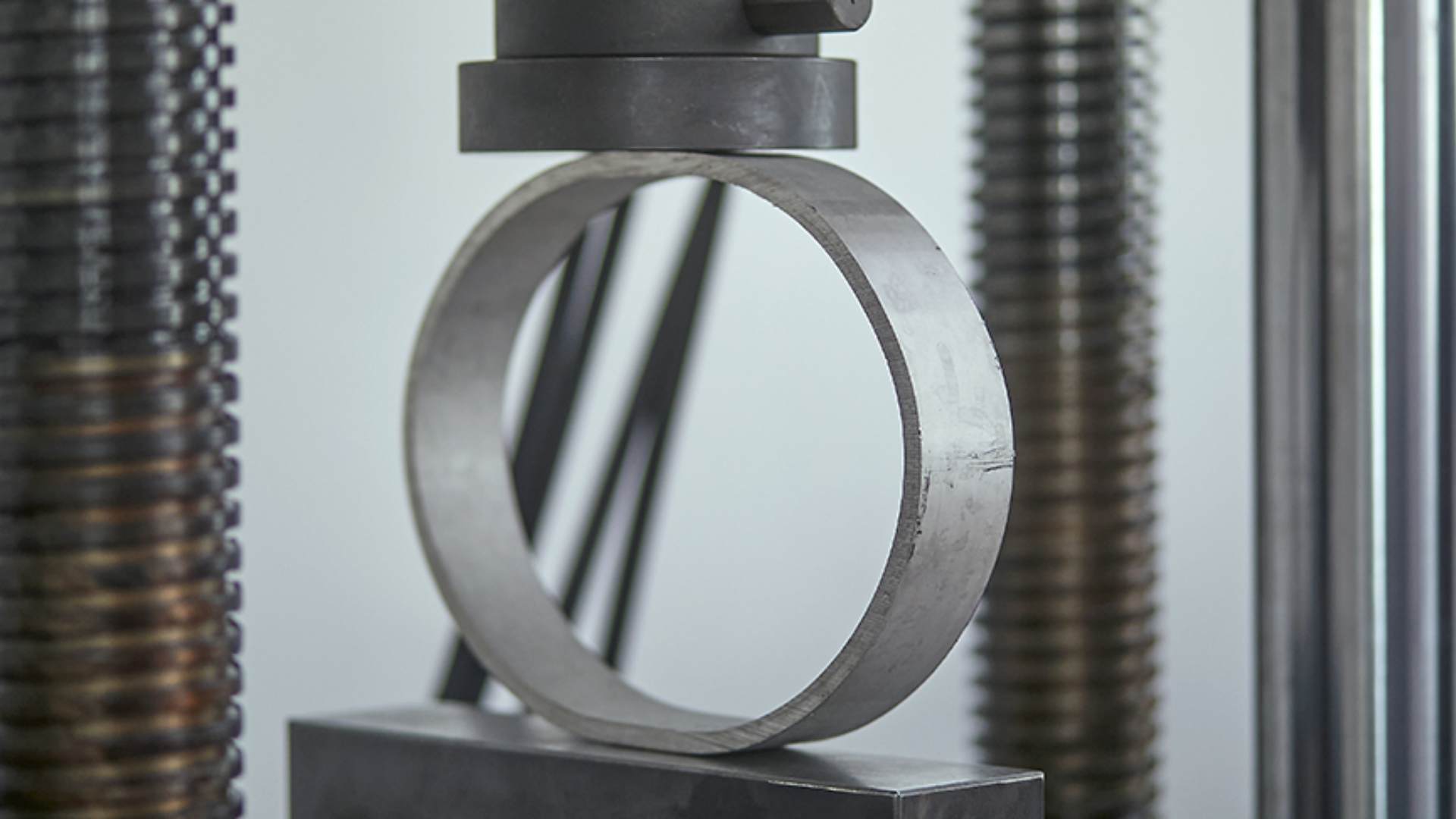
SeAH Steel factory producing stainless welded steel pipes
A Manufacturing Structure Suitable for Mass Transport and Large-Diameter Piping
Welded pipes are steel pipes manufactured by forming steel plates into a cylindrical shape and welding the joints. Due to the nature of this manufacturing method, products can be flexibly produced in various diameters and thicknesses. It is particularly advantageous for producing large-diameter steel pipes.
As the backbone of the hydrogen supply chain, pipelines must reliably deliver massive volumes of fuel, requiring large-diameter pipes that can accommodate high flow rates. Welded pipes are not only perfectly suited for these large-scale dimensions, but their high manufacturing productivity also makes them exceptionally cost-effective when constructing extensive supply networks.
The Importance of Precision Welding Technology to Prevent Micro-Leaks
Hydrogen's exceptionally small molecular footprint makes it far more prone to leakage than standard industrial gases. For this reason, in welded pipes utilized in hydrogen transport, ensuring the absolute integrity of the weld joints is just as critical as the core strength of the steel itself.
Should any microscopic defects or processing anomalies exist within the weld, the continuous stress of high-pressure hydrogen transport could trigger dangerous leaks or fatigue failure over time. To mitigate these threats, manufacturers apply high-precision welding techniques and validate the weld's soundness through stringent quality assurance protocols, most notably nondestructive testing (NDT).
Connection to Long-Distance Hydrogen Transport Infrastructure
Mass supply capability and construction efficiency are key in large-scale pipeline network projects. Since the specifications of welded pipes can be freely adjusted to match various transport environments and topographical design conditions, they are widely utilized as a core steel pipe solution for constructing long-distance hydrogen transport infrastructures between countries or metropolitan cities.
Characteristics of Seamless Pipes for Hydrogen Transport
Advantages of a Seamless Structure that Minimizes Defects
The defining feature of a seamless pipe, true to its name, is the complete absence of welded joints. Unlike conventional welded steel pipes, which possess a longitudinal weld seam from bending and joining plates, seamless pipes are forged from a single solid material. By heating a round billet to extreme temperatures, piercing its center, and elongating it, manufacturers achieve flawless structural uniformity.
Given hydrogen's minute molecular footprint and its tendency to escape through the slightest microscopic defects, maintaining absolute pipeline integrity is critical. Because seamless pipes inherently eliminate the potential vulnerabilities associated with weld seams, they offer a distinct advantage in securing extreme airtightness and robust structural stability.
High Reliability and Safety in High-Pressure Environments
Hydrogen has a low volumetric energy density, meaning it must be compressed at high pressure for mass storage and transport. Hydrogen storage vessels, high-pressure compression facilities, and internal piping at hydrogen refueling stations are constantly exposed to extreme environments ranging from tens to hundreds of atmospheres.
Seamless pipes possess an outstanding ability to uniformly withstand high pressure applied from all directions. Because they maintain excellent mechanical properties even under conditions of repeated high pressure, they are evaluated as an irreplaceable, high-value solution in core hydrogen facility areas requiring ultra-high-pressure stability.
Technical Reasons for High Manufacturing Difficulty
Seamless pipes are highly difficult products that require complex manufacturing processes and advanced technological prowess. The circular material must be pierced at high temperatures, followed by meticulous repetitions of rolling and heat treatment processes, while the internal and external dimensional precision must be strictly managed.
Seamless pipes designed for hydrogen transport require exceptionally higher standards of strength, impact toughness, and hydrogen embrittlement resistance than standard industrial piping. As this demands absolute precision across the entire manufacturing lifecycle, from the initial alloy design to the final heat treatment, the ability to produce these high-spec pipes serves as a core measure of a company's technological competitiveness.
The Rationale Behind the Strict Manufacturing of Hydrogen Pipes
The Effect of Hydrogen on Metals and Hydrogen Embrittlement Countermeasures
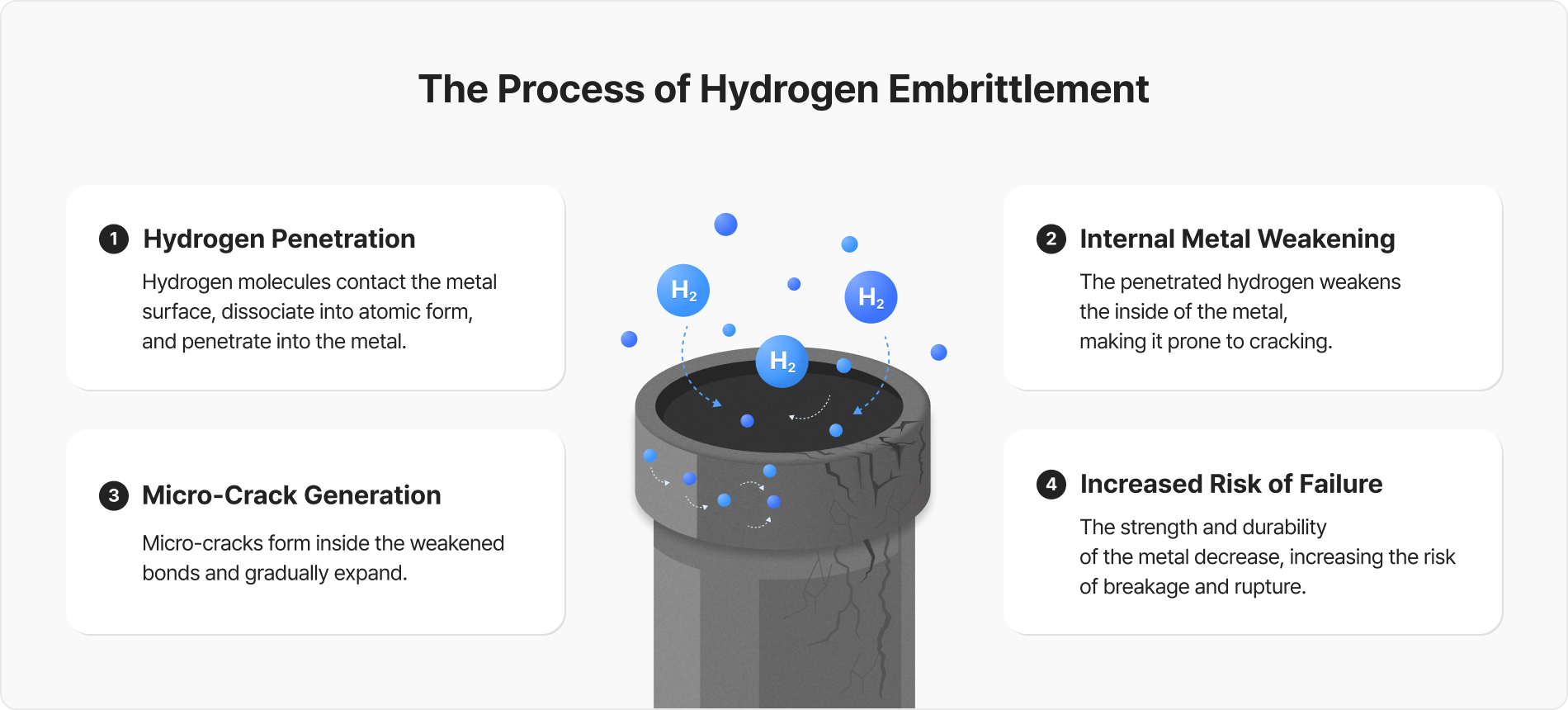
The most formidable hurdle in hydrogen pipeline technology is hydrogen embrittlement. When invisible, microscopic hydrogen atoms permeate the metal, the material is stripped of its inherent ductility and toughness, turning as brittle as glass.
Once compromised, these pipes can suddenly fracture under minor impacts or routine pressure fluctuations, posing a catastrophic threat to long-term infrastructure safety. Consequently, hydrogen transport pipelines must leverage advanced material design—integrating special alloy elements to repel hydrogen penetration—paired with precise heat treatment technologies that meticulously control the metal's internal microstructure.
Stability to Withstand High-Pressure Environments and Prevent Even Minor Leaks
The atmospheric release of highly volatile hydrogen gas carries significant fire and explosion hazards. To maximize efficiency during storage and transport, hydrogen must be densely compressed, subjecting the pipeline's interior to a constant state of high pressure. In such pressurized systems, even a microscopic breach in airtightness can escalate into a major incident. Therefore, hydrogen piping must satisfy NDT and precision machining requirements that exponentially exceed the safety parameters of conventional oil and gas pipelines.
Controlling High-Strength, High-Toughness Materials for Long-Term Infrastructure Lifespan
Once buried underground, a hydrogen pipeline is a national energy infrastructure that must operate stably for decades. Therefore, it is important to secure not only the strength to withstand high pressure but also sufficient toughness to prevent cracks or breakage amidst temperature changes, ground subsidence, and periodic fluctuations in operating pressure.
Subjected to continuous fluctuations in operating conditions, cyclic pressure loads, and environmental stressors, hydrogen piping demands uncompromising long-term durability. If left unchecked, the gradual accumulation of minor fatigue cracks can precipitate sudden and catastrophic structural failure. To preempt this, engineers apply highly calibrated methods to refine alloy components and optimize the material's microstructural integrity. Mastering these durability-enhancing technologies is fundamental to extending the infrastructure's service life, mitigating massive downstream maintenance expenditures, and ensuring the absolute safety of the hydrogen supply network.
SeAH's Manufacturing Technologies and Solutions for Hydrogen Transport
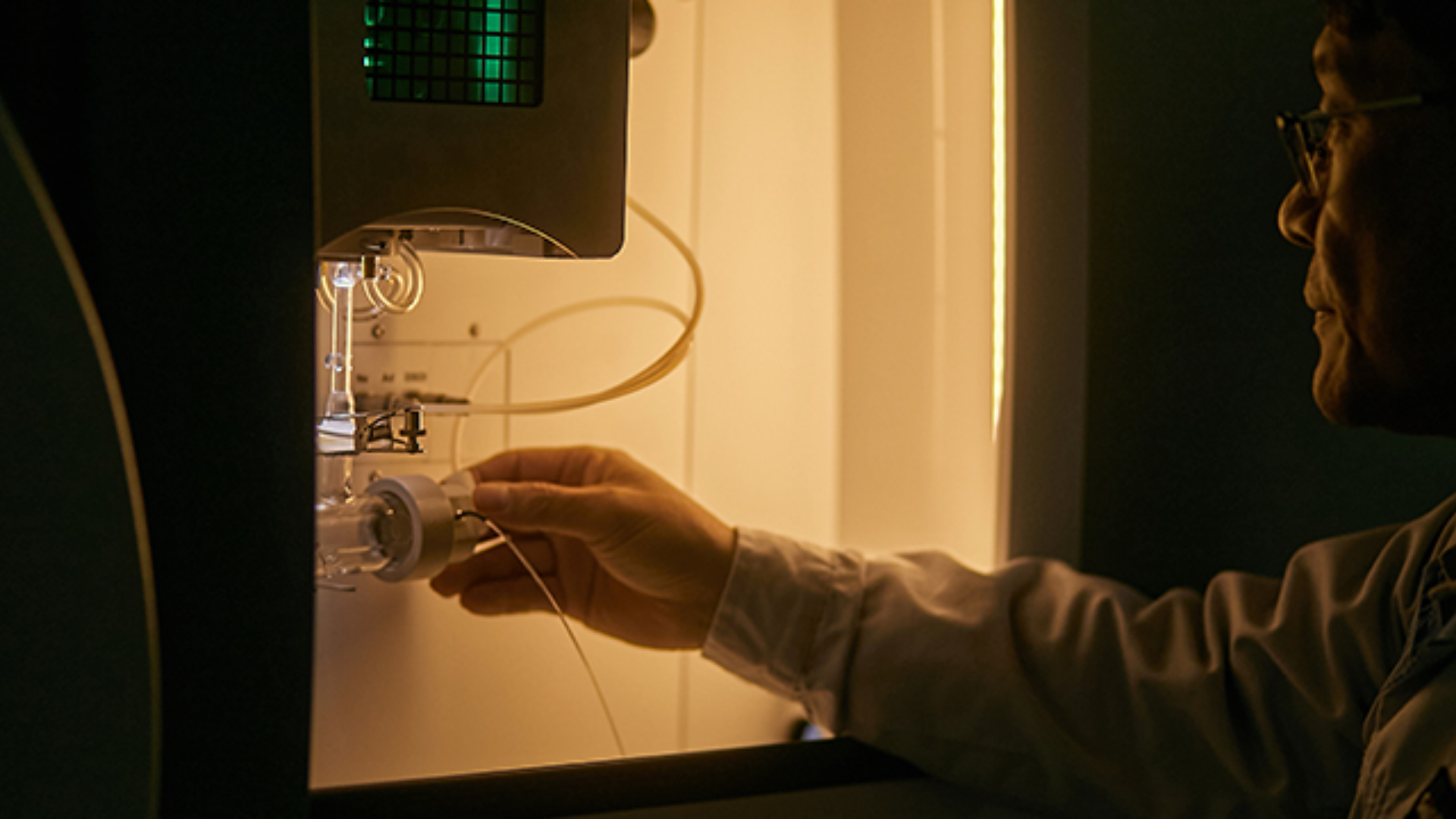
SeAH Besteel employees developing products
SeAH Steel's Welded Pipe Manufacturing Technology for Hydrogen Transport
The successful construction of long-distance hydrogen pipelines hinges on the seamless integration of robust mass-production capabilities for large-diameter pipes and uncompromising quality management systems. Drawing on a proven track record of supplying oil and gas pipes to the global energy infrastructure market, SeAH Steel is spearheading the production of large-diameter welded pipes optimized for hydrogen transport. By leveraging Korea's largest steel pipe manufacturing infrastructure, the company is fully equipped to agilely respond to the demands of upcoming large-scale hydrogen pipeline networks.
SeAH Besteel's Capabilities in Special Steel and Seamless Materials Resistant to Hydrogen Embrittlement
Realizing the hydrogen economy demands more than just advanced pipe manufacturing processes; it requires mastering the foundational material technologies capable of withstanding the harsh hydrogen environment itself. Leveraging its unrivaled special steel manufacturing expertise, SeAH Besteel is spearheading the development of special alloys engineered for extreme resistance to hydrogen permeation and embrittlement. By advancing the production of high-quality billets—the essential raw materials for high-pressure storage vessels and seamless pipes—the company is rapidly solidifying its technological dominance in the next-generation green energy materials market.
Response Capabilities Based on Global Energy Infrastructure Supply Experience
Given that hydrogen pipelines are foundational, long-term energy assets, the reliability, production capabilities, and supply heritage of the steel materials are critically scrutinized.
SeAH Steel has long been a key supplier to the global energy pipe market, just as SeAH Besteel has addressed the energy industry materials sector with its advanced special steel manufacturing. Capitalizing on the trust garnered from successfully supplying materials for extreme offshore environments and worldwide energy transport projects, both companies transcend conventional product sales. They deliver comprehensive, integrated steel and material solutions spanning the entire hydrogen infrastructure construction process, positioning themselves at the vanguard of the global hydrogen economy.
Activation of the Hydrogen Economy and Changes in the Global Pipeline Market
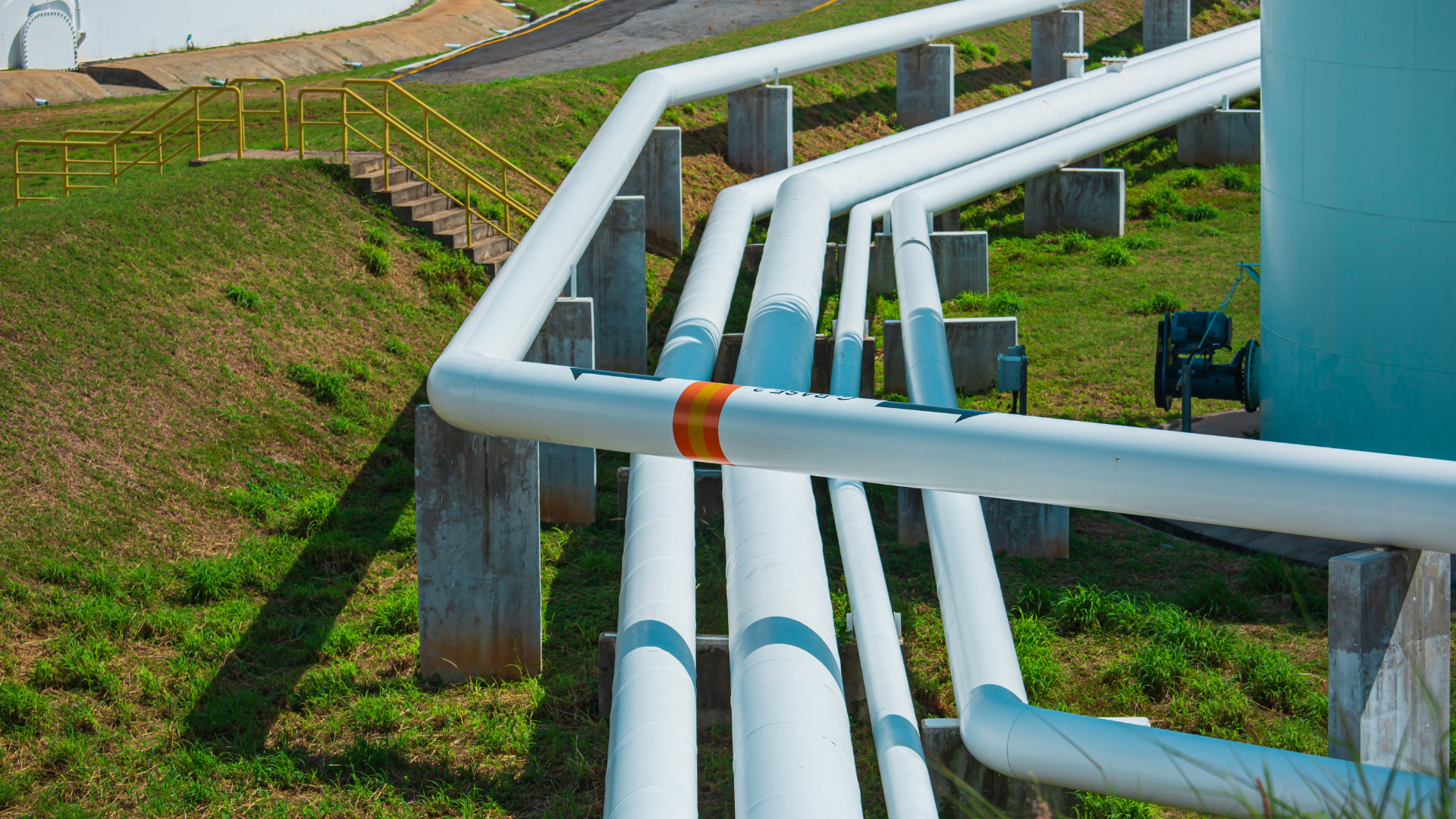
Expansion Trends in Global Hydrogen Energy Infrastructure Investments by Major Countries
Leading global economies, including the U.S., the European Union (EU), Japan, and Korea, have designated hydrogen as a future growth engine and a core pillar of energy security. In Europe, the European Hydrogen Backbone (EHB) initiative—a massive pipeline network designed to seamlessly integrate cross-border hydrogen supply chains—is rapidly taking shape. Similarly, the U.S. is channeling unprecedented investments into expanding regional production bases and transport infrastructure through its Hydrogen Hubs policy.
Full-Scale Demand for High-Spec Hydrogen Pipes Following the Green Energy Transition
As the energy paradigm shifts, the general-purpose gas pipe market of the past is rapidly reorganizing into a market for high-spec, hydrogen-dedicated pipes. Global demand for hydrogen embrittlement suppression technology, precision welding quality, and flawless seamless pipes is emerging in earnest, driving the growth of the high-value steel pipe market with high technological barriers.
Pioneering Global Standards: The Future of Hydrogen Pipeline Technology
With the continued growth of the hydrogen pipeline market, the establishment of hydrogen-specific criteria for international standards and certification systems, including the American Society of Mechanical Engineers (ASME) and the American Petroleum Institute (API), is actively progressing. In the future, only enterprises that can objectively prove the durability and high-pressure capabilities of their technologies will be able to participate in the global supply chain. As a result, leading companies that have secured early technology development and strict quality verification are expected to wield even greater influence over the market.
Hydrogen Pipeline FAQ

What are welded pipes for hydrogen transport?
Welded pipes for hydrogen transport are manufactured by precisely shaping and fusing steel plates. As this method easily accommodates a wide range of specifications and is highly advantageous for producing large-diameter piping, these pipes are widely utilized in high-volume hydrogen pipelines. However, given the extreme sensitivity of hydrogen environments, the structural integrity of the weld is critical, demanding ultra-precise welding technologies and rigorous quality management.
Why are seamless pipes necessary when transporting hydrogen?
Since seamless pipes lack welded joints, they achieve flawless structural uniformity. This inherent design provides unparalleled reliability, virtually eliminating the risk of leakage or rupture in harsh environments subjected to constant ultra-high-pressure conditions and frequent pressure fluctuations, such as hydrogen refueling stations and storage facilities.
How do hydrogen pipelines differ from conventional gas pipelines?
While they may appear identical from the outside, their internal engineering standards differ fundamentally. Given hydrogen's exceptionally small molecular footprint and its tendency to permeate metals, mitigating leakage and ensuring material stability are more critical than with natural gas. Furthermore, the necessity of counteracting hydrogen embrittlement dictates more rigorous controls over steel compositions, welding protocols, and quality assurance standards.
What is hydrogen embrittlement?
Hydrogen embrittlement is a phenomenon where hydrogen penetrates the inside of a metal, lowering the material's ductility and toughness. When hydrogen embrittlement occurs, cracking or a drop in strength can manifest, making it critically important to secure hydrogen embrittlement-resistant materials and manufacturing technologies for hydrogen pipelines and storage facilities.
How is SeAH responding to the hydrogen pipeline market?
SeAH is rapidly expanding its supply chain by leveraging the synergy between SeAH Steel's proven large-diameter pipe manufacturing capabilities and SeAH Besteel's next-generation, hydrogen-embrittlement-resistant special steel technologies. Moving beyond conventional product supply, SeAH is committed to delivering customized, safe, and highly cost-effective hydrogen transport solutions that meet the most rigorous global standards for the worldwide infrastructure market.
List