
insight 2026-08-03
Industry Outlook for Pin Piles and Substructures in the Expanding Offshore Wind Market
As the global offshore wind market expands at an unprecedented pace, the focus is decisively shifting to the substructure technologies that anchor these massive turbines. The rapid upsizing of offshore turbines is accelerating a high-stakes technological arms race. Today, securing a competitive edge in the global market hinges on the advanced engineering of core foundation components, including pin piles, monopiles, and large-diameter, heavy-wall steel pipes.
Global Offshore Wind: Powering the Carbon-Neutral Future
Carbon Neutrality Policies and the Expansion of Global Offshore Wind Investments
As the race to net zero accelerates the global energy transition, governments are aggressively scaling up renewable policies. Offshore wind has emerged as an undisputed frontrunner, leveraging vast oceanic expanses for massive wind farms. By harnessing stronger, more consistent ocean winds, it delivers significantly higher generation efficiency than its onshore counterparts.
Propelled by this momentum, nations across the globe are positioning offshore wind as the cornerstone of their future energy ecosystems. A massive influx of capital is not just funding power generation but revitalizing entire supply chains—from ports and transmission grids to critical upstream and downstream sectors. Moreover, industries driving the physical foundations, such as substructures, heavy-wall materials and special steel, are experiencing an era of explosive, unprecedented growth.
Offshore Wind Market Expanding Beyond Europe to the Asia-Pacific Region
Centered around the North Sea, Europe has been the representative market leading the global offshore wind industry. Countries like the U.K., Germany, the Netherlands and France are continuously developing large-scale offshore wind farms while driving the localization of supply chains, high-voltage direct current (HVDC) offshore transmission networks and port infrastructure.
Recently, the growth axis of the offshore wind market has been rapidly expanding beyond Europe into the Asia-Pacific (APAC) region. Korea, Japan and Taiwan are providing unwavering policy support to nurture offshore wind as a national strategic industry. The steady increase in new large-scale projects within this region is driving global demand for offshore wind equipment and substructures.
Trends in Global Offshore Wind Installed Capacity and Power Generation
Global offshore wind capacity is expected to maintain robust growth. According to the International Energy Agency (IEA), new global offshore wind installations from 2025 to 2030 are expected to reach approximately 140 GW, more than double the growth seen in the previous five years (2020–2024). The annual offshore wind market size is also projected to quadruple from 9.2 GW in 2024 to over 37 GW annually by 2030.
Along with the expansion of facilities, power generation is also expected to rise continuously. The IEA forecasts that global renewable energy generation will surge by about 60 percent, from 9,900 TWh in 2024 to 16,200 TWh in 2030, overtaking coal as the world's largest power source by mid-2026 at the latest.
Amid this energy transition, wind and solar power will drive 30 percent of the total increase in renewables, becoming the core engines of global power generation by 2030. Consequently, offshore wind will take on a much larger role in the global power supply. With renewables set to meet more than 90 percent of the world's new electricity demand between 2025 and 2030, the offshore wind sector is primed to continue its explosive growth.
The Impact of Turbine Upsizing on the Substructure Industry
Introduction of Large Turbines for Maximized Efficiency and Economic Feasibility
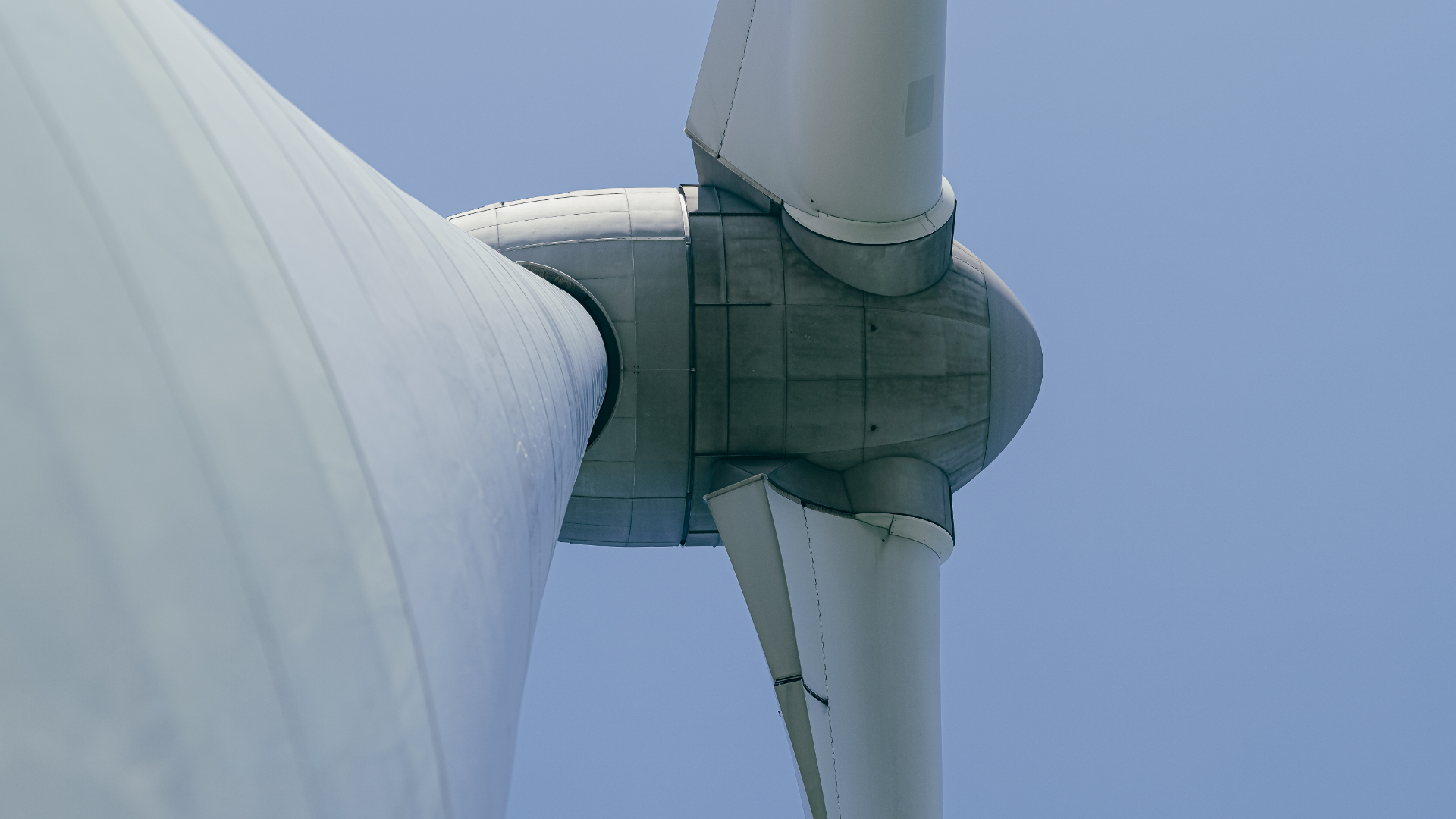
In the offshore wind industry, the upsizing of turbines is a core strategy to lower the levelized cost of energy. As the rotor diameter and tower height of a turbine increase, it can capture powerful wind energy over a wider area, enabling more power generation within the same wind farm footprint. While initial capital expenditures may rise, the number of turbines and substructures required to achieve the same target generation is reduced, which can significantly cut down long-term installation, operations, and maintenance (O&M) costs.
The Growing Importance of Substructures in Response to Next-Generation Offshore Wind Facilities
As turbines scale up to 15 MW, 20 MW and beyond, the loads that substructures must bear increase exponentially. They must withstand not only the massive weight of the turbines but also the fatigue loads repeatedly exerted by strong winds, waves, and currents over long periods.
As a result, substructures like pin piles and monopiles are also becoming mega-sized. Recently, large-diameter, heavy-wall steel pipe technologies capable of manufacturing ultra-large pipes with outer diameters exceeding 10 meters, along with high-strength materials and precision welding techniques, have emerged as key factors dictating the global offshore wind market.
What is an Offshore Wind Pin Pile: The Core Structure Supporting the Foundation
Operating in harsh marine environments, offshore wind installations require highly resilient substructures to endure decades of continuous winds, waves and currents. Securing these massive structures to the seabed demands a highly engineered foundation, making pin piles the crucial component of this architectural feat. With the rapid proliferation of deep-water projects featuring mega-turbines, the strategic importance of pin pile technology is escalating exponentially.
The Principle of Pin Piles: Anchoring Structures Firmly to the Seabed
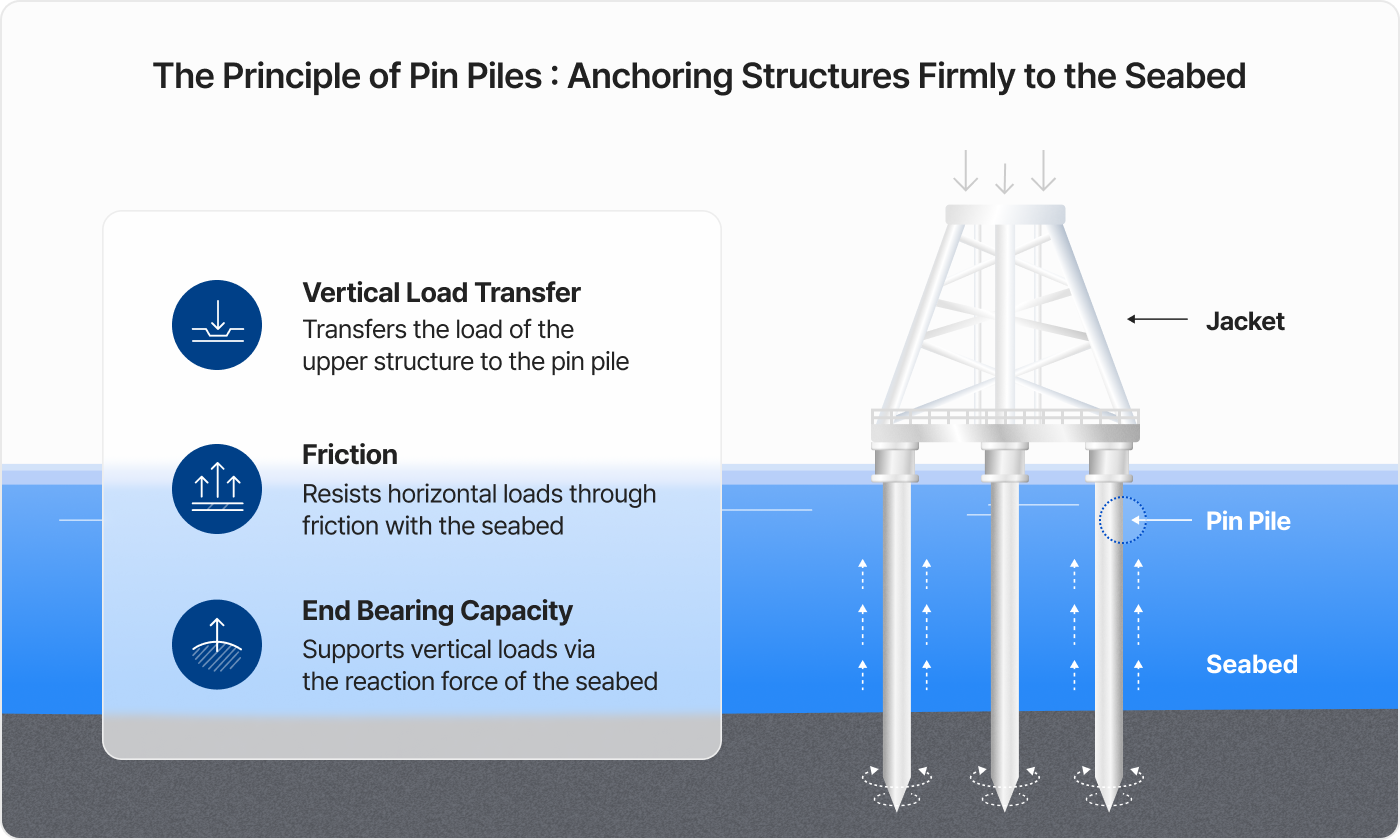
An offshore wind pin pile is a massive, large-diameter steel pipe designed to anchor substructures securely to the seabed. Once the main substructure is positioned on-site, these pin piles are driven deep into the ocean floor through the structure's legs, locking it firmly in place. Acting as the ultimate foundation, they safely distribute and transfer the punishing, repetitive loads generated by the upper turbines down into the seabed. Consequently, producing these critical components demands cutting-edge engineering and manufacturing technologies that guarantee exceptional strength, durability and unwavering long-term stability.
How Pin Piles are Used in Large Substructure Methods
Pin piles are predominantly utilized in conjunction with jacket substructures, which are the preferred foundation for deep-water and extreme maritime applications.
Constructed from high-strength steel members, a jacket features a triangular truss configuration engineered to minimize hydrodynamic drag from waves and ocean currents. Following the offshore installation of the jacket, pin piles are inserted through its legs and rigidly anchored into the seabed. This mechanism efficiently dissipates the massive operational loads from the turbine down into the seabed. Consequently, the pin pile transcends being a mere steel pipe; it is a vital structural asset that ensures the long-term integrity of the entire jacket foundation.
Pin Piles vs. Monopiles: Distinct Roles and Synergistic Solutions
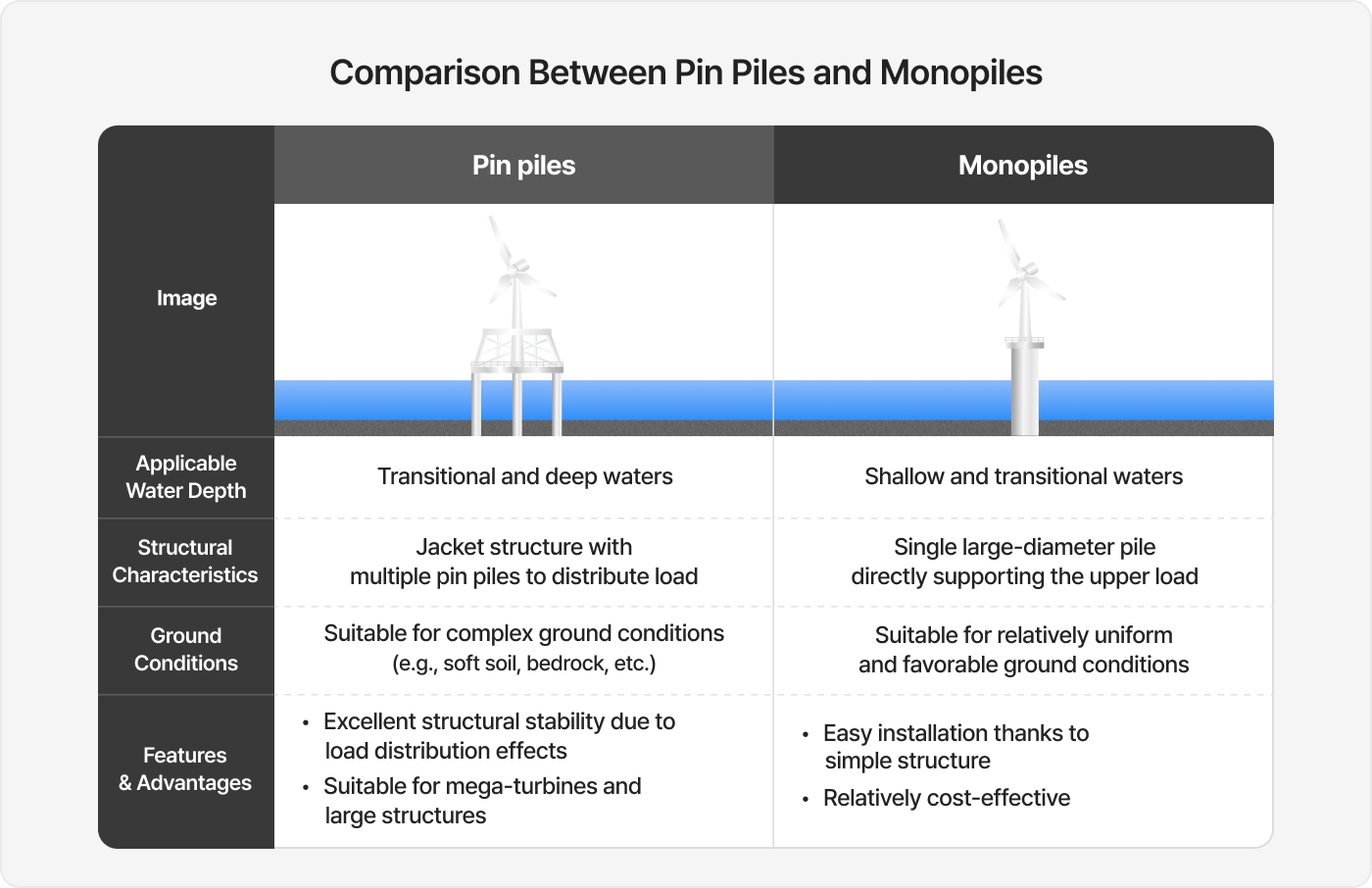
Although both pin piles and monopiles are integral to offshore wind foundations, they serve distinct structural purposes. Pin piles are paired with lattice-framework jacket structures, a configuration highly favored in deep waters, extreme offshore conditions and mega-turbine deployments. Because multiple pin piles anchor each jacket leg, they efficiently dissipate dynamic fatigue loads, securing the long-term structural integrity required for massive projects.
In contrast, the monopile utilizes a single massive steel pipe installed directly into the seabed. Thanks to its structural simplicity and relatively straightforward installation, it delivers exceptional cost-efficiency in shallow and transitional waters, maintaining its status as the world's most widely utilized foundation method.
Recent trends in the global offshore wind market indicate a decisive shift toward deeper waters, greater distances from shore and the rapid upsizing of turbines. In response to these complex variables, developers are strategically allocating monopiles and pin piles according to precise hydrodynamic and geotechnical conditions. Therefore, rather than viewing them as competing methodologies, the industry leverages both as complementary foundation solutions customized to the specific site environment and engineering parameters.
Why Manufacturing Offshore Wind Pin Piles is Challenging
Large-Diameter, Heavy-Wall Steel Pipe Technology to Support Massive Turbines
The relentless upsizing of offshore wind turbines exerts immense structural loads on underlying pin piles. Stably bearing these forces demands advanced large-diameter, heavy-wall steel pipe technology. Yet thicker pipe walls introduce severe fabrication hurdles, complicating forming, welding and the maintenance of tight dimensional tolerances. Given the massive scale of these ultra-heavy structures, end-to-end process management and rigorous quality control are essential throughout manufacturing.
Structural Design to Withstand High Fatigue Loads and Marine Environments
The function of a pin pile extends far beyond basic structural support. It must sustain absolute structural integrity while enduring decades of continuous wind, wave and hydrodynamic loads. Because offshore forces shift constantly in both direction and magnitude, precision engineering that minimizes structural fatigue is critical. Additionally, the highly saline marine environment severely accelerates corrosion, necessitating the strategic selection of specialty materials that offer both superior corrosion resistance and exceptional low-temperature toughness. Together, these meticulous engineering choices serve as the definitive factors in maximizing a structure's lifecycle and minimizing long-term maintenance costs.
Precision Welding and Strict Quality Control Standards Determining Long-Term Durability
Because pin piles are assembled by integrating multiple heavy-wall steel pipes and plates, weld integrity is the definitive measure of structural longevity. In offshore environments characterized by long-term repetitive loading, microscopic defects or porosity in the weld seam can initiate severe crack propagation. Therefore, the fabrication process demands highly specialized welding techniques paired with stringent quality assurance frameworks, including comprehensive non-destructive testing (NDT), that strictly exceed baseline international standards.
Supply Chain Competition in the Global Offshore Substructure Market
Surging Global Demand for Pin Piles and Monopiles Driven by Turbine Upsizing
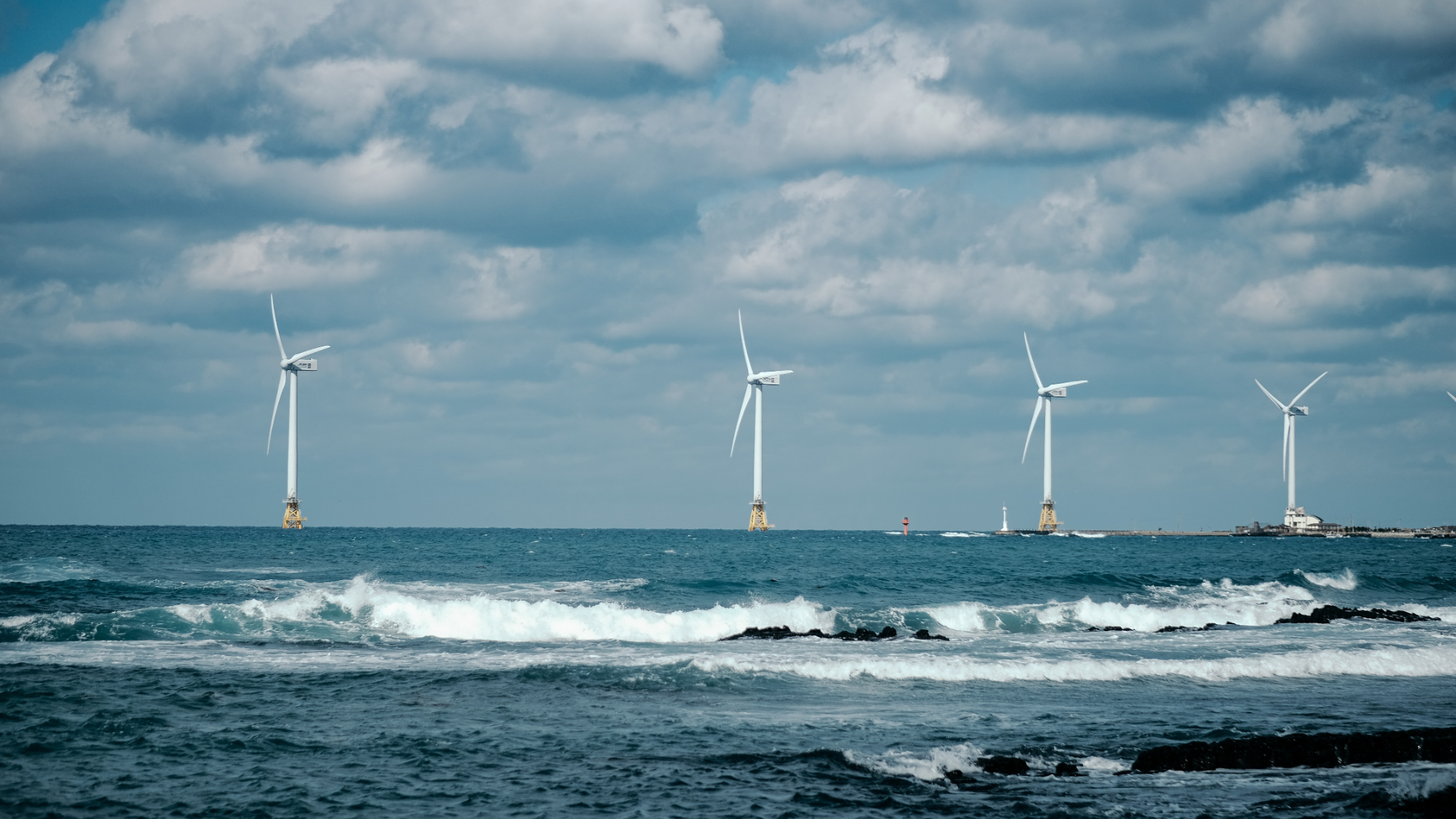
With the accelerated rollout of next-generation mega-turbines exceeding 15 MW, the foundational substructures are undergoing a proportional increase in scale. In line with this trend, the industry is witnessing a continuous rise in the physical size of pin piles and monopiles, along with the overall tonnage of steel consumed. As global offshore wind capacity expands through increasingly large-scale projects, supply chain resilience—defined by the capacity to consistently manufacture and deliver ultra-large components on precise schedules—has become a decisive competitive differentiator.
Supply Chain Resilience: The Ultimate Driver of Offshore Wind Success
Developing an offshore wind farm is a highly capital-intensive undertaking that spans several years. In an industry where timeline disruptions directly translate to severe cost overruns, reliable equipment procurement and stringent delivery management are critical. Because ultra-large pin piles and monopiles entail long production cycles and highly complex logistics in both maritime transport and port handling, a resilient and proactive supply chain has become the definitive metric for winning major global projects.
The Value of Manufacturing Ultra-Large Structures and Global Project Supply Experience
Within the ultra-large substructure market, a verified track record of completed projects serves as the most formidable barrier to entry, transcending fundamental manufacturing capabilities. Given that hydrodynamic conditions, engineering standards and client requirements are unique to every site, extensive project execution experience stands as the absolute benchmark for validating quality and supply chain reliability.
Moreover, executing complex global projects requires a company to integrate advanced large-diameter, heavy-wall steel pipe manufacturing, master-level welding expertise and a production framework strictly aligned with international quality standards. Together, these sophisticated manufacturing assets and proven track records cultivate deep trust among global developers, laying the strategic foundation necessary to secure highly competitive offshore wind projects.
SeAH's One-Stop Value Chain Synergy for Offshore Wind Substructures
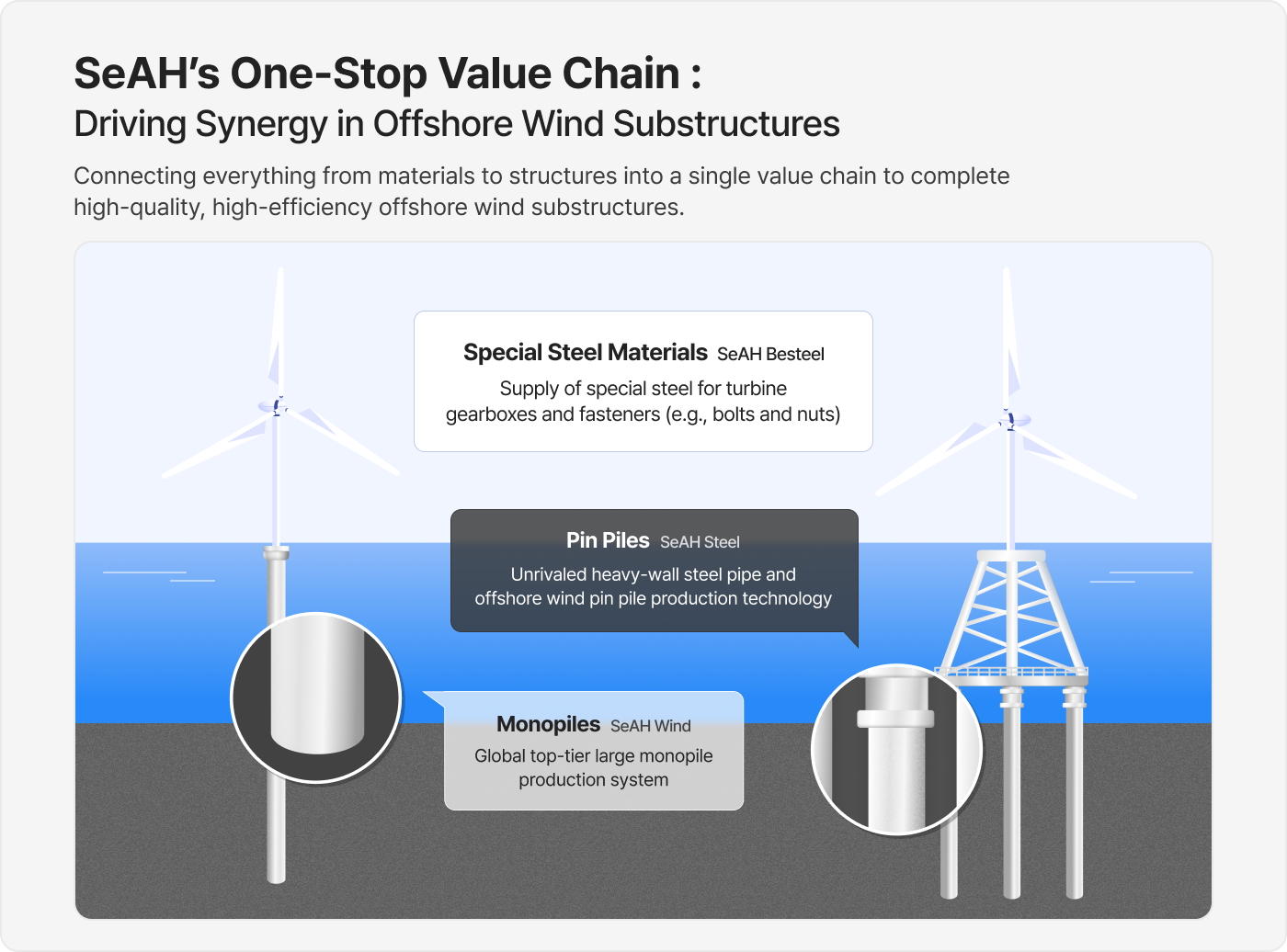
Within the offshore wind substructure sector, vertical integration—spanning raw material production, steel pipe manufacturing and final structure assembly—is essential for securing a decisive competitive advantage. Capitalizing on this synergy, SeAH Group provides end-to-end solutions for the entire industry by combining SeAH Besteel's special steel for gearbox components, SeAH Steel's pin piles and heavy-wall pipes and SeAH Wind's monopile manufacturing capabilities.
Material Supply: SeAH Besteel's High-Quality Special Steel Capabilities for Offshore Wind
Offshore wind foundations are required to withstand continuous aerodynamic and hydrodynamic loads, including harsh winds, waves and ocean currents, over a multi-decade lifecycle. Thus, they necessitate advanced special steel that combines ultra-high tensile strength with optimal weldability, low-temperature toughness and robust fatigue resistance.
Drawing upon extensive expertise in special steel production, SeAH Besteel delivers high-performance materials to various segments of the offshore wind industry. This strategic supply chain capability ensures that the structural integrity and long-term lifecycle stability of the foundations are guaranteed right from the raw material stage.
Pin Pile Manufacturing: SeAH Steel's Unrivaled Heavy-Wall Pipe and Pin Pile Production Technology
Operating as Korea's No. 1 large-diameter steel pipe manufacturer, SeAH Steel engineers pin piles and heavy-wall pipes that serve as the structural backbone of offshore wind foundations. Utilizing highly advanced heavy-wall fabrication technologies, the company has established a robust supply history across major European and Asian markets. Notable project executions include Neart na Gaoithe (NnG) and East Anglia ONE in the U.K., Saint-Brieuc in France and the Changfang and Xidao Offshore Wind Project (CFXD) in Taiwan. Building on this momentum, SeAH Steel recently finalized an exclusive contract to provide heavy-wall steel pipes for Korea's Shinan Ui Offshore Wind Farm. Concurrently, preparations are underway for the full-scale production of ultra-large monopiles for RWE's Norfolk Vanguard project in the U.K., further validating the company's elite global and domestic track record.
Monopile Manufacturing: SeAH Wind's Global Top-Tier Large Monopile Production System
As the dedicated offshore wind foundation subsidiary of SeAH Steel Holdings, SeAH Wind operates the world's largest monopile manufacturing plant in Teesside, U.K. Supported by an annual production capacity of roughly 420,000 tons, the facility serves as a production hub tailored to the growing demands of the European offshore wind sector.
Furthermore, SeAH Wind possesses industry-leading capabilities for fabricating the XXL monopiles required for next-generation offshore projects, firmly establishing its global market leadership. This massive monopile production infrastructure generates immense strategic synergy with SeAH Steel's pin pile business. Consequently, this integrated approach provides the structural foundation necessary to agilely address the diverse engineering requirements of international clients.
Future Offshore Wind Market Expansion and Substructure Industry Outlook
Project Expansion Across Europe, the Traditional Industry Powerhouse
Aligned with its comprehensive carbon neutrality roadmap, Europe continues to execute large-scale offshore wind developments centered around the North Sea. This sustained, predictable order pipeline serves as the structural backbone of the global offshore wind market. Consequently, it is anticipated to drive vigorous demand momentum throughout the entire foundation manufacturing sector, including pin piles, monopiles and heavy-wall steel pipes.
High Growth Potential in the Asian Offshore Wind Market as a New Opportunity
The global offshore wind market is experiencing rapid geographic diversification, expanding beyond Europe into the APAC region. Countries including Korea, Japan and Taiwan are currently driving ambitious, state-backed deployment policies alongside the development of utility-scale wind farms. Within the domestic market, as mega-projects like the Shinan Ui Offshore Wind Farm cluster take shape, the requisite demand for foundational substructures and advanced special steel is projected to increase exponentially. This emerging demand cycle translates into a highly lucrative business opportunity for tier-one manufacturers leveraging stable domestic production bases.
Offshore Wind FAQ

What is the current status of the global and domestic offshore wind markets?
Driven by accelerating carbon neutrality and energy transition policies, offshore wind is one of the fastest-growing renewable energy sectors. While Europe leads the global market, large-scale offshore wind projects are now actively underway across Asian regions, including Korea, Japan and Taiwan.
What is the outlook for the offshore wind market?
The International Energy Agency (IEA) forecasts approximately 140 GW of new global offshore wind installations between 2025 and 2030. Propelled by aggressive national renewable energy policies and the steady rollout of mega-projects, the substructure market—encompassing pin piles, monopiles and heavy-wall steel pipes—is poised for sustained growth.
What is an offshore wind pin pile?
A pin pile is a massive, large-diameter steel pipe that anchors a jacket foundation to the seabed. It ensures absolute structural stability by safely transferring the immense loads generated by the turbine and substructure directly into the ocean floor.
What is the difference between a monopile and a pin pile?
A monopile utilizes a single massive steel pipe to support the turbine, making it highly efficient for shallow and transitional waters. In contrast, a pin pile is used to anchor a jacket structure. As multiple pin piles distribute the overall load, this method is ideal for deepwater environments and next-generation mega-turbines.
Why are offshore wind turbines getting larger?
Upsizing turbines increases their swept area, allowing them to capture more wind energy and achieve higher generation efficiency. Furthermore, generating the same total power output with fewer turbines drastically reduces overall installation, foundation and long-term maintenance costs.
Why is large-diameter, heavy-wall steel pipe technology essential for manufacturing pin piles?
To safely bear the immense loads of next-generation turbines, pin piles require the high strength and structural integrity inherent to large-diameter, heavy-wall steel pipes. Additionally, because these structures must endure decades of cyclic fatigue loads in harsh marine environments, master-level precision welding and uncompromising quality control are absolutely critical.
How is SeAH responding to the offshore wind substructure market?
SeAH Group has built a comprehensive value chain that spans the entire offshore wind substructure sector. This integrates SeAH Besteel's special steel for turbine gearbox components, SeAH Steel's pin piles and heavy-wall pipes and SeAH Wind's monopile production capabilities. Leveraging this integrated synergy, SeAH is actively securing major global projects and expanding its supply chain footprint across both European and Asian markets.
List