
webzine JUL/AUG 2026
Opening New Horizons in Public Safety With a Homegrown AI-Powered Security Screening SolutionSeAH Networks Participates in the 3rd Science and Technology for Public Safety R&D Exhibition
As the international logistics environment becomes increasingly complex and criminal methods such as drug smuggling grow more sophisticated, the importance of advanced security technologies that can rapidly and accurately detect hazardous materials is escalating. In response to this trend, SeAH Networks has begun actively developing its security screening solution business based on its capabilities in existing businesses, including system integration, renewable energy, and Official Development Assistance (ODA), under its vision of perfecting technology everywhere unseen and making the future safer. The solution goes beyond conventional airport and passenger baggage screening to provide an in-house security system designed to prevent the leakage of core technologies from production and research facilities. In particular, SeAH Networks has contributed to strengthening national security capabilities by successfully commercializing the solution through the localization of key components, which were entirely dependent on imports, and the integration of AI-powered automated image analysis technology.
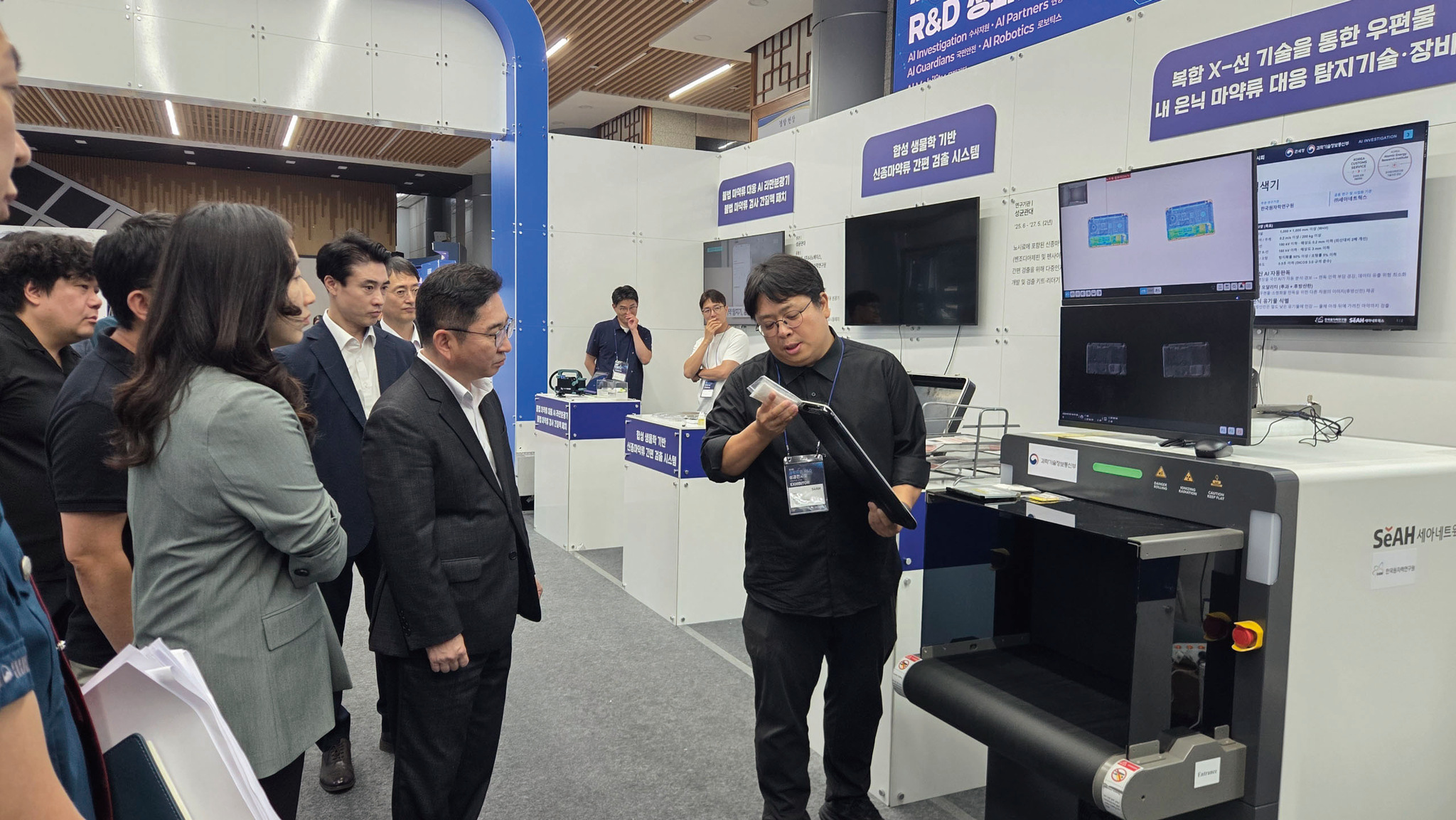
SeAH Networks participated in the 3rd Science and Technology for Public Safety R&D Exhibition, jointly hosted by the Ministry of Science and ICT and the National Police Agency on July 22. At the event, the company showcased its advanced science and technology capabilities and achievements in AI R&D.
The key technology showcased by SeAH Networks at the exhibition was an AI-powered dual-mode X-ray security screening solution for detecting drugs concealed in mail and other items. The solution combines transmission X-ray, which penetrates and examines the inside of materials such as metals, with backscatter X-ray, which specializes in identifying organic materials, enabling more precise material discrimination and drug detection through AI-powered automated image analysis.
This enables law enforcement agencies such as the Korea Customs Service and the National Police Agency to obtain additional information that was difficult to identify with conventional equipment, allowing for more accurate analysis and faster responses.
From 2021 to 2024, the Korea Customs Service implemented the Customized Technology Development Project for Customs Administration 1.0 with policy and budget support from the Ministry of Science and ICT. The dual-mode X-ray inspection system for small cargo, equipped with this solution, was developed as a result of SeAH Networks’ participation in the project and joint research with the Korea Atomic Energy Research Institute (KAERI) and the Korea Advanced Institute of Science and Technology (KAIST).
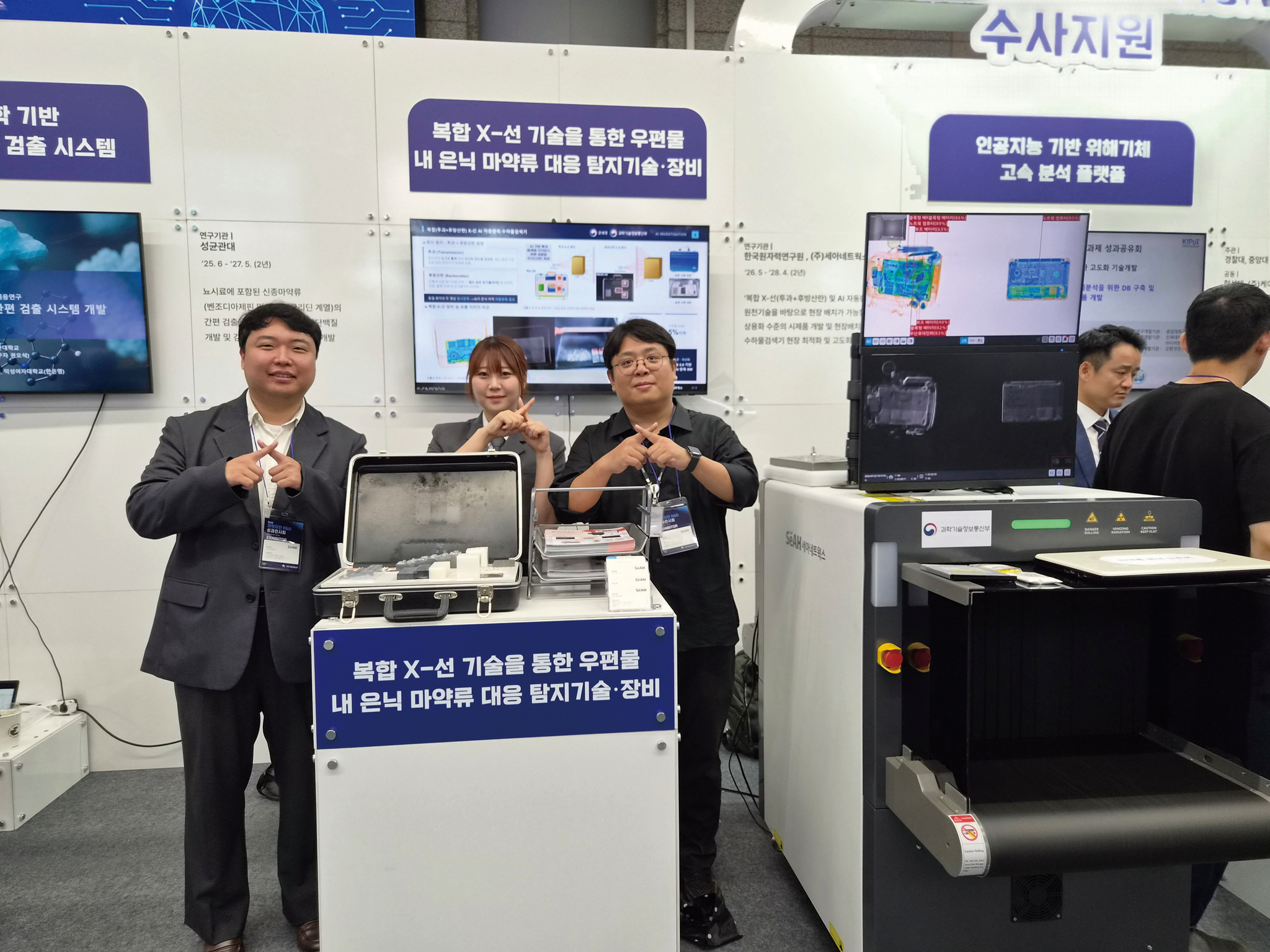
During the R&D process, SeAH Networks localized key components that had previously been entirely dependent on imports and built a database covering 50 types of target substances through the development of AI-powered automated image analysis technology. Based on this database, the company secured object detection capabilities for accurately identifying a range of items, demonstrating its technological capabilities.
Such R&D achievements have led to commercialization. In March 2026, SeAH Networks received a technology transfer from the Korea Atomic Energy Research Institute and began full-scale commercialization. In May this year, its commercialized equipment was selected for secondary detailed drug inspections and deployed at the East Seoul Central Post Office, where it is being used for actual drug detection operations and follow-up research.
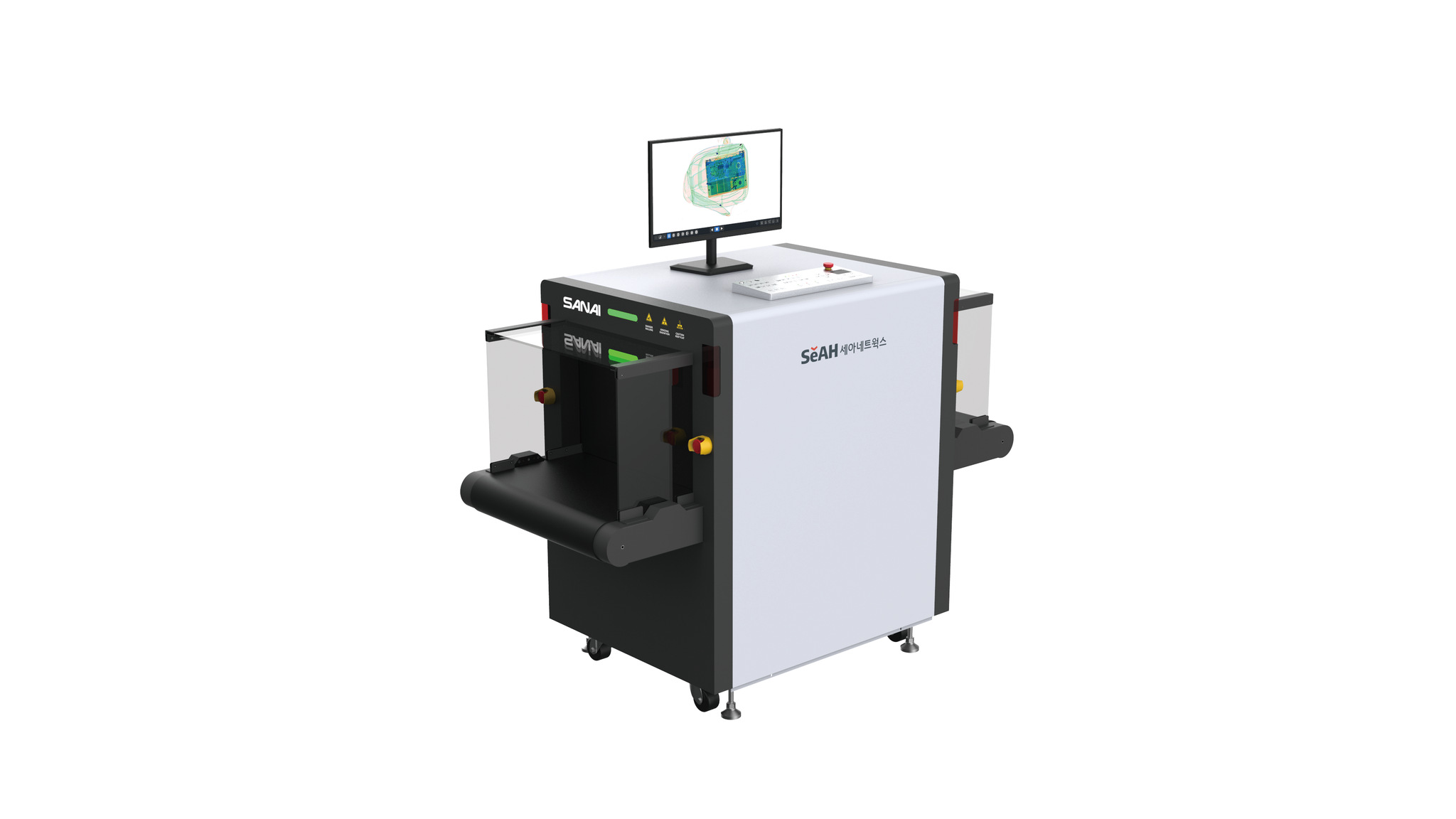
The models that are currently available in the market are the AI Small Cargo and Baggage Screening System (SANAI-TMX64S) and the AI Dual-Mode Small Cargo and Baggage Screening System (SANAI-CMX64SB). Going forward, SeAH Networks plans to expand its product lineup to include CT-based and large cargo screening systems for further development and commercialization.
Meanwhile, the localization of the aforementioned X-ray security screening solution was first conceptualized due to the issues identified in the field during the supply of foreign-made equipment. Through several years of supplying foreign-made container screening systems in cooperation with the Korea Customs Service, SeAH Networks identified challenges associated with reliance on overseas equipment, including delays in maintenance and management, high technology fees, and difficulties in communication. This led the company to pursue the supply of a homegrown X-ray security screening solution. Following installations at Pyeongtaek Port’s East Pier, Gwangyang Port, and the Integrated Inspection Facility at Incheon Port, the company completed the installation of the solution at Busan New Port this year. The locally developed solution is now applied to more than half of the container screening systems currently operating nationwide, with SeAH Networks responsible for their installation, maintenance, and management.
Building on these achievements, SeAH Networks plans to further advance and diversify its radiation application technologies. In particular, the company plans to expand its business from baggage and container security screening solutions incorporating AI-powered automated image analysis to non-destructive testing (NDT), leading the localization of security screening solutions, strengthening the competitiveness of domestic industries, and contributing to the establishment of a robust national safety network.
List