
webzine JUL/AUG 2026
SeAH’s Journey Toward a Sustainable Future: A Year in Review
SeAH has published its Sustainability Reports, sharing the progress in implementing its ESG management strategies. SeAH Holdings, SeAH Besteel Holdings, SeAH Steel Holdings, and SeAH Steel systematically outlined mid- to long-term strategies and achievements across all areas of environmental, social, and governance (ESG) management. In particular, this year’s reports present more advanced sustainability management frameworks, including ESG strategies that reflect each company’s business characteristics and future strategies.

SeAH Holdings Strengthens ESG Data Integration and Global Disclosure Framework
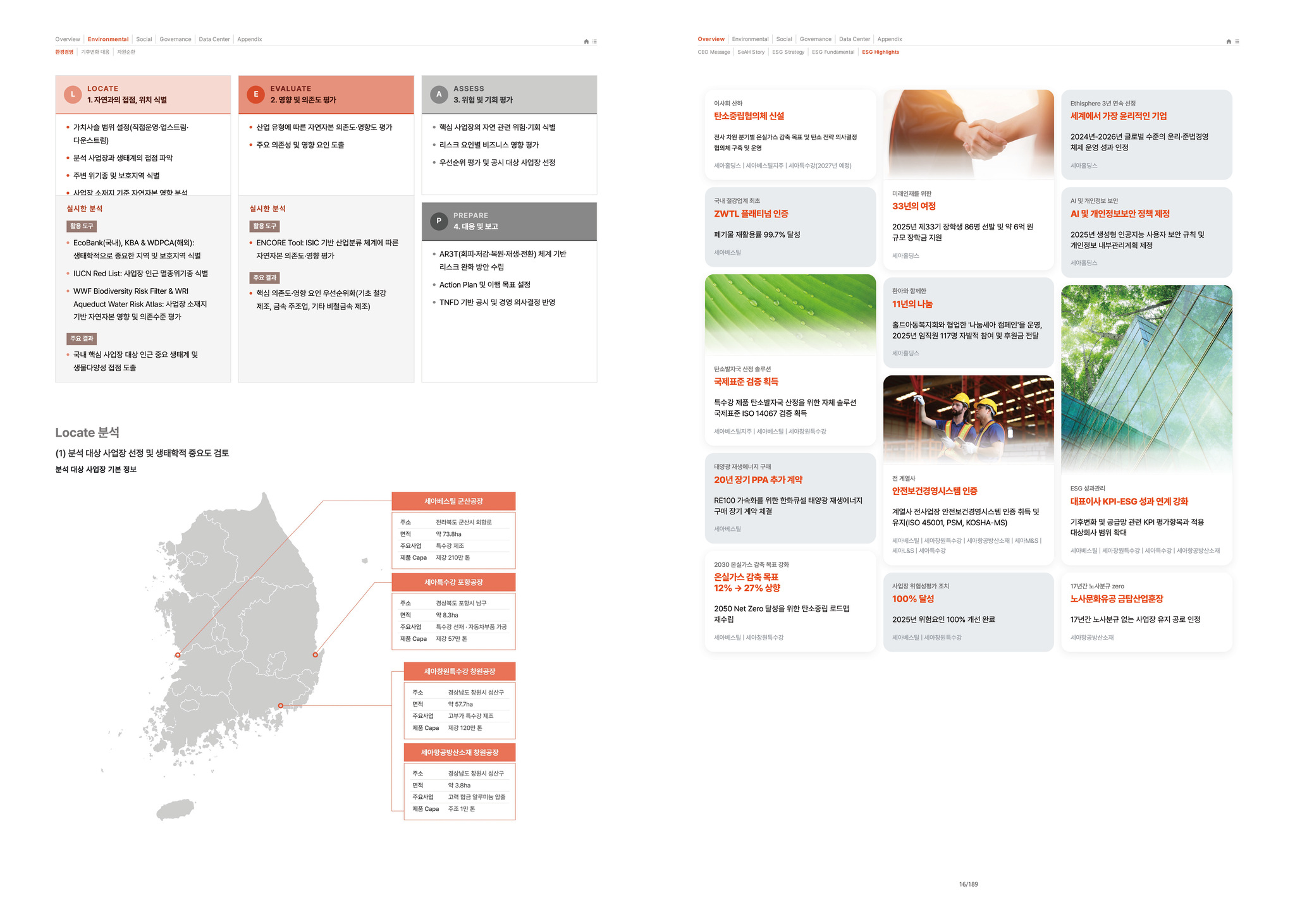
SeAH Holdings set out Net Zero targets for each affiliate in this year’s Sustainability Report. With the goal of achieving Net Zero by 2050, the company established a roadmap to reduce Scope 1 and 2 greenhouse gas emissions by 2030 and included it in the report.
In addition, the company further advanced its ESG data management system. An ESG hub (integrated data center) was established to centrally manage ESG data from the holding company and its affiliates, which enables key environmental, social, and governance indicators to be reviewed in one place. This provides a foundation for systematically comparing and analyzing data from the past three years.
The report also highlights SeAH Holdings’ board-centered responsible management and efforts to enhance shareholder value. The company expanded its communication with stakeholders by providing more comprehensive information on shareholder rights, including its shareholder dividend policy, shareholder participation, and value-up programs.
For the first time, the report includes information on biodiversity and natural capital. Applying the Locate-Evaluate-Assess-Prepare (LEAP) approach of the Taskforce on Nature-related Financial Disclosures (TNFD), SeAH Holdings analyzed the dependence of its domestic sites on ecosystems and their level of impact on the natural environment, while outlining the current status of natural capital management and its future response plans.
Another key feature of this year’s report is the enhanced reliability and usability of ESG information. Moving away from the previous PDF-centered approach, SeAH Holdings has fully transitioned to web-based disclosure and improved accessibility so that stakeholders can find the information they need more easily and conveniently.
In addition, SeAH Holdings standardized the criteria for quantitative indicators that had differed across affiliates and corrected calculation errors, which improved data consistency and reliability while further strengthening alignment with global disclosure standards. Moreover, the company also supplemented the Metrics and Targets section, which was partially omitted from last year’s report, to fully reflect the four main elements of the Taskforce on Climate-related Financial Disclosures (TCFD) recommendations: governance, strategy, risk management, and metrics and targets.
SeAH Besteel Holdings Strengthens ESG Execution Based on Five Key GREEN Strategies
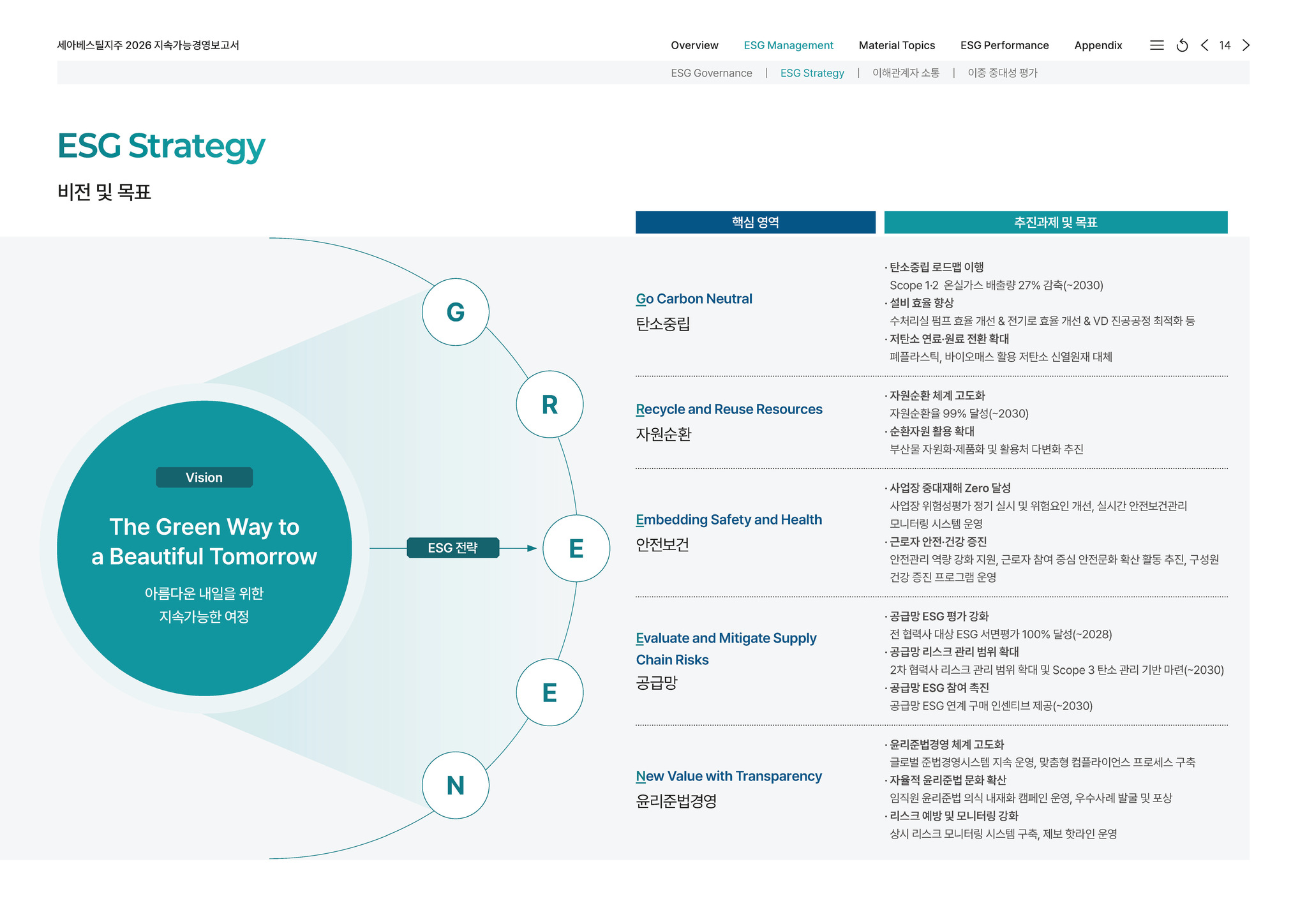
SeAH Besteel Holdings has set out more specific implementation targets centered on its five key GREEN strategies, its mid- to long-term ESG strategy.
In the area of carbon neutrality, SeAH Besteel Holdings significantly raised its 2030 greenhouse gas reduction target from 12% to 27% compared with 2018 levels. This is more than twice the previous target. It is a clear indication that reflects SeAH Besteel Holdings’ commitment to carbon neutrality. Beyond a mere declaration, SeAH Besteel Holdings plans to achieve Net Zero by 2050 through eco-friendly structural transformation and tangible results.
In the area of resource circulation, SeAH Besteel Holdings aims to achieve a 99 percent resource circulation rate across all affiliates by 2030. In supply chain management, the company plans to complete written ESG assessments of all suppliers by 2028 and expand the scope of ESG management to second-tier suppliers by 2030 to lay the foundation for Scope 3 carbon management. In terms of safety and health, the company has established a target to reduce its lost-time injury frequency rate (LTIFR). Through its corporate value enhancement plan (value-up), it has also set targets of achieving an ROE of at least 8 percent, a PBR of at least 0.7 times, and dividends equivalent to at least 30 percent of consolidated net income by 2027.
The report also highlights various changes aimed at strengthening the implementation of ESG management. First, SeAH Besteel Holdings introduced new climate change-related criteria or increased their weighting in evaluations of executives at major operating companies, which helped lay the groundwork for translating ESG management into tangible action.
Supply chain management has also been further developed. SeAH Besteel Holdings completed written ESG assessments of key suppliers and disclosed detailed results of supply chain due diligence and follow-up measures, including on-site inspections and improvement measures for high-risk suppliers.
The report also features an enhanced approach to climate change response. In addition to existing transition risks, it analyzes and presents the financial impacts of physical climate risks, including heat waves, typhoons, and heavy rain, on business sites under different scenarios.
The report also highlights SeAH Besteel’s achievement of becoming the first company in Korea’s steel industry to receive Platinum certification under the Zero Waste to Landfill (ZWTL) program, underscoring its ESG competitiveness in resource circulation.
SeAH Steel Holdings Expands ESG Value into Future Energy Markets
SeAH Steel Holdings’ Sustainability Report focuses on connecting ESG with its future growth strategies.
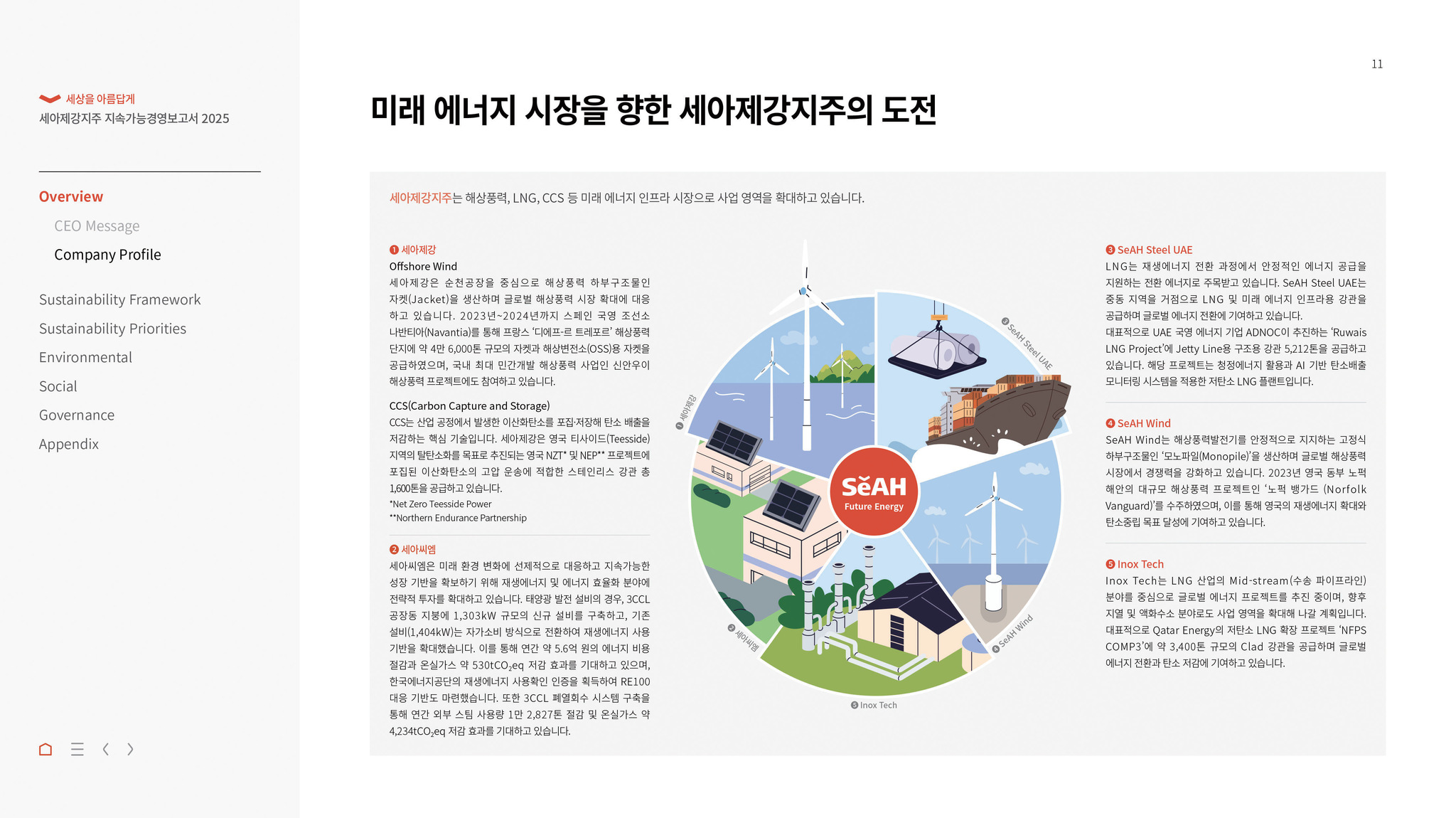
A key highlight of this year’s report is a special feature titled, SeAH Steel Holdings’ Challenge Toward Future Energy Markets. The report introduces the visions and strategies of its affiliates as they expand their businesses into future energy infrastructure markets, including offshore wind, LNG, and carbon capture and storage (CCS).
SeAH Steel Holdings also improved its ESG data collection system for overseas affiliates to enhance data consistency and established an initial climate change response framework that analyzes physical and transition risks across its domestic and overseas sites using scenarios from the Network for Greening the Financial System (NGFS) and climate projection data.
Through these efforts, SeAH Steel Holdings demonstrates its commitment to expanding the scope of ESG management overseas in line with its global business expansion, while further developing its climate change response framework.
SeAH Steel Advances Climate Risk Management and Human Rights Management Frameworks
SeAH Steel focused on strengthening its site-specific response to climate risks and its human rights management framework.
By applying the latest climate change scenarios, the Shared Socioeconomic Pathways (SSP), SeAH Steel enhanced its analysis of physical climate risks at each site and established new short- and mid- to long-term response roadmaps based on the findings.
In the area of human rights management, the company disclosed the results of its human rights impact assessment and presented improvement plans and response measures for key human rights risks identified through the assessment.
The report also features a special section titled, The Story of Energy Transition Connected by Steel Pipes. It highlights the role and competitiveness of steel pipe technologies as they expand beyond traditional energy industries into future energy infrastructure and presents SeAH Steel’s vision as it prepares for the era of energy transition.
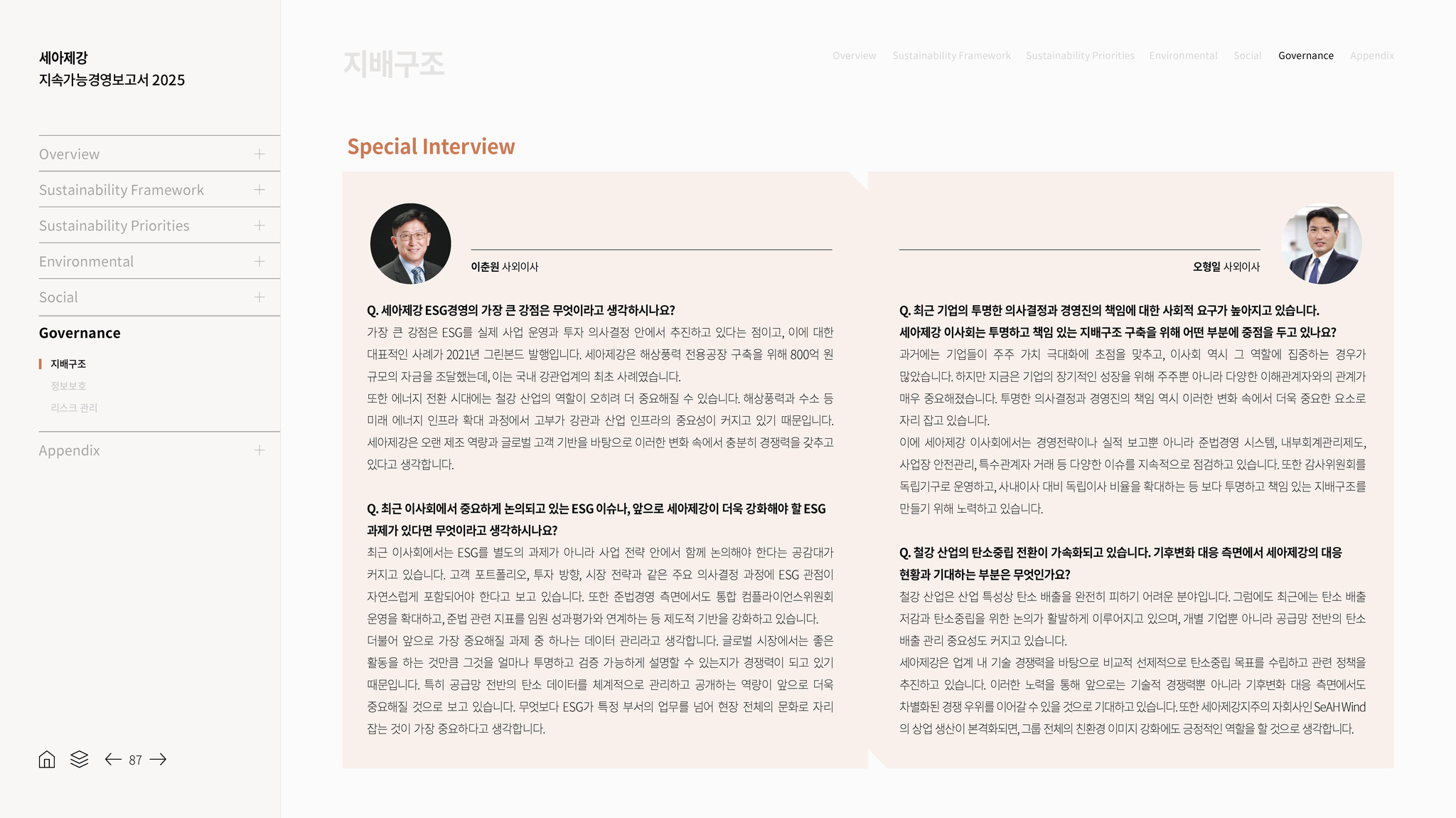
The report also includes special interviews with two Outside Directors, who shared their views on ESG management achievements, future challenges, and directions for sustainable corporate growth, conveying a message of responsible management.
Preparing for a Sustainable Future Through Transparent Disclosure
ESG disclosure has recently become a key criterion for assessing corporate sustainability. In addition to climate change response, supply chain management, human rights management, and responsible governance, the reliability of data and disclosure systems are also becoming important factors in evaluating corporate competitiveness.
This Sustainability Report demonstrates how SeAH is responding to these changes by connecting ESG with its future growth strategies.
SeAH will continue to make ESG management a core pillar of its corporate competitiveness, fulfilling its environmental and social responsibilities while building a sustainable future based on trust with its stakeholders.
List