
insight 2026-09-10
Hydrogen Storage Alloys: SeAH Besteel Opens the Era of Next-Generation Hydrogen Energy- By Junyong Jung, Head of the R&D Center at SeAH Besteel
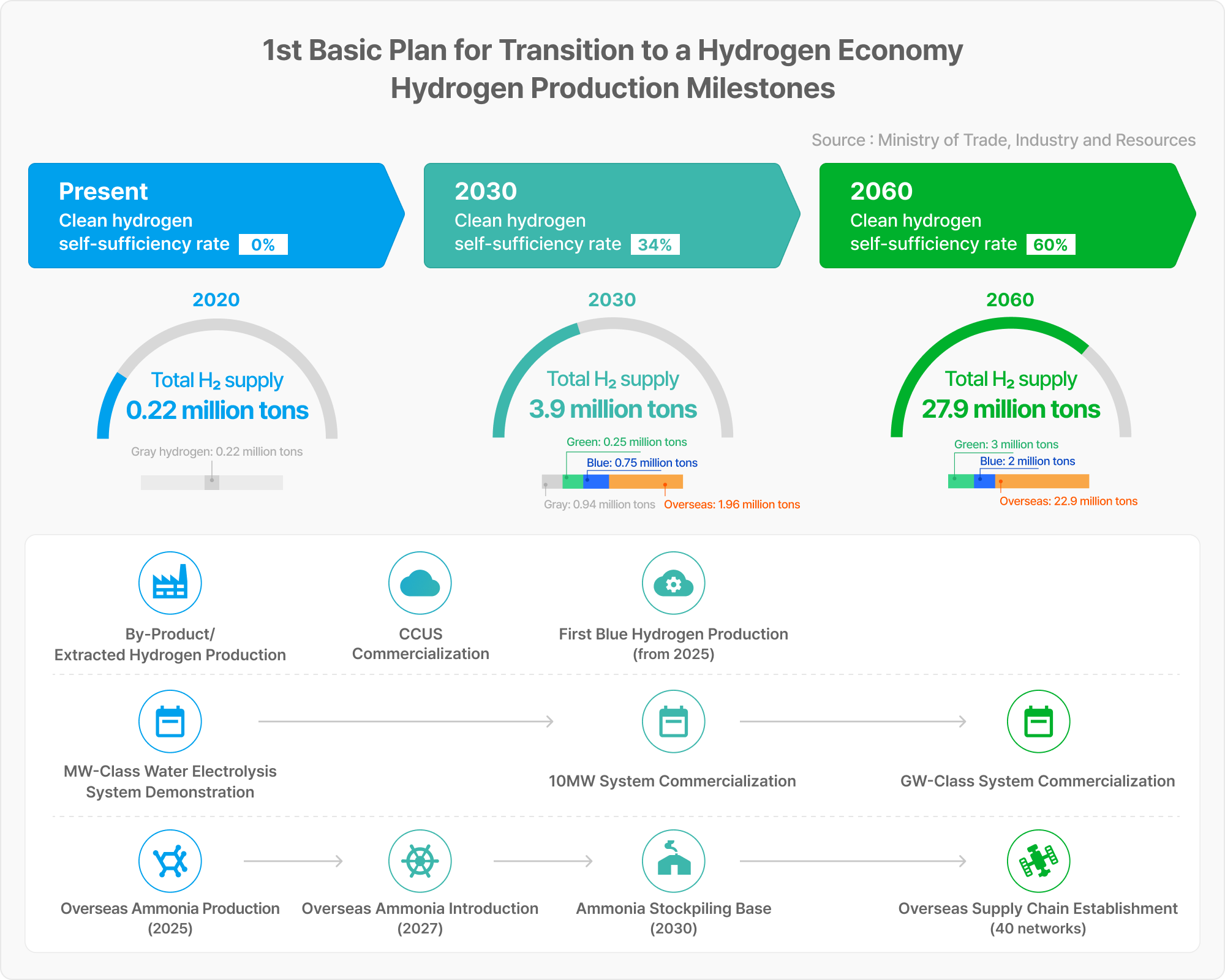
As the drive toward 2050 Carbon Neutrality accelerates, the world faces the monumental task of overhauling its energy systems. In response, the Korean government has positioned hydrogen as a central pillar of its national energy strategy. Through its 1st Basic Plan for Transition to a Hydrogen Economy (2023–2042), the government aims to establish a capacity to supply 5 million tons of hydrogen annually by 2035. Bolstered by initiatives like the clean hydrogen certification system, the Hydrogen Energy Portfolio Standard (HPS), and the development of dedicated hydrogen cities and industrial complexes, the hydrogen sector is rapidly evolving into a core national infrastructure that spans energy, industry, and transportation.
Why Hydrogen Storage Alloy Technology is Essential
Beyond Gas and Liquid: The Shift to Solid Hydrogen
The greatest obstacle to expanding the hydrogen economy is storage. Gaseous hydrogen must be compressed and stored at ultra-high pressures of approximately 700 to 900 bar. This process entails high equipment costs, leakage risks and material fatigue. Liquid hydrogen presents its own set of challenges. Because it requires maintaining a cryogenic temperature of minus 253 degrees Celsius, complex insulation systems and inevitable energy losses are inherently difficult to avoid.
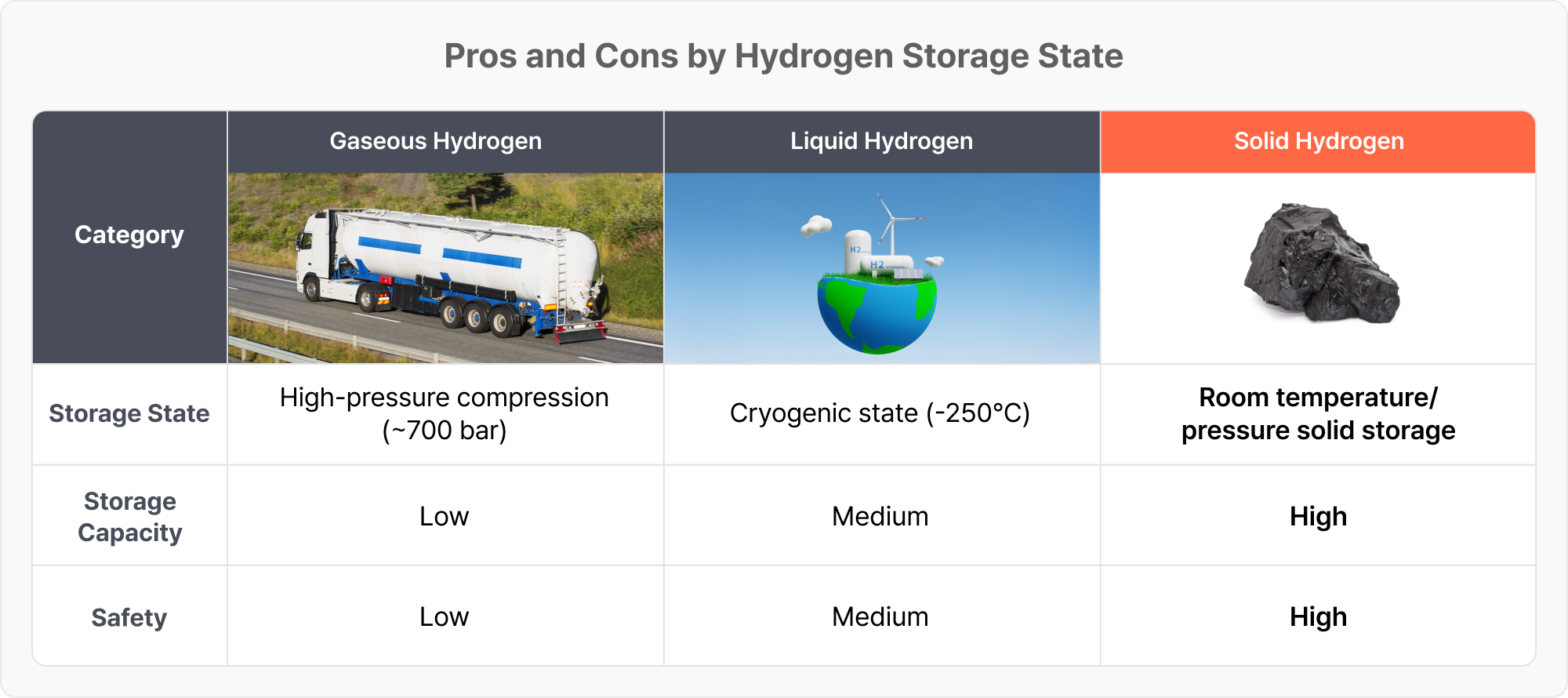
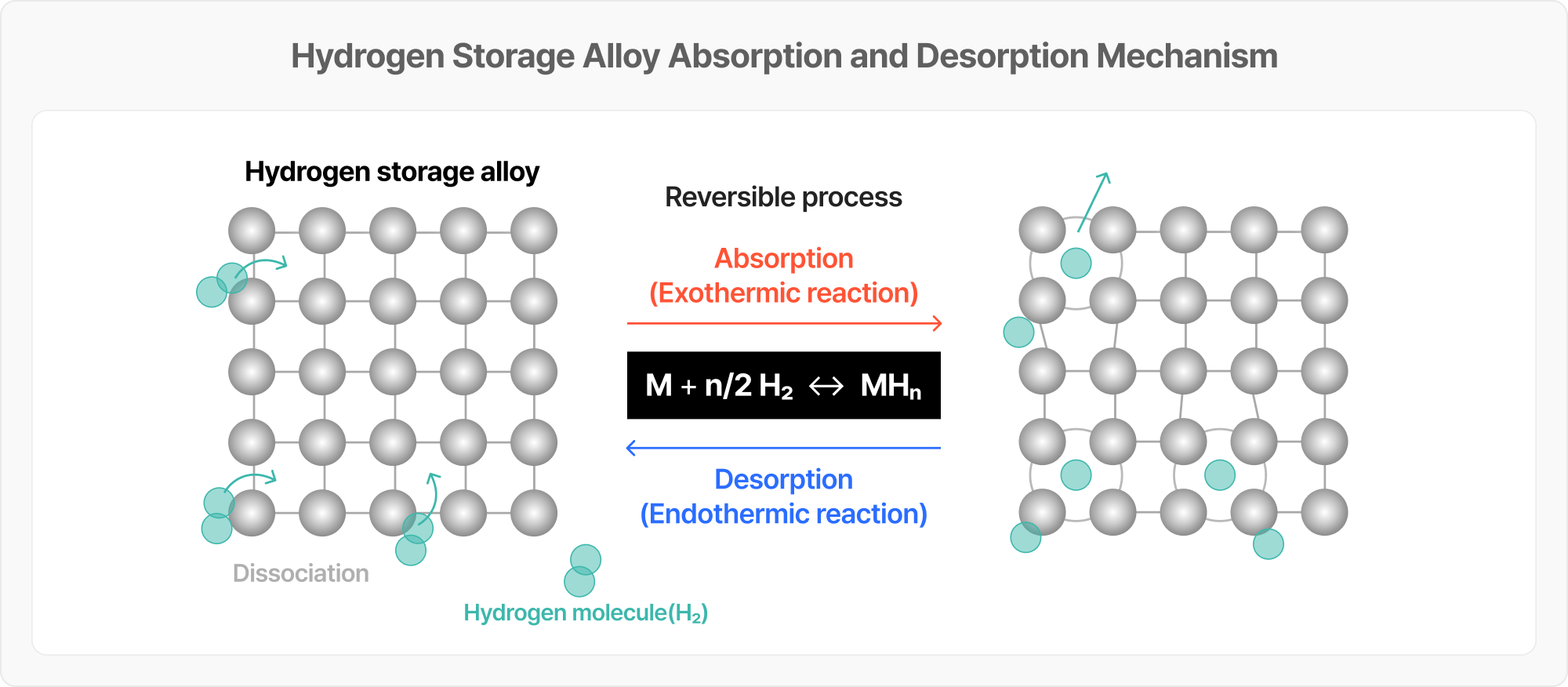
Hydrogen storage alloy (HSA) technology has emerged as a promising alternative to overcome these limitations. HSA works by absorbing hydrogen into a metal lattice under low-pressure conditions and releasing it in response to temperature changes. Since it can safely and repeatedly store and release hydrogen without the need for ultra-high pressures or cryogenic environments, it is gaining significant attention as a definitive solution for next-generation hydrogen storage.
HSA-Based Compression System to Replace Mechanical Compressors
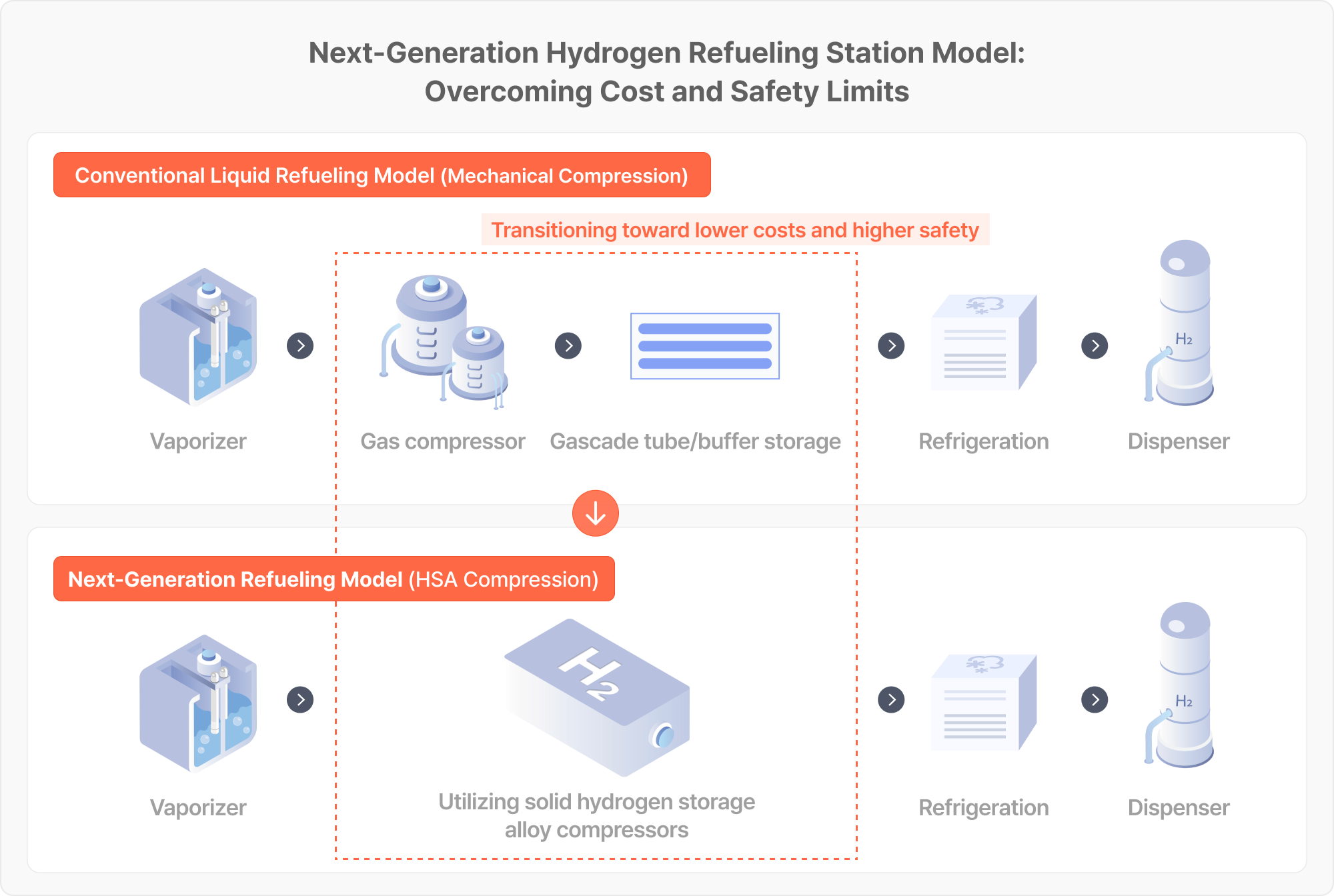
Recognizing the potential of hydrogen storage alloys, SeAH Besteel is advancing a demonstration project for a non-mechanical hydrogen refueling station. Currently, most hydrogen stations use piston compressors to pressurize hydrogen up to roughly 900 bar. However, these systems are structurally complex, generate significant noise and vibration and incur high maintenance costs—issues that have been repeatedly cited as major roadblocks to expanding hydrogen infrastructure.
HSA-Based Multi-Stage Thermochemical Compression Process
To address these challenges, SeAH Besteel is developing a multi-stage thermochemical reaction system that compresses hydrogen sequentially using the pressure differential between the alloy's absorption and desorption phases. The system operates through the following process: In the first stage, the alloy absorbs hydrogen at minus 40 degrees Celsius and 10 bar. In the second stage, a temperature increase induces hydrogen desorption, driving up the pressure. Through this multi-stage reaction, the final phase releases high-pressure hydrogen at up to 900 bar. This method can entirely replace mechanical compressors by relying solely on the alloy's thermochemical reactions to compress and store hydrogen. As a result, it achieves noise-free, low-maintenance and highly safe operations, aligning perfectly with government policy directions for standardizing and upgrading hydrogen refueling stations. SeAH Besteel’s non-mechanical compression technology is being hailed as a groundbreaking innovation that will contribute to significant cost reductions and enhanced safety in future hydrogen infrastructure.
SeAH Besteel’s HSA Design Expertise and Future Applications
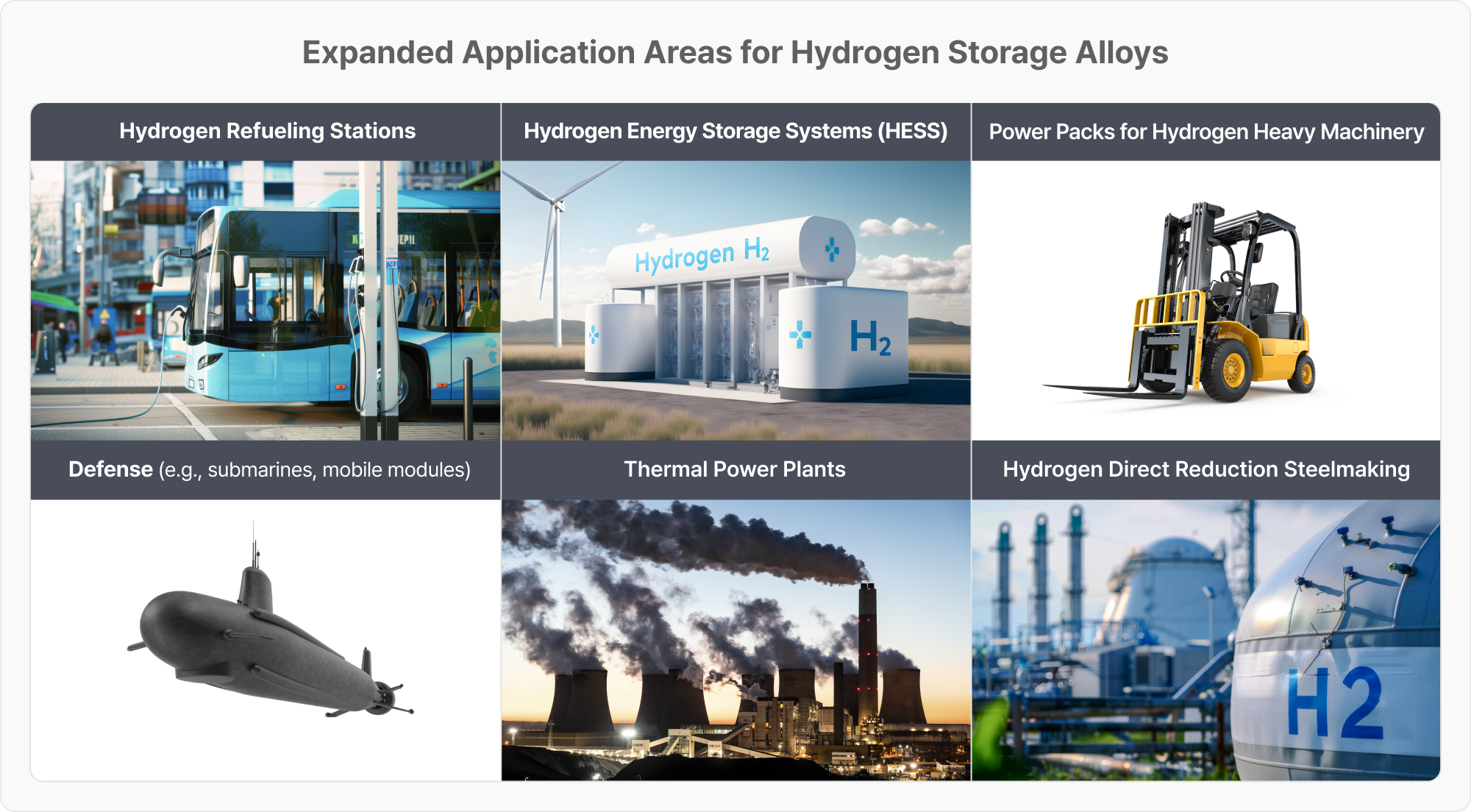
SeAH Besteel has already secured the design blueprints for first- and second-stage compression alloys. Moving beyond the laboratory phase, the company is now developing pilot-scale modules and conducting demonstration projects. The alloy currently under development is based on a Ti-Zr-Cr-Mn-Fe (AB₂-type) structure. It features rapid hydrogen absorption rates even at low temperatures, maintains a stable equilibrium pressure during high-pressure release and guarantees structural stability and a long lifespan despite repeated use. These performance characteristics make the technology highly applicable across a wide range of fields, including small mobility devices, drones, hydrogen power packs and defense power systems. Looking ahead, SeAH Besteel plans to enter the commercialization phase by expanding these applications into multi-stage compression modules for refueling stations and industrial solid hydrogen storage systems.
The Vision for a Solid Hydrogen Infrastructure
Beyond a mere breakthrough in materials, hydrogen storage alloy technology serves as a core driver of full-cycle infrastructure innovation, spanning the production, storage, transportation and utilization of hydrogen.
Through the commercialization of its 900-bar high-pressure hydrogen release system, the advancement of alloy reaction control technologies and active participation in national demonstration projects tied to government hydrogen policies, SeAH Besteel will further solidify the foundation of Korea's hydrogen economy. Furthermore, by driving the expansion of the solid hydrogen infrastructure industry, the company aims to grow into a leading materials company in the clean hydrogen era and leap forward as a premier energy solution provider contributing to national carbon neutrality. The safest and most efficient way to handle hydrogen is by storing it within metal.
Far from being just about massive facilities, the story of solid hydrogen infrastructure is a profoundly human one, built for people, cities and the next generation. Just as steel quietly fulfills its role out of sight, SeAH Besteel’s solid hydrogen technology will serve as the invisible yet unyielding new foundation that sustains our everyday lives.
*Copyright belongs to SeAH Group. Unauthorized reproduction and redistribution are prohibited.
*This article was adapted from a contribution by Junyong Jung, Head of the R&D Center at SeAH Besteel.
List