
people 2026-10-26
Spearheading the Nuclear Energy Business
With the High-Value KN-18- By the Nuclear Energy Business Division at SeAH Besteel
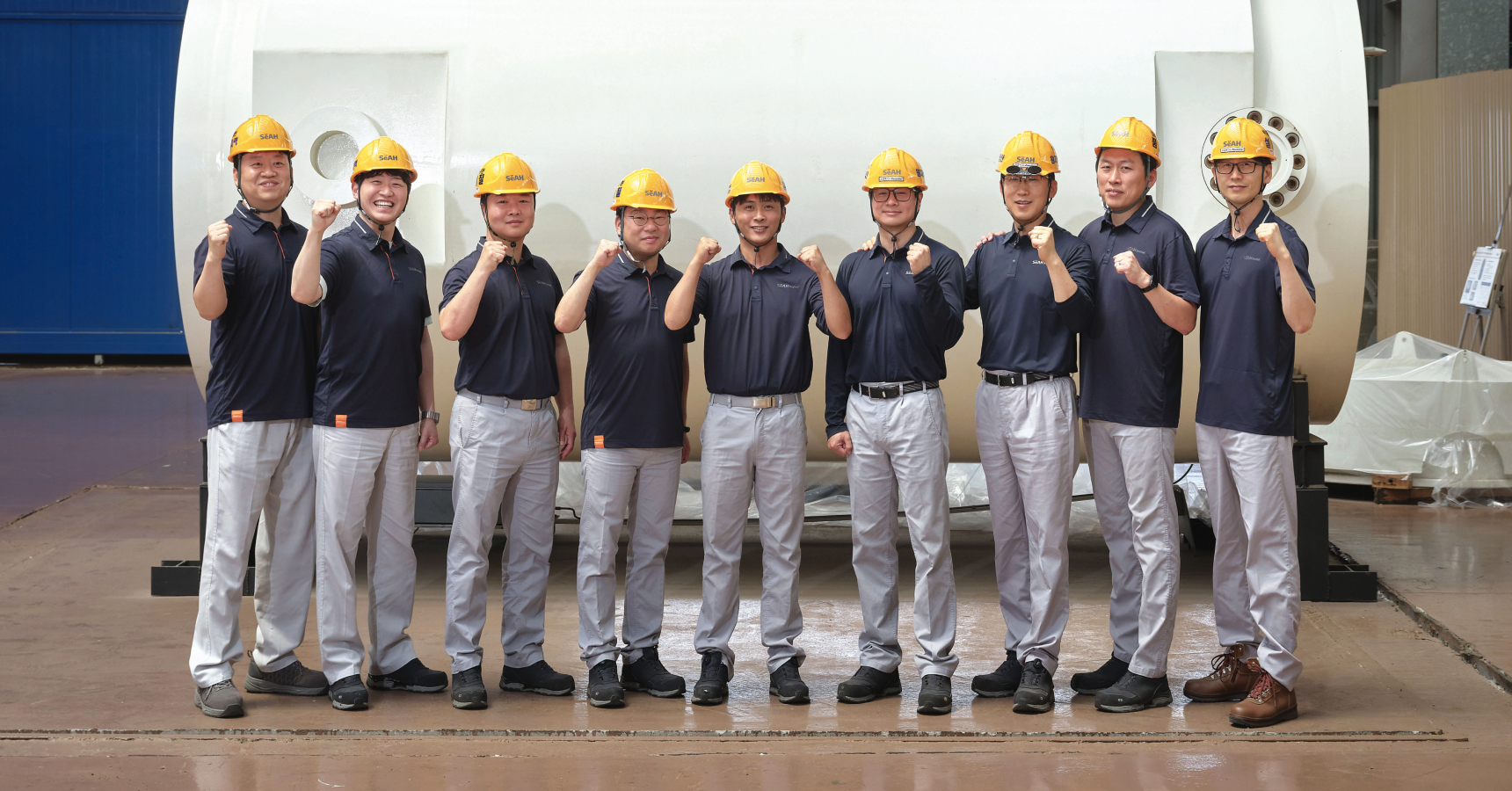
A company possessing all the tools to overcome those barriers, SeAH Besteel is building a solid track record as a relative new-comer to the nuclear energy market. Its technological prowess and supply capabilities were recently on display with the urgent manufacturing and delivery of a cask—a special container that safely transports spent nuclear fuel to wet storage facilities—for Korea Hydro & Nuclear Power (KHNP).
This post explores that journey, from winning the contract all the way through to the successful delivery.
SeAH Besteel Answers KHNP’s SOS
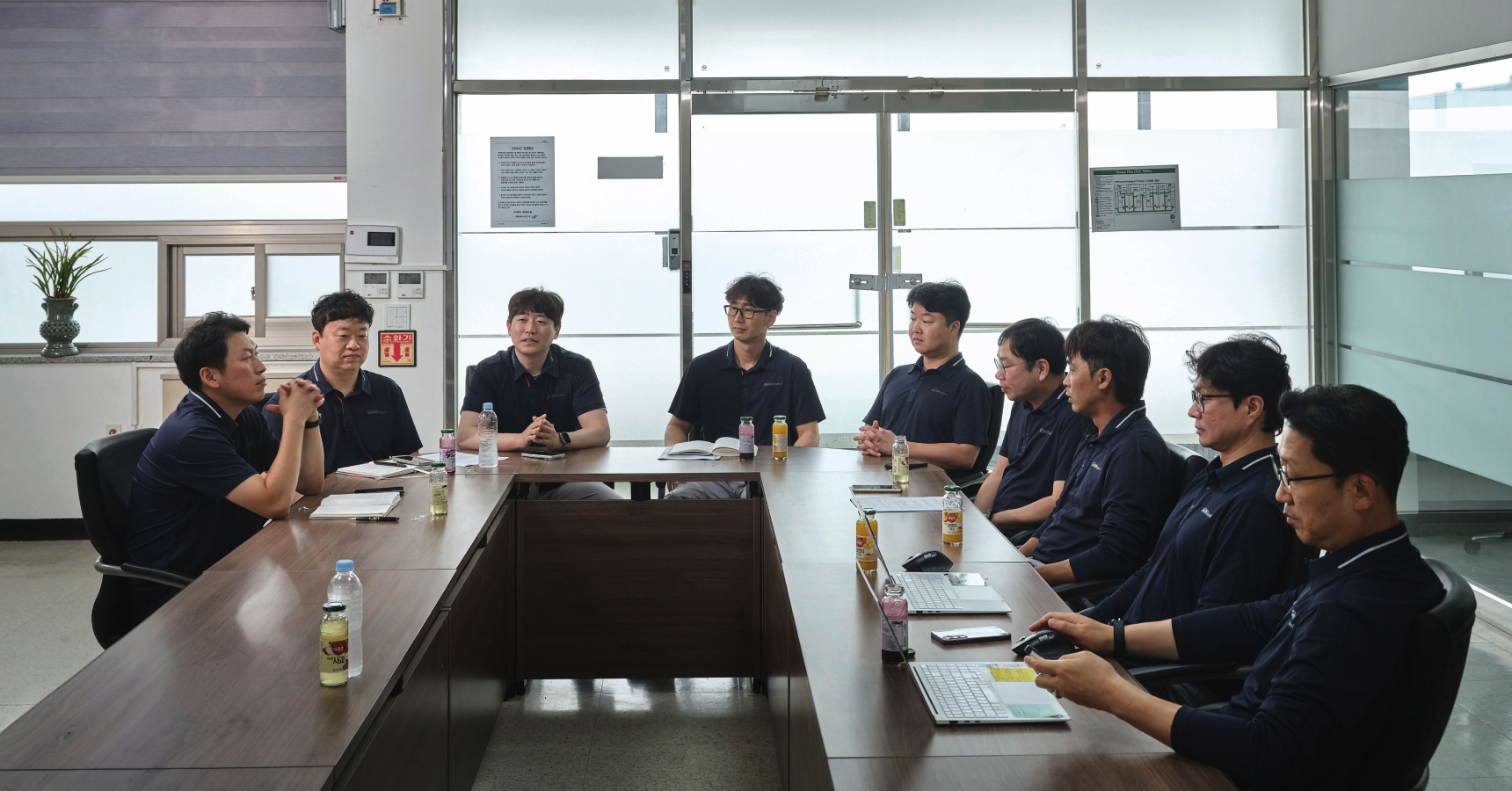
Jongsul Park recalls the urgency of the moment: “There was an unexpected problem with KHNP’s existing KN-18 casks, which was causing major disruptions in the transportation of spent nuclear fuel. If the storage pools became saturated and fuel replacement became impossible, plant operations would have to be suspended—it was a true state of emergency for the national power supply. KHNP absolutely needed a highly reliable partner to help overcome this crisis.”
Ultimately, SeAH Besteel’s Nuclear Energy Business Division was selected to take on this nationally-impactful challenge. The company had already proved itself with the production of the TN-40HT cask for Orano, meeting all of the U.S.-based nuclear fuel cycle provider’s strict verification criteria with its highly advanced cask manufacturing setup. Requiring a breakthrough solution, KHNP turned to SeAH Besteel for support—at the exact time the steel company was looking to expand into new businesses.
In June 2026, after the completion of this important contract, SeAH Besteel became the first organization in Korea to acquire dry supplier registration for KHNP’s dry storage project.
KN-18 Cask: Flawless Safety Beyond Global Standards
Crucially, SeAH Besteel’s KN-18 meets all relevant global safety standards, including the Nuclear Safety and Security Commission's regulations, the International Atomic Energy Agency’s (IAEA) SSR-6, and the U.S. Nuclear Regulatory Commission’s (NRC) 10 CFR Part 71. Beyond its verified structural integrity and radiation shielding capabilities, the cask delivers exceptional thermal management and absolute criticality control, highlighting the completeness of SeAH Besteel's differentiated technology and evolved cask design.
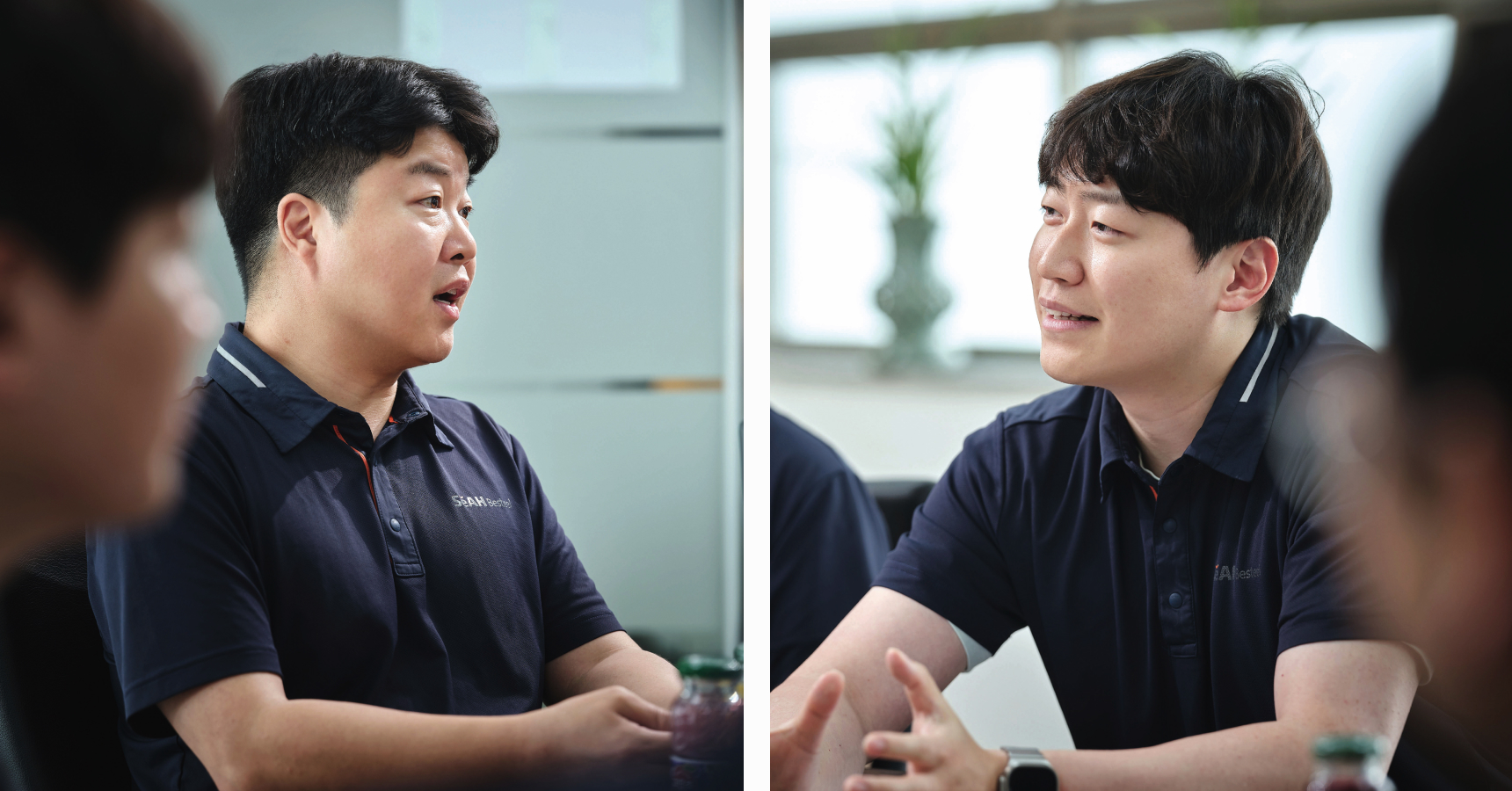
Byungseok Kim and Jaehun Jung recalled, "Given the nature of the nuclear energy business, where safety is the top priority, navigating the licensing phase on such a condensed timeline was extremely challenging."
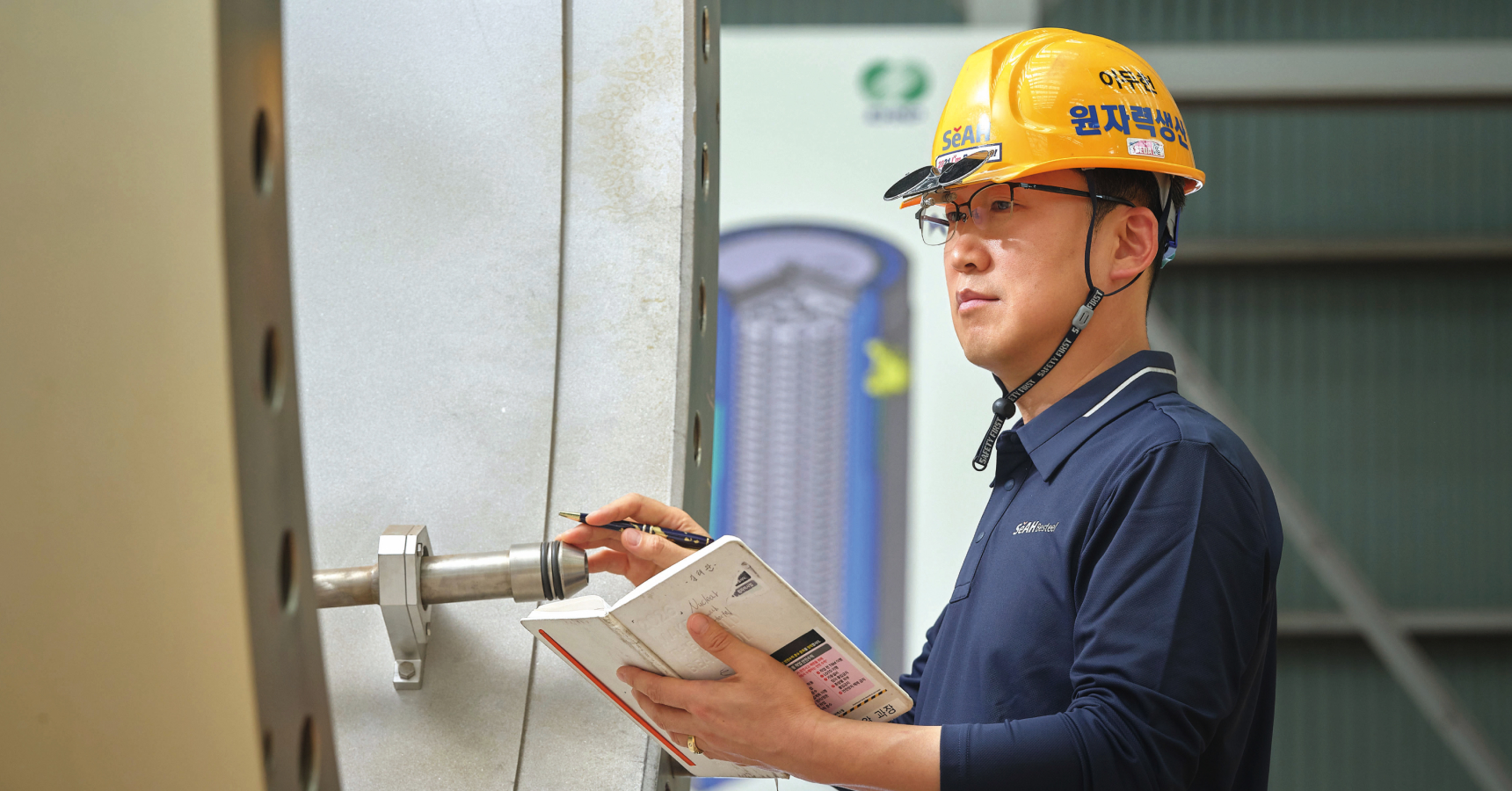
Initially, the technical specifications stipulated traditional radiographic testing (RT) for the 210-millimeter-thick welds. However, radiation backscatter caused by the thickness inevitably led to a failure verdict. Aiming to introduce phased array ultrasonic testing (PAUT), the latest non-destructive testing (NDT) method, the team meticulously analyzed alternative requirements, manufactured an identical mock-up of the actual cask, and began verification tests.
Although changing code requirements is exceedingly difficult in the nuclear sector, the team chose a straightforward approach: they directly presented the concrete data and mock-up materials to the relevant nuclear safety authorities. The move paid off and, following a successful demonstration showing that PAUT can detect 100 percent of weld defects and even perform 3D quantitative analysis, final approval was granted.
The demanding nuclear procurement system was another hurdle that had to be overcome.
“It was a truly arduous experience, but paradoxically, it was also the best possible education into the complexities of the nuclear procurement framework,” noted Wonil Ha.
The team swiftly identified and placed orders with suppliers equipped with nuclear quality assurance systems (such as ASME and KEPIC). They also visited the suppliers in person when materials needed to be urgently deployed to the site in an effort to optimize process management. United by a shared goal, the team worked tirelessly until every single task was completed.
One Team in Pursuit of a Single Goal
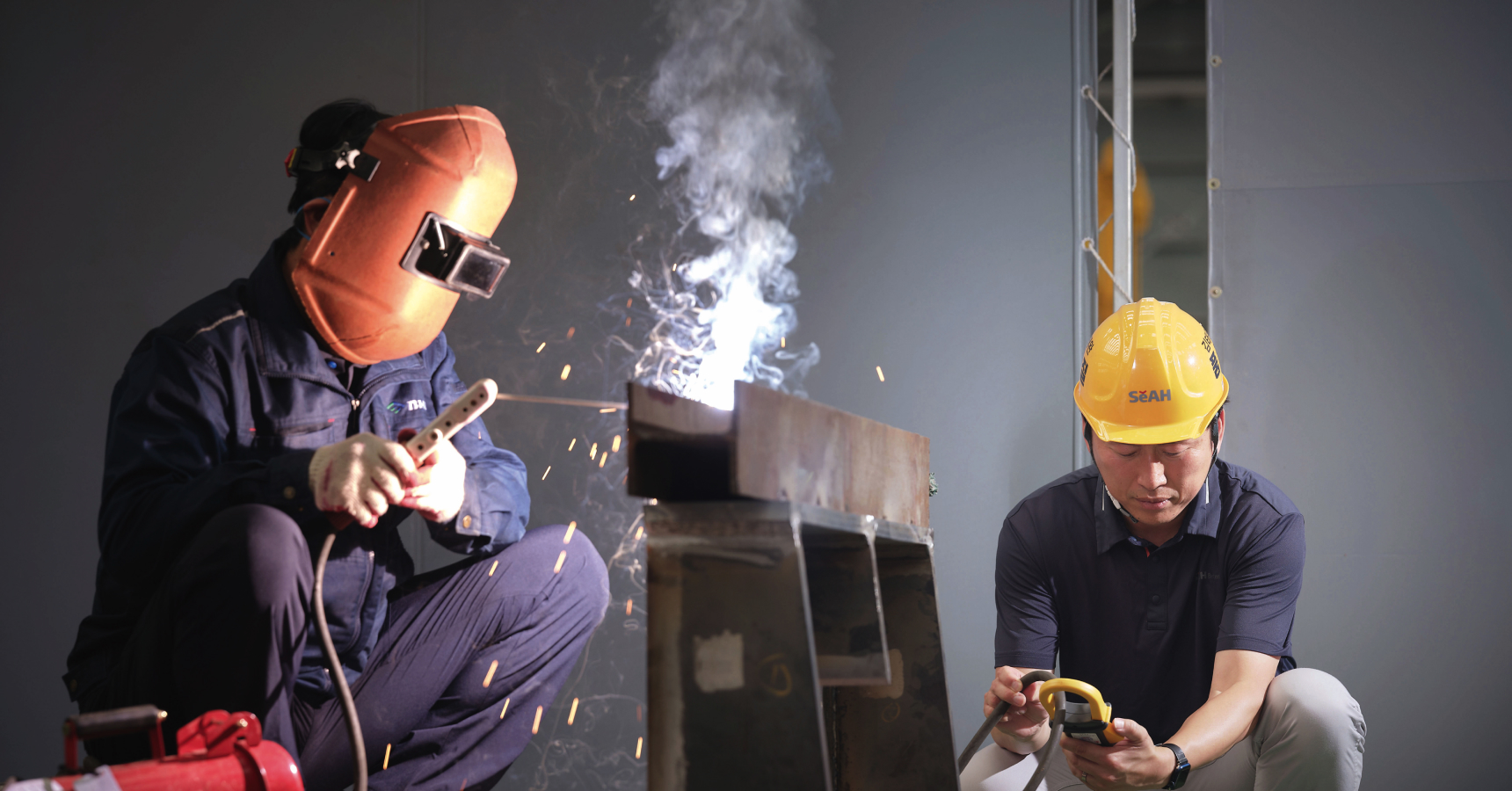
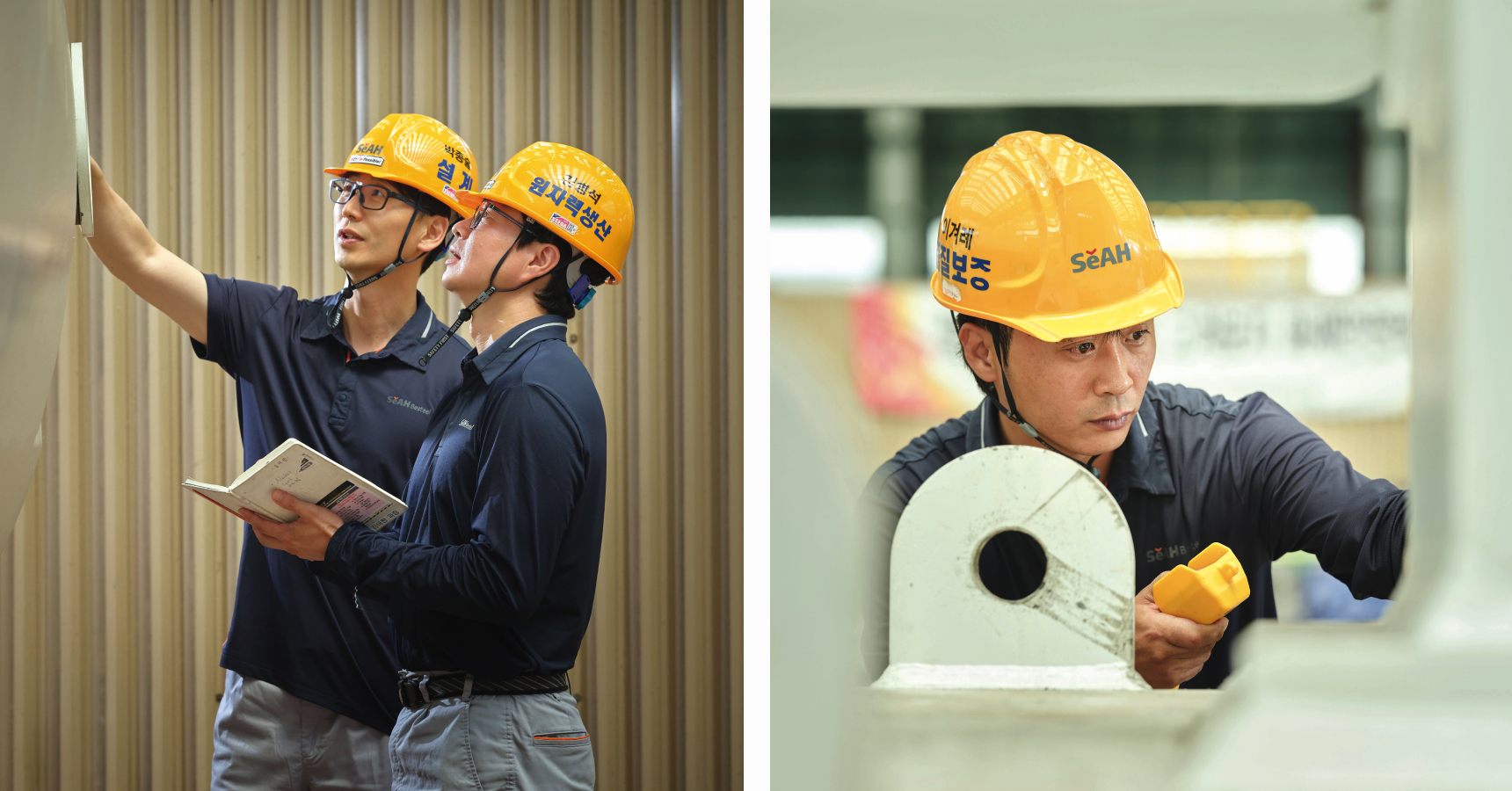
In this way, the SeAH Besteel team created a synergy of top-tier quality and trust simply because each member properly executed the set procedures assigned to their respective roles. Rather than relying on the dedication of a specific department to get the job done, every team voluntarily stepped up, demonstrating a company-wide commitment to achieving the interrelated goals of zero defects and precision delivery execution. Kyuryui Lee shared, “Through this process, I gained a strong conviction that if we unite based on trust, there is no task we cannot accomplish.”
Following its successful entry into the back-end nuclear fuel cycle market, and the forging of a strategic partnership with domestic power generator KHNP, SeAH Besteel is continuing to build momentum. The company is determined to become the leader of the domestic back-end market, which is expected to see significant growth in the coming years.
Minsoo Jo explained, “Our Nuclear Energy Business Division is focusing on two core tasks. The first, and most important, is to win bids in the domestic spent nuclear fuel dry storage project, and the second is to enter the small modular reactor (SMR) business, which is one of the fastest-growing segments in the global nuclear industry."
The dry storage project is a massive undertaking that requires the supply of a huge number of casks. To participate in the bidding for the main project, which is just around the corner (2027), SeAH Besteel is proactively preparing for a monumental overhaul of its mass-production system. In addition to strategic investments in facilities, the company is scaling its personnel training programs to achieve full readiness. Having proven its technological prowess and execution capabilities through the KN-18 cask delivery, and via the completion of KHNP supplier registration, SeAH Besteel is poised to take the next step and cement itself as a leading player in the back-end nuclear fuel cycle market.
“It was an emergency situation where licensing approval was delayed by about five months,” said Dooheon Lee, who spearheaded the team. “But all members worked together to tackle the challenges we faced head-on, and produced valuable results. I believe this experience will serve as a solid foundation for our future businesses and continuing success.”
There is a saying that wisdom grows only through experience. By choosing the right path over shortcuts in every instance, SeAH Besteel’s Nuclear Energy Business Division was able to overcome existing limitations and fight through considerable difficulties to help KHNP avert a national power crisis.
List