
insight 2026-07-03
What Makes SMRs Different?Understanding Next-Generation Nuclear Technology
The global nuclear industry has its eyes fixed on a revolutionary technology: the small modular reactor (SMR). SMRs are rapidly emerging as a realistic, carbon-free energy solution that addresses the environmental and economic limitations of conventional large-scale nuclear plants. Today, the push for technological development and commercialization is actively accelerating, championed by leading nations including the U.S., the U.K., Canada, and Korea.
The Concept of SMRs and Comparisons With Conventional Large-Scale Nuclear Plants
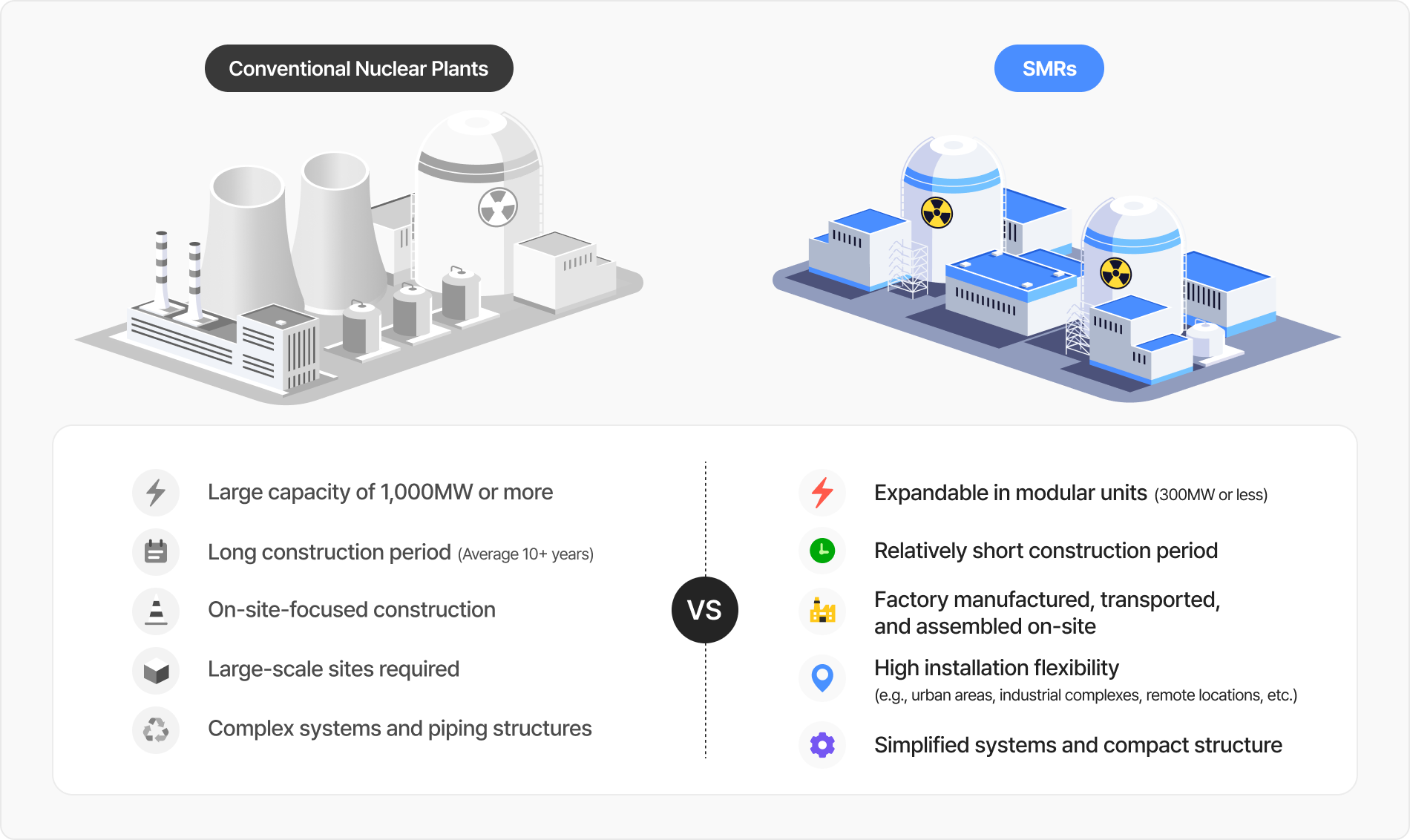
Definition and Concept of SMRs
SMRs represent a leap forward in next-generation nuclear technology. By the International Atomic Energy Agency (IAEA) definition, these are reactors with an electrical capacity of 300MW or less. While they harness the same proven nuclear fission process as conventional large-scale plants, their compact design unlocks a new level of flexibility in power generation. Driven by an urgent global mandate for carbon neutrality, robust energy security, and grid stability, SMRs are rapidly taking center stage as a definitive energy solution for the future.
Structural Differences Between SMRs and Conventional Large-Scale Nuclear Plants
The most critical distinction between SMRs and conventional nuclear plants lies in how they are built. Large-scale facilities dictate that core infrastructure, such as the reactor, steam generator, and cooling systems, be custom-built directly on the project site. Consequently, these mega-projects are inevitably tied to massive geographic footprints, protracted construction schedules, and immense initial investments.
By contrast, SMRs rely on a miniaturized, modular architecture. Critical components are prefabricated in factory environments, transported to the site, and then assembled. This modularity unlocks unparalleled scalability, allowing operators to flexibly expand generation capacity by adding modules in step with rising power demands.
Furthermore, many SMRs feature an integral design that consolidates the reactor, steam generator, and cooling system within a single vessel. By fusing these major components into one cohesive unit, this streamlined architecture drastically minimizes facility complexity while exponentially enhancing safety.
Background of the Downsizing and Modularization Approach
SMRs emerged to overcome the economic and operational limitations of conventional large-scale nuclear plants. While traditional facilities excel at generating massive baseload power, their strict reliance on sprawling national grids makes them highly impractical for remote regions or localized industrial hubs with smaller energy requirements..
Recently, the global energy landscape has been rapidly diversifying, driven by the expansion of AI infrastructure and data centers, along with advanced manufacturing complexes. In this shifting paradigm, SMRs—capable of delivering flexible, safe, and carbon-neutral power—are gaining immense traction as a definitive alternative for the future energy market.
Inside an SMR: How Small Modular Reactors Operate
Power Generation Structure of SMRs Using Nuclear Fission
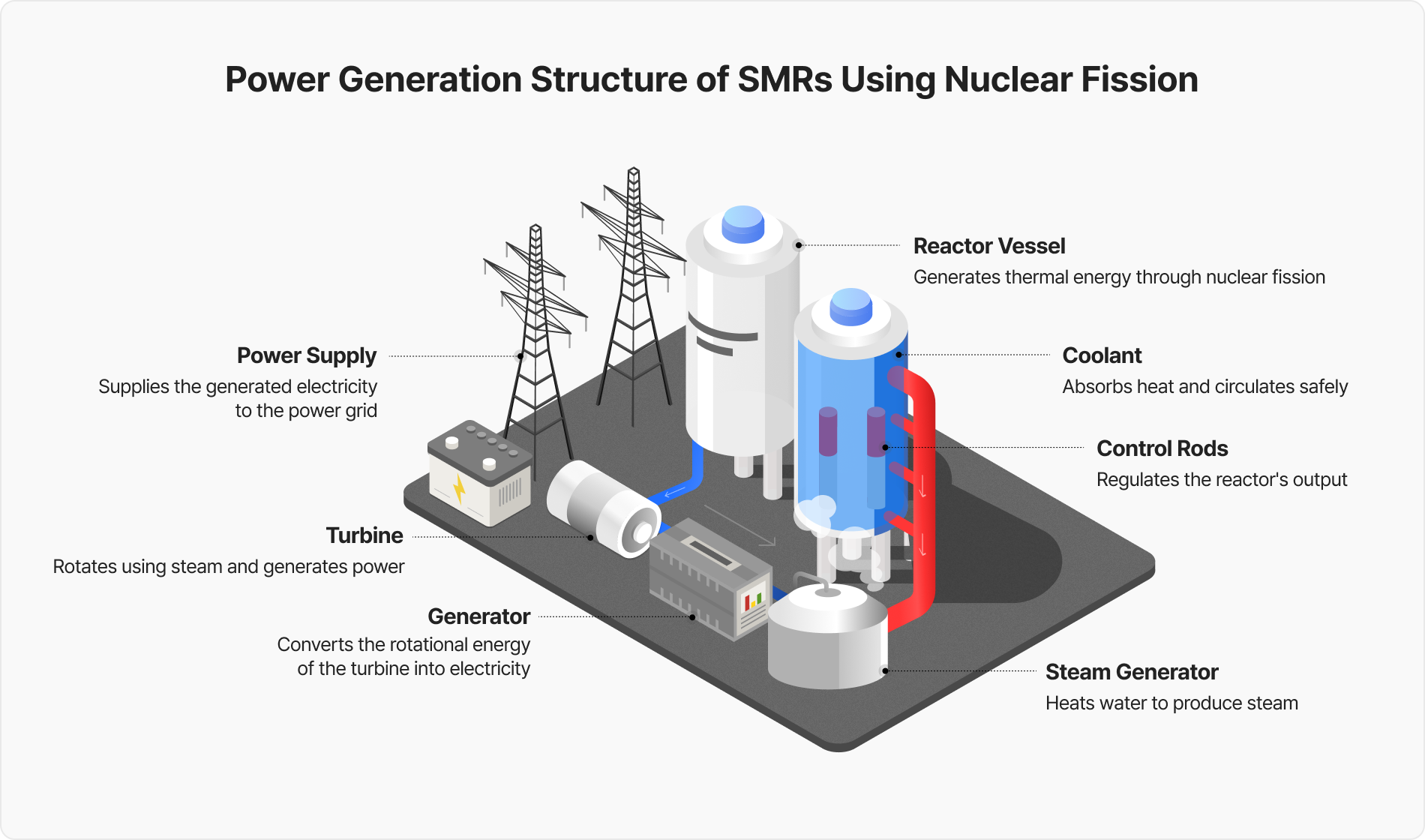
Fundamentally, the underlying mechanics of an SMR are identical to those of conventional nuclear facilities. The process begins inside the reactor, where nuclear fission generates massive amounts of thermal energy. This heat boils water into high-pressure steam that rapidly spins a turbine, driving a generator to ultimately produce electricity.
Modular Design Enabling Factory Manufacturing and On-Site Assembly
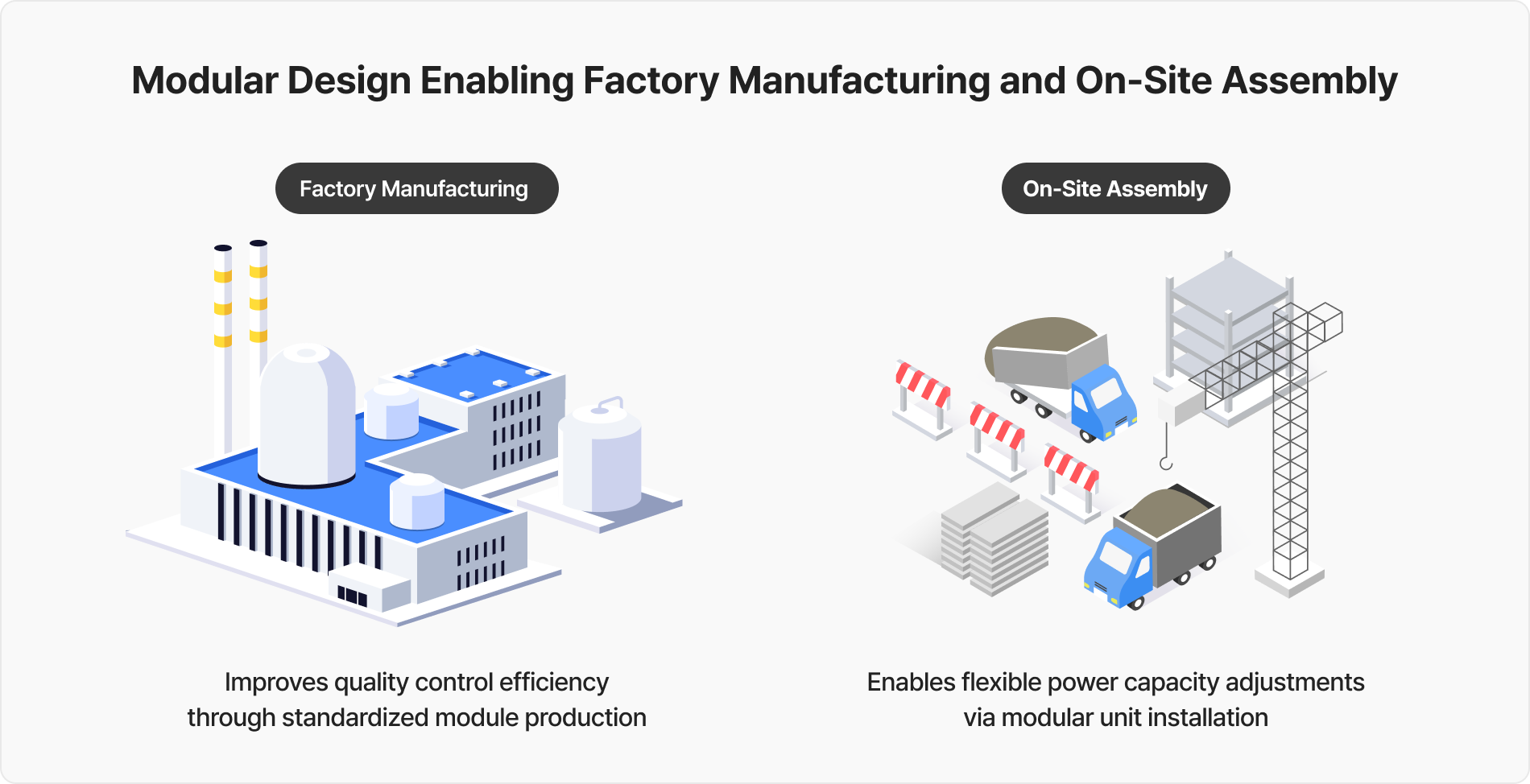
The core competitiveness of SMRs is anchored in their modular design and deployment strategy. With the reactor and related equipment prefabricated as modules in controlled factory settings, the on-site phase becomes a matter of streamlined assembly. By subjecting every component to rigorous, standardized manufacturing processes, this method ensures impeccable quality control and unparalleled product reliability. It also provides economic benefits by drastically slashing construction timelines, driving down financing costs, and significantly accelerating the return on investment.
Cooling System Structure Lowering Accident Risks
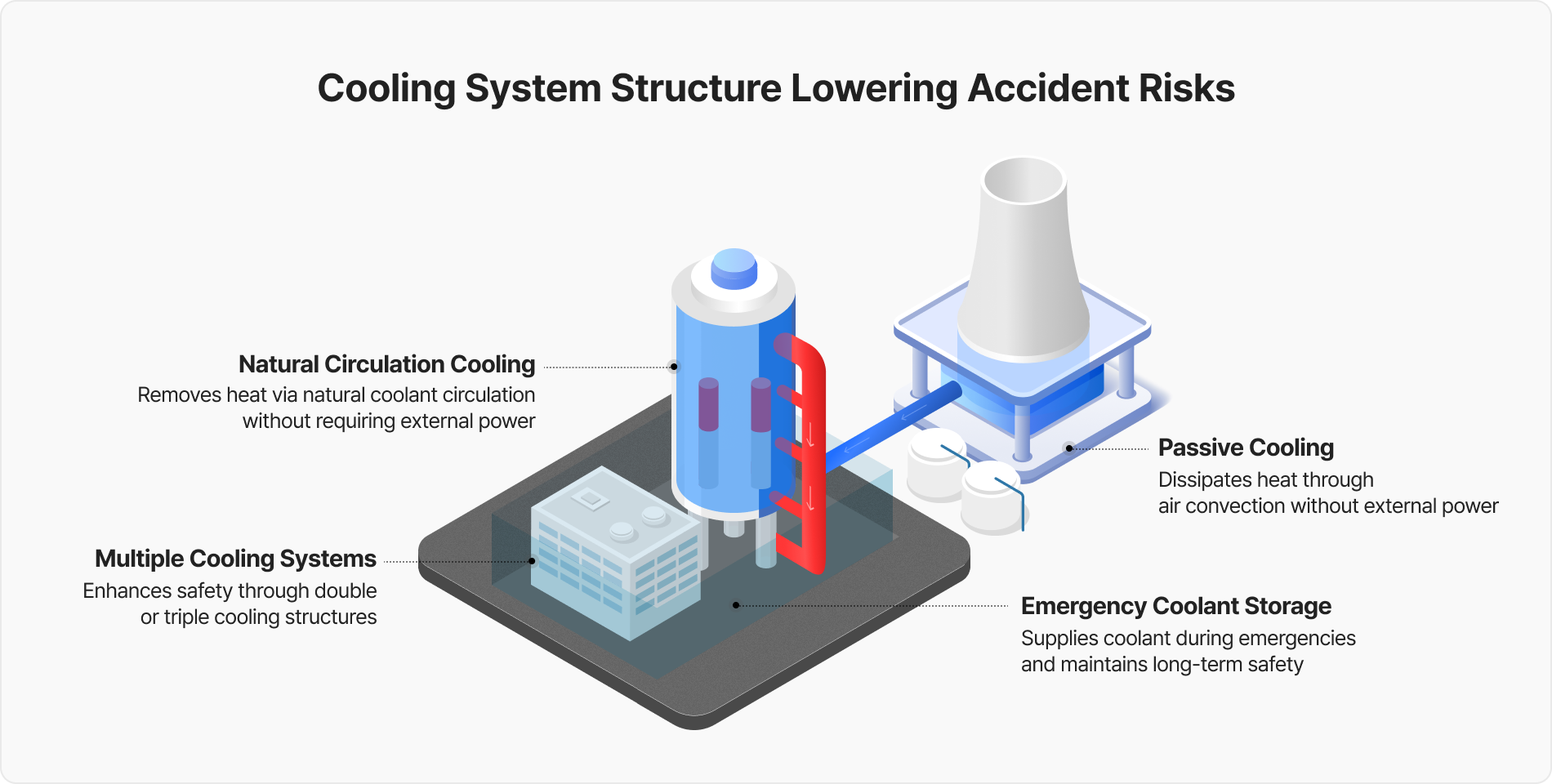
Safety is the most crucial element defining SMRs. SMRs apply various cooling systems to stably remove the heat generated in the reactor. Some SMRs use an integral design that combines the reactor, cooling system, and steam generator inside a single vessel, minimizing connection points and thereby fundamentally blocking the possibility of coolant leaks.
Furthermore, SMRs are engineered with advanced passive safety systems that rely on immutable physical principles, such as natural circulation and gravity, to guarantee stable reactor cooling even during severe emergencies. By integrating redundant cooling networks and emergency coolant frameworks, these designs can autonomously dissipate heat without any reliance on external power sources. Ultimately, this self-sustaining cooling architecture stands as the cornerstone of SMR safety, setting a new benchmark for the nuclear industry.
Types of SMRs and Differences in Technological Approaches
Light Water Reactor-Based SMRs Leading Commercialization
Of all the SMRs currently under development, light water reactor (LWR)-based models boast the highest technological maturity. By utilizing ordinary water as both a coolant and a moderator, these reactors offer the fastest path to commercialization. Their primary advantage lies in the ability to seamlessly leverage the operating data, established supply chains, and proven regulatory frameworks of conventional large-scale nuclear plants.
Emergence of Next-Generation Reactor Technologies
Recently, in addition to the LWR approach, the development of various next-generation reactor technologies is underway depending on the coolant and operating temperature, such as high-temperature gas-cooled reactors (HTGRs), sodium-cooled fast reactors (SFRs), and molten salt reactors (MSRs). These technologies aim to improve thermal efficiency, fuel utilization, and safety, and are considered major candidates to secure leadership in the future SMR market.
Customized Design Approaches Depending on Application Purpose
SMRs are not limited simply to power generation. They allow for versatile, customized designs tailored to the introduction purpose and regional environment, such as dedicated power sources for large-scale data centers, industrial process heat supply, hydrogen production, seawater desalination, and ship propulsion engines.
High-Spec Nuclear Materials and Manufacturing Technologies for the SMR Market
High-Reliability Special Steel Materials Becoming Crucial with Reactor Downsizing
Given the nature of SMRs, which must consolidate the reactor and major systems within a limited space, the required performance level for the materials used is extremely high. Specifically, special steel materials with high strength, durability, and long-term reliability are applied to core equipment such as pressure vessels, piping, steam generators, and cooling systems. As reactors become smaller, the role played by core components increases; thus, the materials themselves are evaluated not merely as structural components, but as key elements dictating the safety and performance of the SMR.
Material Performance Withstanding Extreme Environments
Nuclear facilities maintain high-temperature and high-pressure states over long periods and are continuously exposed to intense radiation. Therefore, securing special metal materials perfectly equipped with heat resistance to prevent component deformation, corrosion resistance to prevent rust, high fatigue strength, and radiation resistance is the starting point of nuclear safety.
SMR Manufacturing Technology Maximizing High Stability and Precision
As many SMRs rely on a single, integral architecture, absolute precision with zero margin for error is non-negotiable across all manufacturing stages, including forging, machining, welding, and heat treatment. The true competitiveness of the finished product is ultimately defined by precision engineering that yields perfectly uniform internal metal structures, thereby maximizing long-term durability.
Strict Verification System from Materials to Finished Products
The nuclear industry is a sector where even the smallest defect is unacceptable. From material procurement to final product inspection, components must fully satisfy global standards such as the American Society of Mechanical Engineers (ASME) and the Korea Electric Power Industry Code (KEPIC). They can only be installed in actual facilities after their quality is verified through rigorous non-destructive testing.
SeAH Besteel's Role in the Global SMR Market
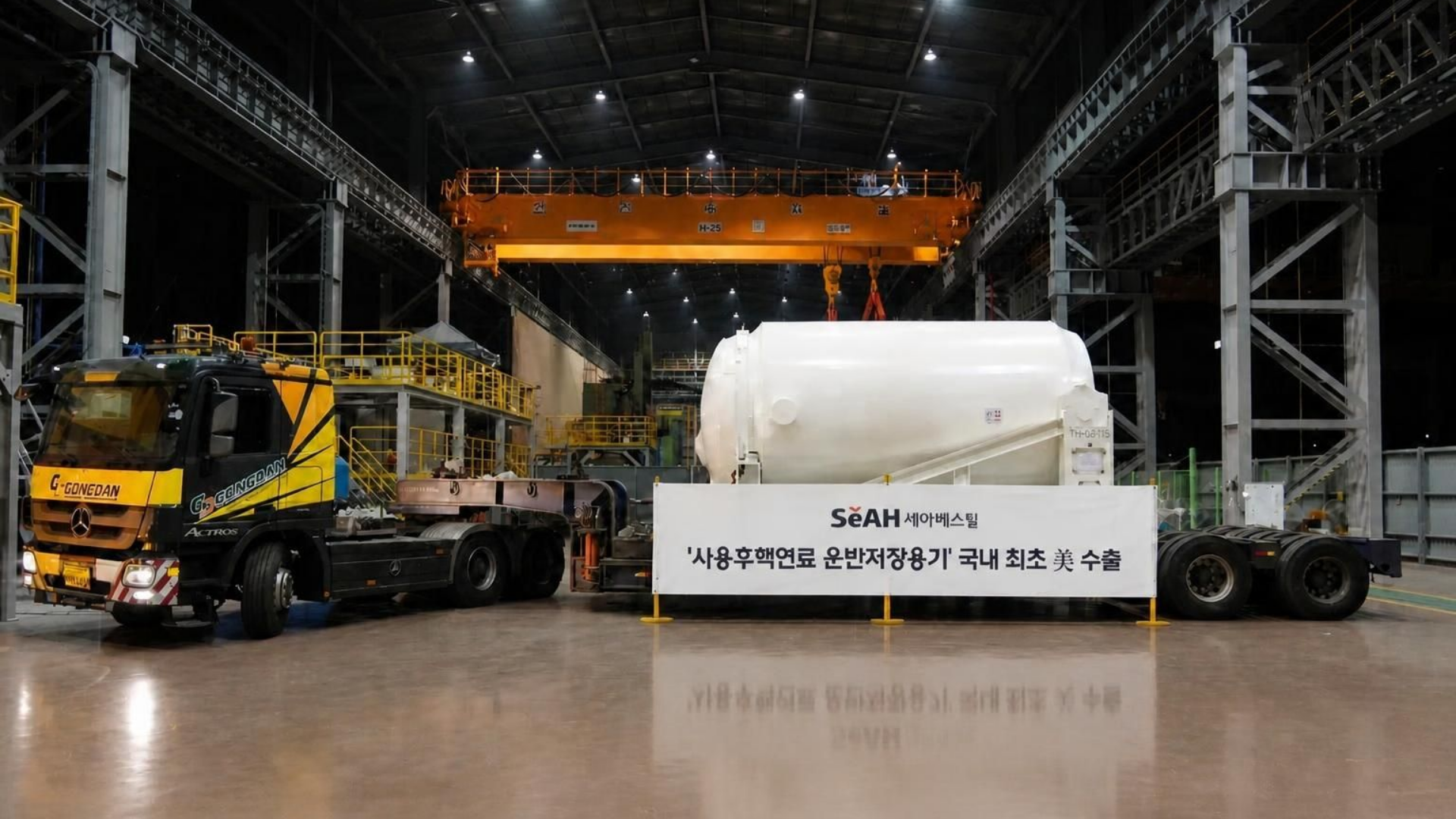
Spent nuclear fuel transport and storage casks successfully delivered to Orano TN by SeAH Besteel
Building a Total Solution for Nuclear Equipment Based on Special Steel Technology
As Korea's No. 1 special steel manufacturer, SeAH Besteel has established a comprehensive total nuclear solution by supplying the critical materials and products demanded by the industry, backed by its deeply accumulated metallurgical expertise. Leveraging advanced component manufacturing capabilities that span the entire nuclear fuel lifecycle, from initial loading to long-term storage, the company is rapidly expanding its footprint beyond conventional large-scale plants and into the next-generation SMR market.
Global-Standard Spent Nuclear Fuel Storage Manufacturing Capabilities
As the ultimate safeguard for handling spent nuclear fuel, the cask is a technologically demanding piece of equipment. It dictates uncompromising radiation shielding performance and enduring structural integrity. Globally, the ability to manufacture these finished casks is an exclusive capability held by only a handful of industry leaders. In Korea, SeAH Besteel drives this elite sector, possessing the foremost manufacturing expertise required to meet such rigorous demands.
In 2019, SeAH Besteel launched a dedicated nuclear manufacturing facility, officially marking its entry into the spent nuclear fuel management sector. Today, the company boasts a robust infrastructure capable of producing over 30 cask units annually. Beyond mere capacity, SeAH Besteel has cemented its reputation for top-tier quality reliability in the global nuclear arena. This excellence is validated by its successful acquisition of the rigorous ASME and KEPIC certifications, alongside passing a stringent quality assurance audit by the U.S. Nuclear Regulatory Commission (NRC).
SMR Market Strategy: The SeAH Besteel and SeAH CCS Synergy
As the SMR market continues to scale, the appetite for nuclear-grade special steel and metal materials is growing exponentially. To capture this expanding sector, SeAH Besteel is aggressively positioning itself, leveraging its unparalleled nuclear forging expertise and its massive 13,000-ton forging press infrastructure. By joining forces with SeAH CSS, the company is also solidifying a robust supply network dedicated to high-reliability materials like stainless steel and nickel alloys.하고 있다.
The Era of Energy Transition: Future Prospects of the Global SMR Market
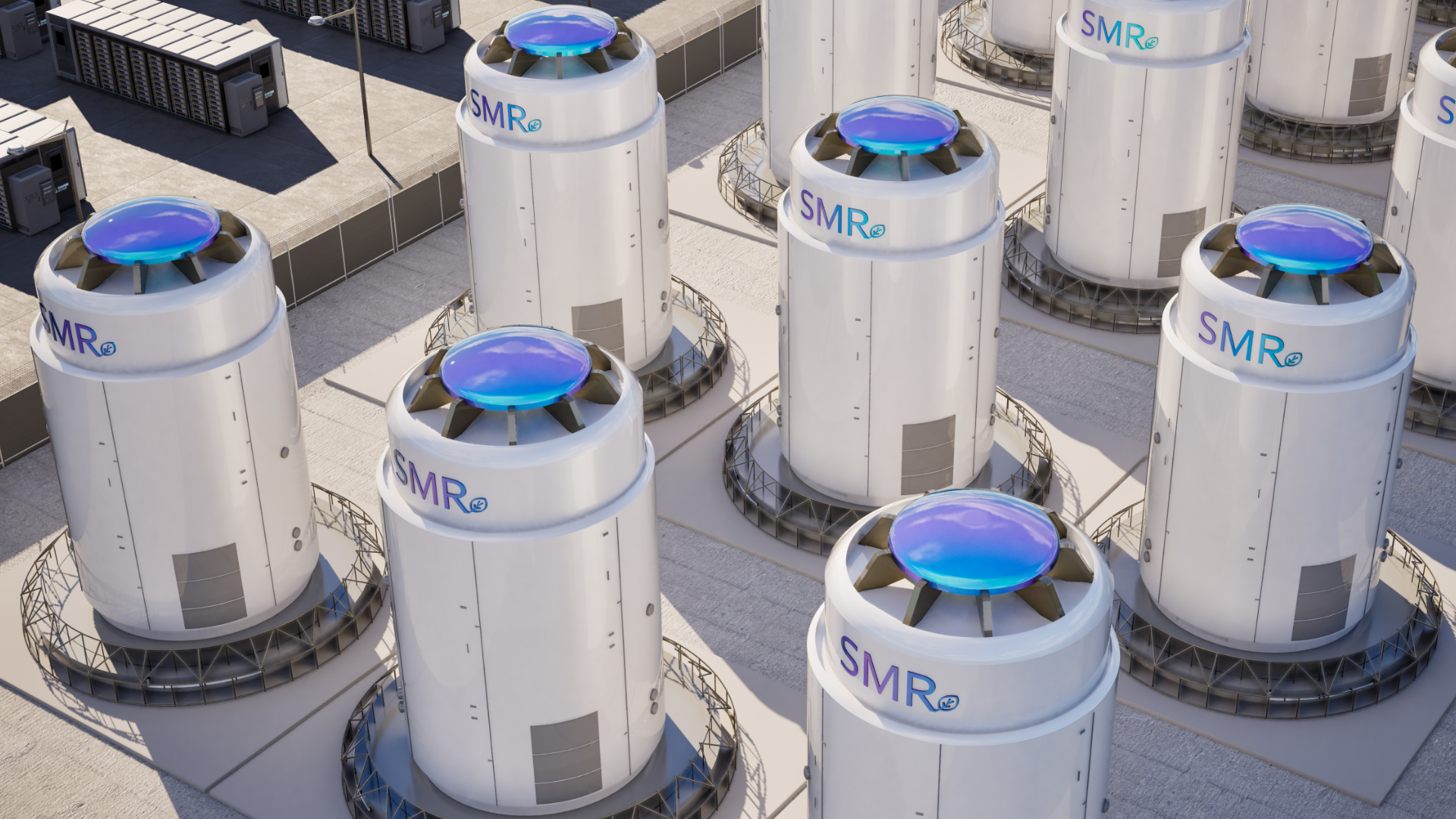
Global SMR Market Trends Centered on Key Nations
As the global energy paradigm shifts toward carbon neutrality, leading nations, including the U.S., the U.K., Canada, France, and Korea, are heavily championing SMRs as the definitive next-generation energy solution. Propelled by unwavering policy support and massive capital investments from these governments, the downstream market for nuclear-grade special materials and equipment is projected to experience exponential growth.
Intensifying Competition for Leadership in Next-Generation Nuclear Technology
Given the formidable technological barriers and stringent certification standards of the SMR market, companies that preemptively anchor the early supply chain are poised to dictate the future of the nuclear industry. An end-to-end value chain race—spanning not just initial design, but everything from raw material procurement to finished product manufacturing—is already well underway.
The Role of the Nuclear Industry in Energy Transition
SMRs are becoming increasingly invaluable as a reliable baseload power solution capable of mitigating the output volatility of renewable energy. By delivering uninterrupted, high-quality power 24/7 regardless of weather conditions, SMRs bridge a gap in grid stability. Moving forward, they will cement their position as a core linchpin of the eco-friendly energy mix, playing an expanding role in navigating the global energy transition.
SMR FAQ

What is an SMR?
Small modular reactors (SMRs) represent a next-generation nuclear power technology. Generally defined as reactors with an electrical output of 300 MW or less, their innovative design allows for a significantly smaller footprint than conventional large-scale nuclear plants. Recently, SMRs have emerged as a pivotal solution capable of meeting the surging power demands of data centers, bolstering energy security, and driving the global transition toward carbon neutrality.
How do SMRs operate, and what are their core principles?
Fundamentally, the power generation mechanism is identical to that of conventional large-scale nuclear plants: heat generated by nuclear fission inside the reactor boils water to produce steam, which in turn drives a turbine and generator to produce electricity. However, SMRs distinguish themselves through groundbreaking safety enhancements. By adopting an integral architecture that houses all major components within a single vessel, alongside passive cooling systems, they maximize both safety and operational efficiency.
What are the different types of SMRs?
The most prominent is the LWR-based SMR. Having already cleared rigorous technology verification, it offers the fastest path to commercialization. Beyond LWRs, various next-generation reactor models are actively under development to boost generation efficiency and enable highly versatile applications. Notable examples include HTGRs, SFRs, and MSRs.
How do small modular reactors differ from conventional nuclear plants?
Conventional large-scale nuclear plants rely on massive, site-specific civil engineering and construction, making them highly time-consuming and capital-intensive. In contrast, SMRs leverage a modular approach—prefabricating components in factories for streamlined on-site assembly. This not only significantly slashes construction timelines and costs but also enables the flexible scaling of power capacity to meet shifting demands.
What special materials are used in SMR manufacturing?
To withstand the extreme operating environments inside the reactor, characterized by intense heat, immense pressure, and continuous radiation exposure, SMRs require high-reliability special steels and advanced forgings with exceptional heat and corrosion resistance. Furthermore, the industry is increasingly adopting premium special metals, such as advanced stainless steels and nickel alloys, to guarantee uncompromising long-term durability.
How is SeAH Besteel responding to the global SMR market?
Leveraging the nation's foremost special steel technology, SeAH Besteel is strategically expanding its footprint by supplying core materials and components required for the nuclear industry. Most notably, the company has secured advanced manufacturing capabilities for spent nuclear fuel transport and storage casks. It has also cemented its reputation for world-class quality reliability, securing esteemed ASME nuclear certifications and flawlessly passing a stringent quality assurance audit by the NRC. Furthermore, through a synergistic partnership with SeAH CSS, SeAH Besteel is fortifying its supply chain for nuclear-grade special materials, such as advanced stainless steels and nickel alloys, ensuring it is perfectly positioned to meet the escalating demands of the global SMR market.
List