
insight 2026-08-14
Aerospace Aluminum and Material Technology:
Why OEM Certification Matters
What Is Aerospace Aluminum? The Core Material Driving Aircraft Lightweighting
To maximize fuel efficiency and flight performance, aircraft must minimize overall weight while maintaining structural stability against continuous loads and vibrations encountered in flight. Aerospace aluminum is a high-performance alloy engineered specifically to satisfy these competing demands, serving as a primary material across major structural components.
Performance Demands: Commercial vs. Aerospace Aluminum
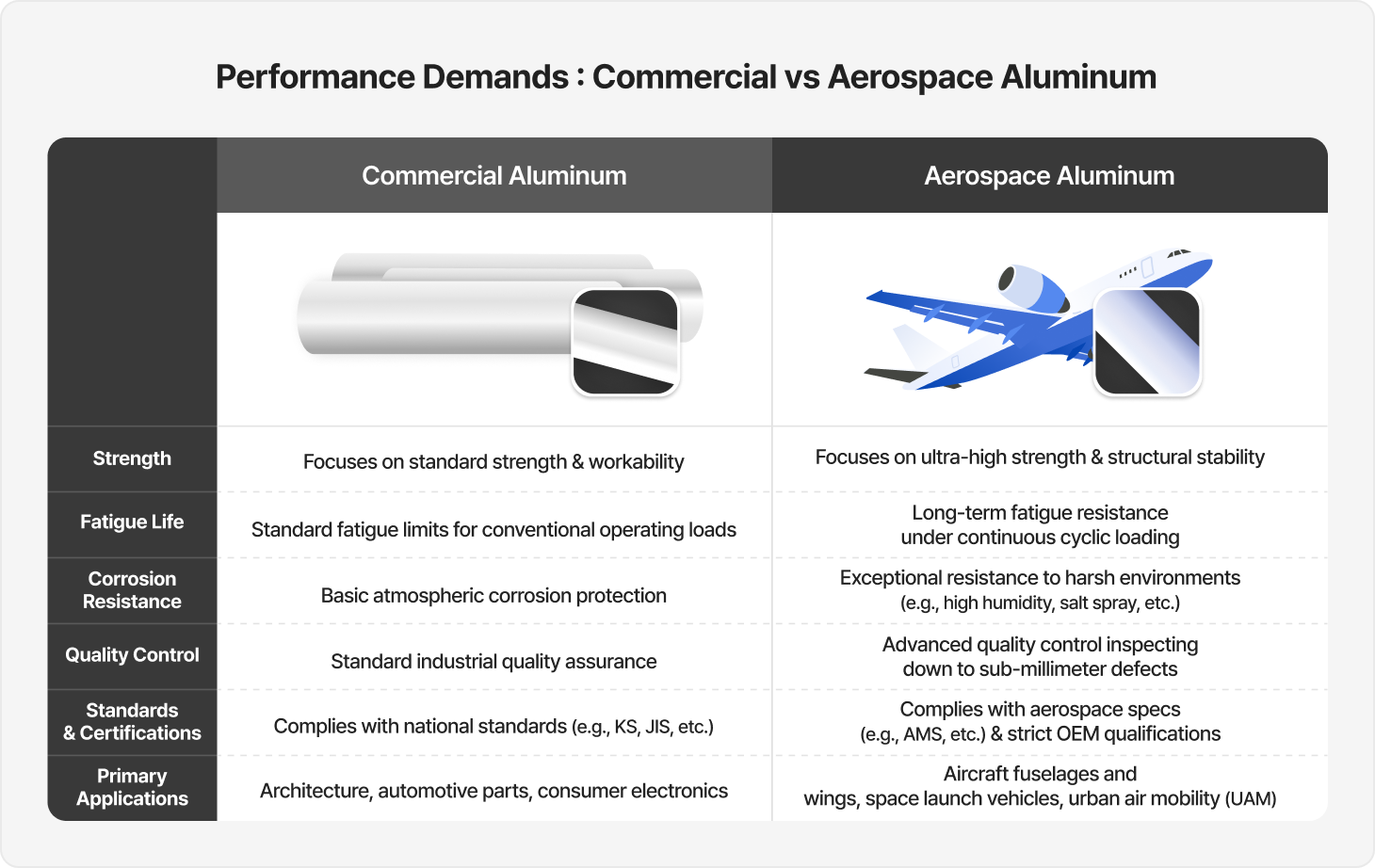
While commercial aluminum is widely used in construction, automotive, and electronics due to its light weight and workability, aerospace aluminum demands significantly higher performance metrics.
Aircraft are subject to continuous atmospheric pressure fluctuations, cyclic fatigue loads, and operational vibrations during takeoff, flight, and landing. They are also exposed to extreme temperature swings at varying altitudes as well as harsh external environments. To endure these extreme conditions, aerospace aluminum must deliver high tensile strength as well as superior fatigue life, exceptional corrosion resistance, and high structural reliability to resist thermal and mechanical deformation.
This structural reliability under prolonged operational stress is what fundamentally distinguishes aerospace aluminum—as a highly specialized, high-performance material—from standard commercial aluminum.
Why Aluminum Dominates Aircraft Structures
Weight directly governs fuel consumption and operational efficiency. Reducing structural mass allows aircraft to fly longer distances or carry heavier payloads with the same amount of fuel.
Aluminum provides a significantly lower density than steel while achieving required mechanical strength through advanced alloying techniques. Its exceptional formability simplifies the production of complex shapes, while its high corrosion resistance ensures long-term operational integrity. Thanks to these unmatched traits, it forms both the skeleton and skin of modern aircraft, including fuselage frames, fuselage panels, wings, bulkheads, and door frames.
Material Engineering: Balancing Strength and Weight
The mechanical properties of aerospace aluminum are achieved through precise chemical formulation and advanced manufacturing. By adding alloying elements such as copper, magnesium, and zinc in optimal proportions, the base material acquires its fundamental performance characteristics. Extrusion and forging processes are then utilized to shape components while imparting critical mechanical traits, after which precision heat treatment is applied to maximize tensile strength, fracture toughness, and fatigue resistance.
Only when these precise forming and heat treatment technologies are seamlessly integrated can lightweight performance, ultra-high strength, and long-term durability be achieved simultaneously. For this reason, aerospace aluminum is widely regarded as a premier example of high-value advanced materials.
Key Applications Across Aircraft Structures
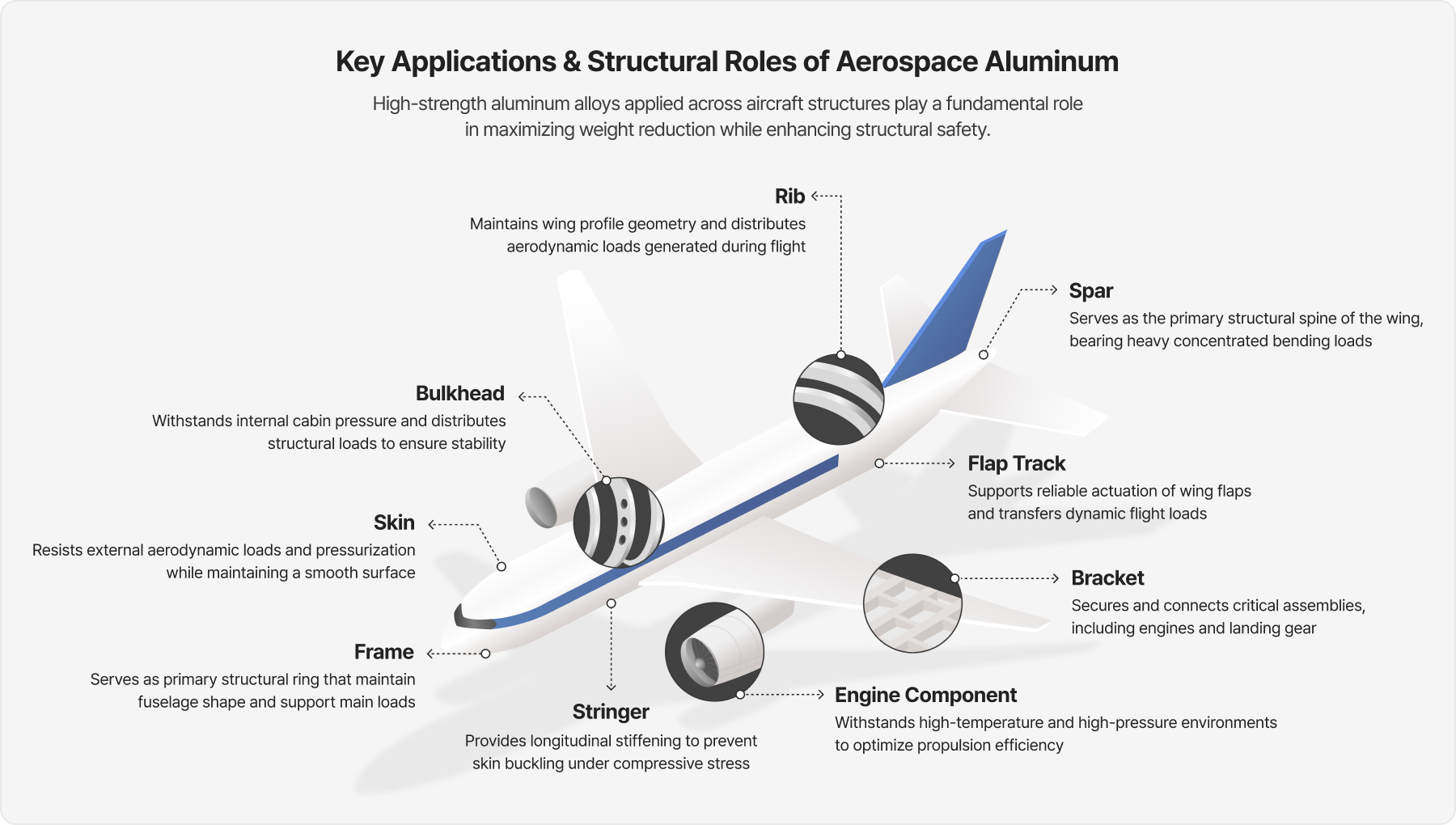
Aerospace aluminum is custom-tailored to specific structural areas across the aircraft to meet the precise performance requirements of each component. Its applications span a broad spectrum—from primary structural elements like the fuselage and wings to internal assemblies and aerospace structures—utilizing special aluminum alloys optimized for the unique role and operating environment of each part.
High-Strength Structural Elements: Fuselage and Bulkheads
The fuselage supports the entire structural framework of the aircraft. It endures dynamic stresses including cabin pressurization cycles, aerodynamic drag, and landing impact forces, making high structural reliability essential.
To meet these demanding requirements, aerospace aluminum alloys are widely used in fuselage skins, frames, stringers, and bulkheads to dissipate external loads. These structures play a critical role in maintaining the aircraft's aerodynamic shape and ensuring overall structural stiffness.
Critical Wing and Internal Components
Aircraft wings are critical structures that generate the lift required for flight, continuously enduring cyclic bending and torsional loads in midair. As a result, they demand exceptionally high structural stability and fatigue durability.
Aerospace aluminum is widely used across key internal components that serve as the wing's structural backbone and internal framing, such as spars, ribs, and flap tracks, as well as brackets and structural assemblies surrounding the engine. Thanks to advanced extrusion and forging processes, complex geometric shapes can be precisely manufactured, allowing each component to be tailored to its specific performance requirements.
Expanding Beyond Commercial Aviation to Space
The application of aerospace aluminum extends beyond commercial jetliners to military aircraft, helicopters, unmanned aerial vehicles (UAVs), launch vehicles (rockets), and satellites. In space launch systems, where every gram saved directly boosts payload capacity, demand for high-performance aluminum alloys continues to accelerate in line with the growth of the aerospace industry.
Strict Manufacturing and Quality Standards
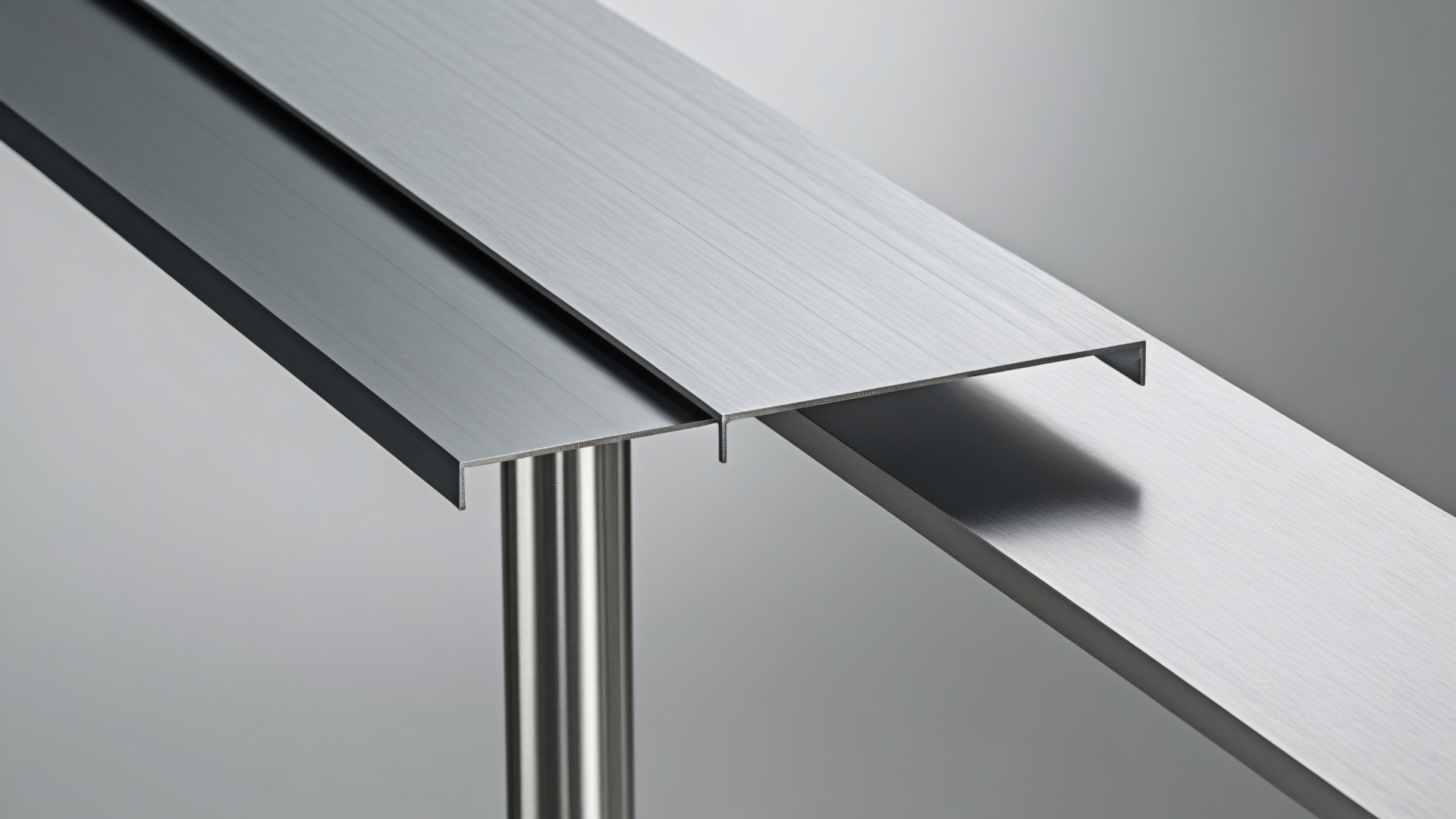
Zero-Defect Aerospace Quality Management Systems
In the aerospace sector, microscopic flaws can propagate into fatigue cracks under repeated cyclic loading, leading to catastrophic failure. To mitigate this risk, manufacturing protocols require non-destructive testing (NDT) to inspect both surface and internal structures for sub-millimeter anomalies.
In addition, production of aerospace materials is conducted under global aerospace quality management frameworks like AS9100. Full trace data, from raw material receipt through thermal processing and final inspection, is recorded to ensure absolute product consistency and reliability.
Extrusion and Forging: Built for Extreme Environments
Extrusion and forging of aerospace aluminum are far more than mere shape-forming operations. These processes serve as a critical phase that densely aligns the material's internal microstructure and dictates its mechanical properties. As minute variations in process conditions, such as temperature, deformation speed, and forming pressure, drastically alter the final material properties, precise process control technology is essential.
Even minor process deviations can impact the product's lifespan and strength, underscoring the need for consistent process control across all manufacturing stages. This advanced manufacturing technology serves as the vital foundation for reliably achieving the performance required for aircraft structural materials.
Material Reliability and Traceability for Global Supply Chain Management
Global aircraft manufacturers procure materials and components from numerous suppliers worldwide. Therefore, they strictly mandate rigorous traceability systems that enable complete end-to-end tracking of every production record, from raw material origin to the final finished product.
Systematically managing data across raw materials, manufacturing processes, heat treatment parameters, and inspection results allows for rapid root-cause identification and corrective action should an issue arise. This robust traceability infrastructure serves as the essential foundation for ensuring product reliability and meeting the stringent quality standards required across the global supply chain.
The Critical Value of OEM Certification
Since safety and quality are paramount in the aerospace industry, material suppliers must adhere to the highest standards demanded by the sector. An aerospace aluminum supplier must undergo comprehensive validation, evaluating not only physical product performance, but also process stability, quality management systems, and reliable delivery capabilities. This vital gateway is precisely what is known as OEM certification.
How Boeing and Airbus Select Suppliers
Major OEMs like Boeing and Airbus enforce rigorous vendor qualification processes. Beyond verifying base material specs, OEMs conduct comprehensive on-site audits to evaluate plant-wide consistency, advanced equipment capabilities, financial health, and on-time delivery records. Given that material defects directly compromise passenger safety, OEM qualification often spans several years.
The aerospace supply chain is renowned for its high barriers to entry. This is because prospective suppliers must secure both complex, highly demanding technical accreditations, such as Nadcap, and proprietary approvals from individual OEMs. Entering this market presents a formidable challenge for newcomer firms, as it requires sustaining massive capital investments in equipment, advanced technological capabilities, and lengthy reliability qualification periods. In effect, these stringent barriers to entry serve as the bedrock for maintaining the safety and quality of the global aerospace industry.
Turning Certification into Competitive Advantage
OEM certification acts as an official endorsement of a supplier's technological capability and quality control. Once certified, suppliers gain long-term trust within the global aerospace ecosystem, paving the way for multi-year long-term agreements (LTAs) and participation in next-generation aircraft programs, ultimately driving long-term revenue growth and strengthening market leadership.
SeAH Aerospace & Defense: Technological Excellence and Global Footprint

As a primary Korean producer of high-strength aluminum extrusions and forgings for aerospace and defense applications, SeAH Aerospace & Defense (SeAH A&D) leverages proprietary manufacturing technology and global OEM credentials to expand its global market footprint.
Aluminum Alloy Capabilities: Expanding Beyond Korea to the Globe
Leveraging Korea's leading aluminum alloy manufacturing capabilities, SeAH A&D produces high-strength aluminum extrusions and forgings essential to the aerospace and defense industries. Designated as a national strategic defense material producer in 1973, the company has spent decades supplying critical materials foundational to national defense and the aerospace sector, accumulating unmatched technical data and manufacturing expertise along the way.
To meet the accelerating global demand for aerospace and defense materials, the company is undertaking large-scale capital investments. Through its new Changnyeong plant—targeted for completion in the first half of 2027—SeAH plans to significantly scale up its extrusion and forging capacity, further solidifying its presence and market leadership on the global stage.
Vertically Integrated Manufacturing System
Aerospace structures demand both ultra-high strength and micron-level dimensional precision. To meet these high standards, SeAH A&D operates a fully integrated manufacturing pipeline spanning raw aluminum alloy casting, precision extrusion, and heavy forging.
While the Changwon facility currently handles core high-strength aluminum production, the upcoming Changnyeong plant will significantly expand overall throughput and operational efficiency to meet growing global demand.
Global OEM Certifications and Strategic Partnerships
Demonstrating the utmost level of technology and quality, SeAH A&D has secured all requisite OEM certifications from global top-tier aerospace and defense leaders, including Boeing, Airbus, Lockheed Martin, and Korea Aerospace Industries (KAI).
Notably, in December 2025, the company signed a long-term agreement (LTA) with Boeing and achieved another significant milestone by securing an LTA with Airbus in July 2026. These achievements reaffirm the global market's confidence in SeAH A&D's quality reliability and supply chain stability, leveraging this momentum to further solidify its position as a leading partner within the global aerospace supply chain.
Global Aerospace Growth and the Evolving Market for Aerospace Aluminum

Driven by a solid recovery in commercial passenger demand and the emergence of next-generation aircraft technologies, the global aerospace industry is entering a new era of expansion. As aircraft manufacturers ramp up production line utilization, demand for high-performance structural materials like aerospace aluminum is rising in tandem. Furthermore, the advent of emerging sectors such as space exploration and urban air mobility (UAM) is driving material standards to evolve to the next level.
Rising Aircraft Orders Driven by Passenger Demand Recovery
With the post-pandemic recovery in international passenger demand, global aircraft manufacturers are ramping up production in earnest. Boeing and Airbus project increased aircraft deliveries to meet global air travel demand over the coming decades, which is expected to drive up demand for high-performance materials used in aircraft structures. As aircraft production expands, the required volume of aerospace aluminum—the structural backbone of wings and fuselages—grows proportionally, reinforcing the vital importance of manufacturing hubs capable of delivering uninterrupted, large-scale supplies of quality-assured materials.
Surging Demand for High-Performance Materials Driven by New Space and UAM Growth
The applications of aerospace aluminum are expanding beyond the sky into space and urban airspaces. As the New Space era of commercially driven space exploration takes full swing and the market for UAM—the eco-friendly transportation for the future—gains tangible momentum, demand for ultra-lightweight, high-strength specialized materials continues to intensify.
For space launch vehicles, satellites, and UAM aircraft, extreme lightweighting is essential to overcome the constraints of battery weight and energy efficiency. To this end, high-performance aluminum alloys are regarded as a key enabler that will accelerate the realization of next-generation mobility.
The Imperative of Aerospace Material Localization for Supply Chain Resilience
Due to extremely high technological barriers to entry and lengthy qualification processes, the aerospace material market remains dominated by a handful of global suppliers. As such, when geopolitical conflicts or global supply chain disruptions arise, domestic aerospace and defense manufacturers face a severe risk of direct supply shortages.
As a result, the need to localize core aerospace materials has emerged as a top priority to secure supply chain sovereignty and protect national industrial competitiveness. In response, concerted efforts are underway in Korea to solidify proprietary manufacturing capabilities in strategic raw materials, such as aerospace aluminum and special alloys, and build a robust, stable supply chain infrastructure.
Aerospace Aluminum FAQ

What is aerospace aluminum?
Aerospace aluminum refers to high-strength aluminum alloys specifically engineered for aircraft and space structures. They offer far higher fatigue resistance, tensile strength, and corrosion protection than commercial alloys, complying with stringent global aerospace standards.
Why is aluminum the most widely used metal in aircraft?
Aluminum offers an ideal combination of low weight and high strength, making it uniquely advantageous for aircraft lightweighting. Reducing structural weight improves fuel efficiency and lowers operating costs, while its superior corrosion resistance and formability enable wide-ranging applications across fuselages, wings, and internal structural components.
How does aerospace aluminum differ from commercial aluminum?
Aerospace aluminum is a high-performance alloy engineered to deliver superior mechanical strength, fatigue life, and corrosion resistance compared to commercial aluminum. Furthermore, it is subject to the stringent standards of the aerospace industry throughout every phase of production, including extrusion, forging, heat treatment, and quality inspection.
Why are quality standards so strict for aerospace materials?
This is because even the smallest defect in an aircraft component can compromise overall flight safety. Accordingly, strict adherence to international quality standards and robust traceability systems is enforced across every stage—from material production and processing to inspection and shipment—ensuring continuous management of product quality and lifecycle history.
What is the significance of OEM certification?
OEM certification is a formal process through which aircraft manufacturers, such as Boeing, Airbus, and KAI, validate a supplier's technological capability and quality management system. It is regarded as an essential prerequisite for entering the supply chain of global aircraft manufacturers, serving as a benchmark that demonstrates an aerospace material supplier's reliability and supply capacity.
What main products does SeAH A&D supply?
SeAH A&D manufactures high-strength aluminum extrusions and forgings used in aircraft fuselages, bulkheads, wings, seating, and various internal and external structural components. Furthermore, by securing OEM certifications from major aircraft manufacturers such as Boeing, Airbus, and KAI, the company supplies aerospace aluminum materials to the global aerospace industry.
List