
people 2026-10-06
Building a Solid Foundation for Carbon Neutrality and the Hydrogen Economy- Featuring: Sungwoong Kim, Team Leader of the Product Development Team at the R&D Center, SeAH Steel
Technology always moves ahead of the mainstream. Before carbon neutrality and the hydrogen economy became part of the global consciousness, SeAH Steel was already preparing for the transition to a new era of clean energy.
Key to the company’s ongoing efforts is the development of two distinct types of steel pipes: one designed to safely transport carbon dioxide emissions from power plants, and the other to ensure a stable supply of hydrogen.
Guiding this important work is Team Leader Sungwoong Kim, who has been a stalwart of research and development (R&D) at SeAH Steel for nearly 20 years. “More than mere manufacturing, creating a great product requires building trust,” he notes.
We recently sat down with Kim to learn how he and his innovative team are leveraging the strength and stability of steel to support the framework for future energy.
Pioneering the Future
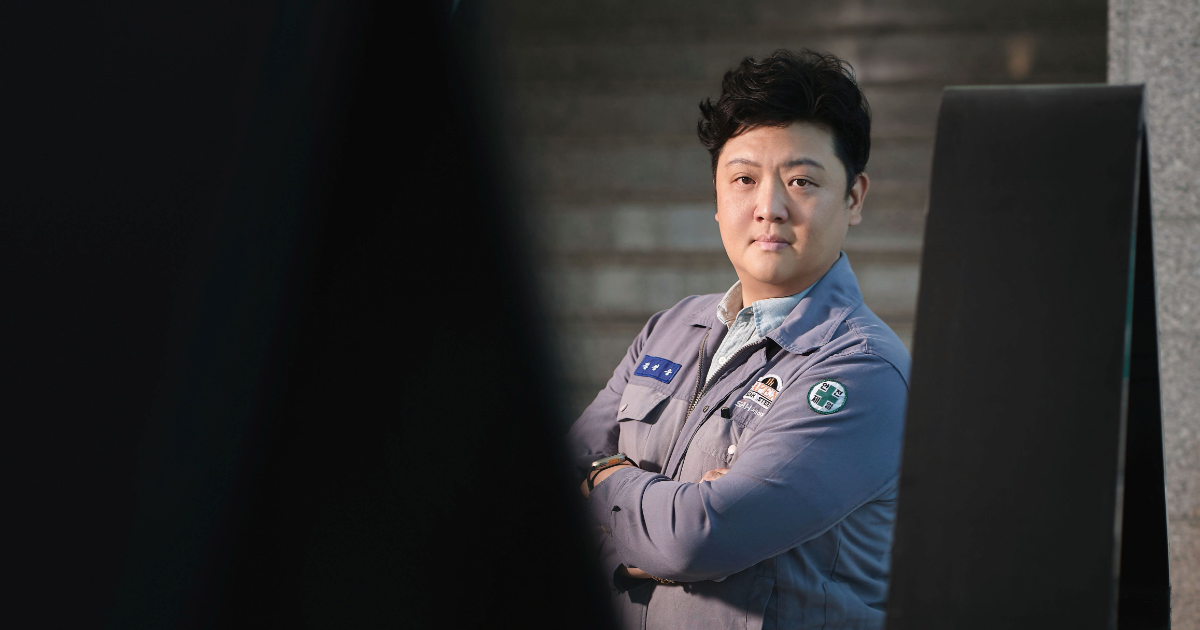
When Kim arrived at SeAH Steel, the company’s primary market was the oil and gas industry. Never one to confine itself to a single sector, the company began expanding into renewable and clean energy—bringing its accumulated expertise in piping for traditional energy to this burgeoning segment.
“While excelling in existing businesses is important, exploring new markets is absolutely essential,” Kim emphasizes. “That is why SeAH Steel has, and continues to, put considerable resources into researching solutions that support the transition to eco-friendly energy and carbon-neutrality.”
The company’s carbon capture, utilization and storage (CCUS) and hydrogen ventures are the natural next steps in this ongoing journey.
Steel has long been considered a traditional industry. Yet, Kim argues that steel is actually a core driver of future energy, as steel pipes remain indispensable for safely connecting everything from wind turbines and offshore wind substructures to pipelines for transporting hydrogen and carbon dioxide.
“The further we transition toward eco-friendly energy, the greater the need for high-performance steel pipes becomes,” he asserts.
Leaning into the technical mastery it secured while working for oil and gas industry clients, SeAH Steel is now creating new piping technologies to connect the engines of the clean energy era. This is the future toward which Kim’s research has always been directed.
“Ultimately, steel must evolve alongside the changing times.”
Effective Technologies for Transporting Carbon and Hydrogen
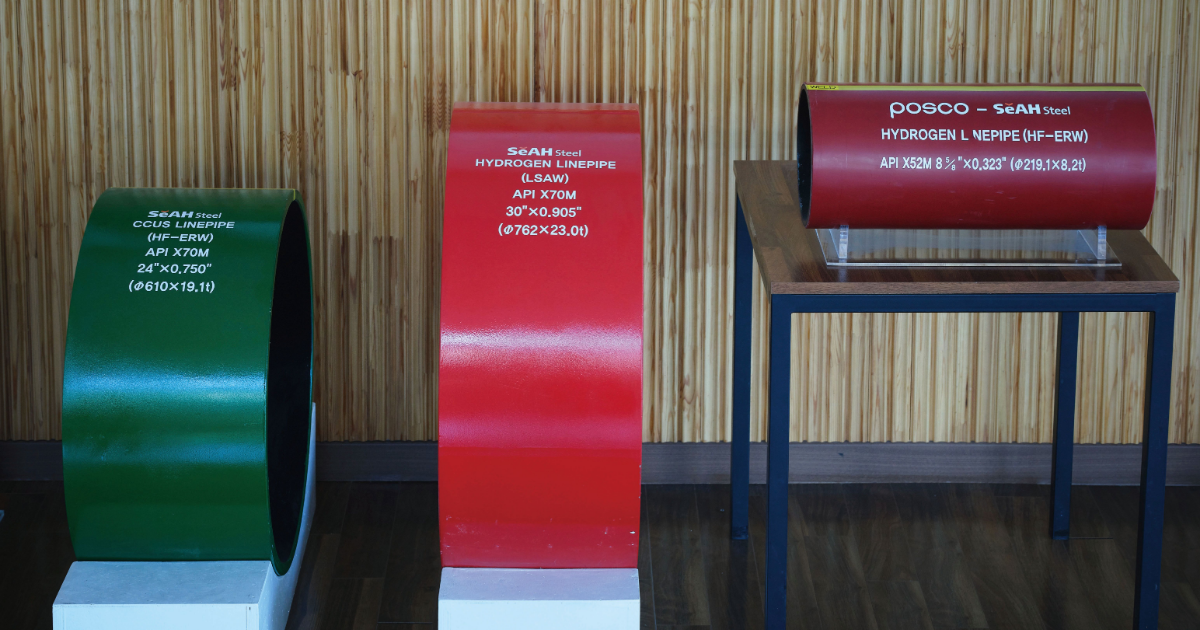
Kim explains, “The success of CCUS is not just a matter of capturing carbon; transporting that carbon safely to its destination is also an essential part of the equation.” Carbon dioxide captured at power plants or industrial facilities must travel through pipelines to utilization facilities or storage sites. This is where SeAH Steel’s pipes come into play.
Recently, the company signed a contract to supply approximately 1,750 tons of stainless steel pipes for a major CCUS project in the Teesside region of the U.K. A flagship carbon-neutral infrastructure initiative driven by the U.K. government, the project involves transporting captured carbon dioxide from power plants to subsea storage sites in the North Sea.
Steel pipes used to transport carbon dioxide face entirely different requirements compared to standard pipelines. Depending on pressure and temperature, carbon dioxide shifts between gaseous and liquid states, and in certain environments, it can even turn into a solid state, similar to dry ice. During the sublimation process, it rapidly absorbs surrounding heat, causing the pipeline’s temperature to plummet.
“If the pipeline’s temperature drops significantly, the steel can become vulnerable to impact,” Kim notes. “To ensure structural integrity and maintain the highest level of safety, steel pipes for carbon dioxide transport must be able to withstand the stress of exposure to cryogenic temperatures.”
It was the creation of a piping technology that does exactly that which brought SeAH Steel to the attention of the Teesside project’s leaders. The company was selected as a supplier because its piping solution satisfied all the stringent demands of the intended application, including impact and cracking resistance—even at temperatures as low as minus 196 degrees Celsius—and the anti-corrosive and pressure-resistant properties needed for subsea deployment. Equally important to the project leadership was SeAH Steel’s proven capabilities in the manufacturing and supply of large-diameter, extra-long pipes.
For the Korea-based company, this was not just an overseas-contract win, but a major milestone—serving as concrete proof that SeAH Steel’s energy pipe technology, honed over many years, is globally competitive. Alongside piping for CCUS, piping for hydrogen transportation is another key growth engine for the company as it further establishes itself in the future energy infrastructure sector.
Hydrogen is widely regarded as a premier clean energy source because it does not emit carbon dioxide when burned. However, safely storing and transporting it is notoriously difficult. Hydrogen atoms are incredibly small and can easily penetrate microscopic crevices within metals. These atoms combine to form molecules, which then expand inside the metal and exert pressure that can ultimately lead to cracks or fractures. This phenomenon, known as hydrogen embrittlement, is the central engineering challenge of developing and producing safe and effective hydrogen pipeline technology.
SeAH Steel has subjected its steel pipes for hydrogen transport to a rigorous verification process including tests exposing them to hydrogen environments for up to 1,000 hours. The company’s electric resistance welded (ERW) steel pipes passed all evaluation criteria and are currently in active use in Korea—at a hydrogen refueling station in Pohang and in the piping systems of Ansan’s hydrogen demonstration city.
“The required performance completely changes depending on whether the substance flowing through the pipe is water, oil, or gas,” says Kim. “SeAH’s hydrogen pipes are designed to withstand high transport pressures, are resistant to hydrogen embrittlement, and are capable of enduring temperatures of minus 45 degrees Celsius. Verified through extensive testing, our piping is now proving its superior stability and safety in the field.”
Kim believes that the role of steel will become even more critical as the clean energy era unfolds. Regardless of which form of energy is used, the infrastructure to safely connect and transport it will always be necessary. With its world-class piping technology, SeAH Steel is supporting the realization of a carbon-neutral future.
One Iteration After Another: Finding and Applying the Optimal Conditions
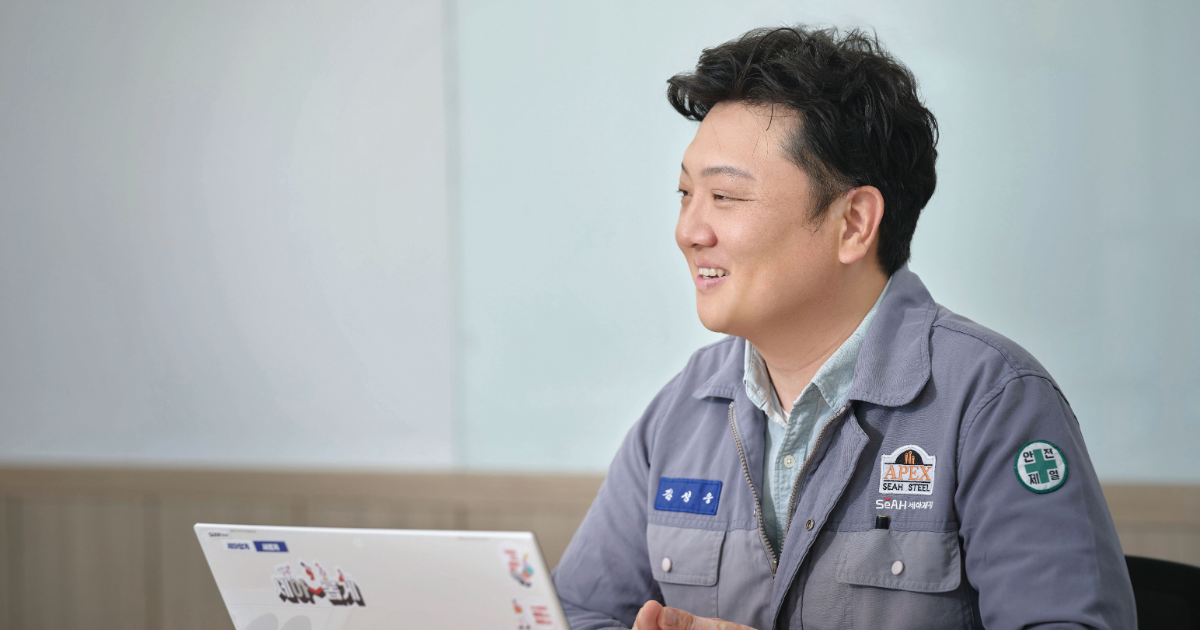
When creating a new solution, the Product Development Team continuously adjusts variables to find the optimal combination of characteristics for the targeted use case(s). They evaluate how best to control the compressive and tensile stress generated during the forming process, how to shape and interlock the edges of the steel plates, and exactly how much heat and pressure to apply during welding.
The accumulated results of these tests form a comprehensive and highly valuable dataset. By repeating impact tests and material evaluations under various conditions, the team is able to identify the appropriate forming and welding parameters for the product’s specifications and applications, subsequently applying them to the production line.
“Developing a new product is, ultimately, the process of creating a new standard,” says Kim.
Naturally, there were difficult moments. While ensuring the operational stability of newly introduced equipment designed to commercialize hydrogen pipes, the welding quality did not initially meet expectations. Countless specimens were produced and tested, but the desired results proved elusive.
Representatives from related departments, including production, advanced research, and maintenance, gathered on the factory floor late into the night. Together, they analyzed the causes, slightly tweaked the conditions, and tested repeatedly. Only after considerable trial and error did they finally establish stable production conditions.
“The solution didn’t come from just one person, but from a tight-knit team communicating and collaborating on the ground,” Kim reflects.
Behind every completed product lie numerous failures, repeated verifications, and relentless, data-driven improvements. R&D could be described as an endeavor of endurance, where achieving success is a long journey whose reward is the realization of a perfected product.
The People Unlocking the Future of Clean Energy
Kim foresees the future energy industry evolving into an integrated energy supply chain where LNG, hydrogen, and CCUS are seamlessly interconnected. Sharing this viewpoint, SeAH Steel aims to go far beyond the supply of purpose-engineered piping. The company’s goal is to grow into a technology partner that offers customized solutions that reflect the characteristics of the transported energy and the intended operating environment, bridging the gap between the conventional drilling sites of today and the clean energy sites of tomorrow.
When asked what he finds so rewarding about his R&D work, Kim shared a personal story:
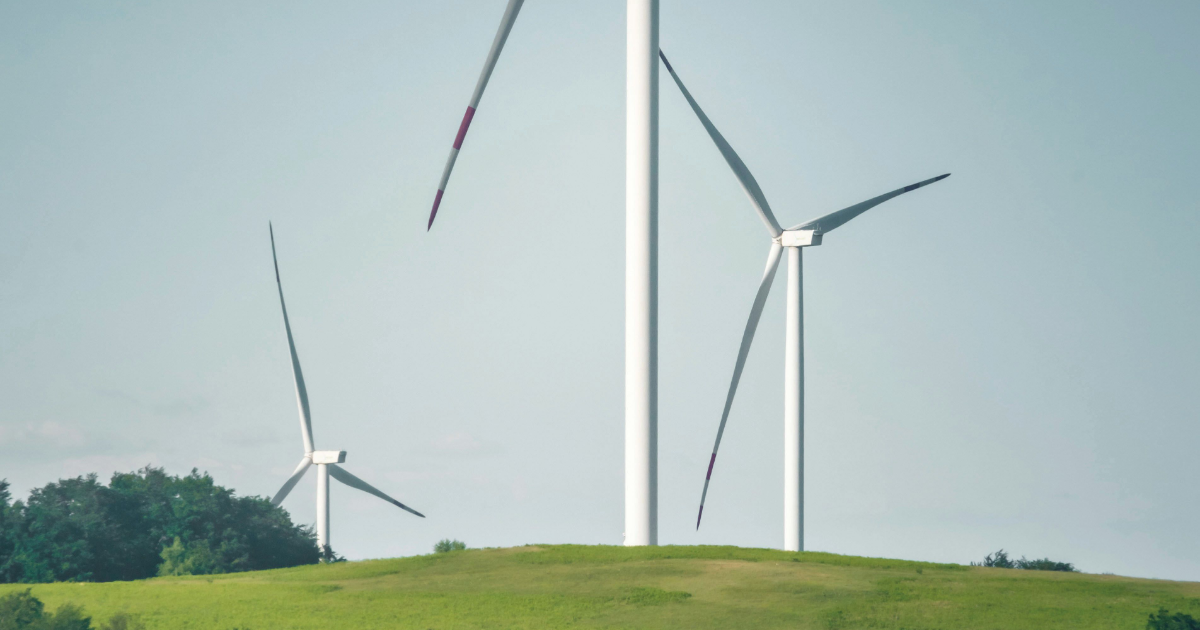
“My second child is ten now. Back in the kindergarten days, we visited the wind farm in Yeongdeok. Pointing at the pillars beneath the wind turbines, I explained, ‘Daddy’s company makes those.’ Ever since then, whenever seeing a wind turbine, my kid proudly says, ‘My dad’s company makes those!’”
To his child, Kim’s job was simply about making eco-friendly energy. “I'm just doing my job, but knowing that the results will help make the world my children grow up in a little cleaner and safer brings me immense pride.”
He believes that R&D isn’t just about boosting a company’s competitiveness; it is about bettering the lives of future generations. A single technology refined in the lab today could be the key to building a new energy infrastructure that fundamentally changes the daily existence of those who will someday inherit the planet.
Kim’s ultimate goal is an extension of that belief.
Currently, SeAH Steel is actively pursuing involvement in major CCUS projects worldwide, including in Canada. Kim expressed his desire to successfully lead these projects and further strengthen SeAH Steel’s position as a core supplier in the global energy transition market.
Like the hidden steel pipes that transport energy, the efforts of R&D professionals like Sungwoong Kim often go unnoticed. Yet, the technologies that reduce carbon, safely transport hydrogen and lay the foundation for a better future all begin with silent, steadfast research.
After speaking with Kim, one realizes that steel is not an industry anchored in the past, but one that is helping forge the future. And that future is being built, little by little, upon countless repeated experiments, verifications, and the hard work of dedicated people who refuse to leave the lab, or the production floor, until the job is done.
Related Content
What is CCUS?
While reducing carbon emissions has become a shared challenge across all industries, completely eliminating carbon is easier said than done. This is particularly true for foundational industries like steel, cement, refining, and chemicals, which inherently generate carbon dioxide during their manufacturing processes.
Steel Pipes: The Blood Vessels of Energy Infrastructure Driving the Energy Transition
Amid the global energy transition, steel pipe technology is expanding from oil & gas to offshore wind, CCUS, and hydrogen. Discover how SeAH Steel is spearheading this evolution and shaping the future energy landscape.
List